 Skip to content


Building an Instagram following takes time. You publish product photos, share Reels, post Stories, respond to comments, and gradually attract more followers. Yet, despite the growing audience, your retail business may still struggle to generate enquiries or sales.
This situation is more common than many retailers expect. A growing follower count does not automatically mean your business is attracting potential customers. People may enjoy your content without having an interest in buying your products. Others may be interested but cannot find the information they need to make a purchase. To build a stronger social media presence, explore our guide to Meta Ads and social media for retail.
If your Instagram followers are not turning into customers, the problem may involve your audience, content, product presentation, trust signals, or buying process.
In this guide, we explain what retailers should check and how to make Instagram more effective as a sales channel.
Check Whether You Are Attracting the Right Followers
The first question is not how many followers you have. It is whether those followers are potential customers.
A retail business can attract thousands of followers through entertaining Reels, giveaways, viral trends, or general lifestyle content. However, these followers may have little interest in the products being sold.
For example, a Lahore-based clothing brand might receive significant engagement on a funny fashion Reel. The Reel could attract people who enjoy humour but have no intention of purchasing clothing from that brand.
This creates a gap between audience growth and business growth.
How to check your audience quality
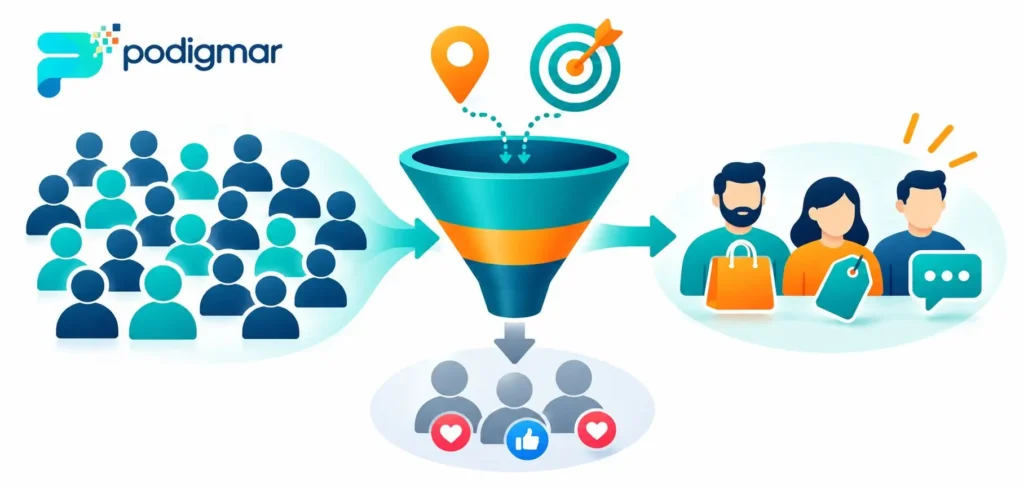
Review your Instagram audience and ask:
- Are your followers located in the cities or regions where you deliver?
- Do their interests match your products?
- Are they interacting with product-related content?
- Do they ask questions about prices, sizes, availability, or delivery?
- Are your followers part of your intended customer group?
Use Instagram Insights to review available audience information and engagement patterns. Compare this information with the customers you actually want to reach. Your audience targeting should also support your wider retail marketing strategy and attract people who are more likely to become customers.
What to improve: Create content that attracts people interested in your products rather than focusing only on content that receives likes and views.
Review Your Content Strategy
Your content may be attracting attention without giving people a reason to purchase.
Many retailers publish attractive product pictures but rarely explain the product’s value. Customers see what you sell, but they may not understand why they should choose your business.
A strong Instagram content strategy should do more than keep your account active. It should help potential customers discover products, understand their benefits, build confidence, and take the next step.
Use different content types for different purposes
Consider including these content categories:
Product-focused content
Show your products clearly from different angles. Include useful details such as sizes, colours, materials, features, and prices where appropriate.
Educational content
Help customers understand your products. A skincare retailer, for example, could explain how to use a product or what ingredients it contains.
Demonstration content
Use Reels and Stories to show products in real situations. Demonstrations can help customers understand product quality, size, texture, or functionality.
Customer-focused content
Share genuine customer feedback, product experiences, and user-generated content with permission.
Promotional content
Communicate relevant offers, bundles, seasonal collections, and limited-time promotions. Make the conditions clear so customers understand what is included.
Your content should balance discovery, education, trust, and promotion. If every post is designed only to gain engagement, your account may attract attention without supporting the buying decision.
Make Your Products Easy to Understand
A potential customer may visit your profile, like your products, and still leave without contacting you.
One reason is incomplete product information.
Imagine a customer sees a clothing item on Instagram. They like the design but cannot find its price, available sizes, fabric details, or delivery information. They may decide not to send a message simply because the next step feels inconvenient.
Retailers should remove these unnecessary barriers.
What product information should you provide?
Depending on your product category, include:
- Clear product names and descriptions.
- Prices or straightforward instructions for requesting a price.
- Available sizes, colours, and variations.
- Product dimensions, materials, or ingredients.
- Current stock or availability information.
- Delivery options and estimated delivery details.
- Return or exchange conditions.
For example, a jewellery retailer should show close-up product images, material details, available designs, and pricing information where possible.
An electronics retailer should explain important specifications, compatibility, warranty information, and what comes inside the package.
The easier it is to understand your product, the easier it becomes for customers to consider purchasing it.
Improve Your Instagram Profile and Bio
Your Instagram profile is often the first place a potential customer visits after discovering your content.
If your bio is unclear, your profile does not explain what you sell, or customers cannot find a way to contact you, you may lose interested buyers.
Your profile should quickly answer three questions:
- What does your business sell?
- Who do you serve or where do you deliver?
- How can someone place an order or contact you?
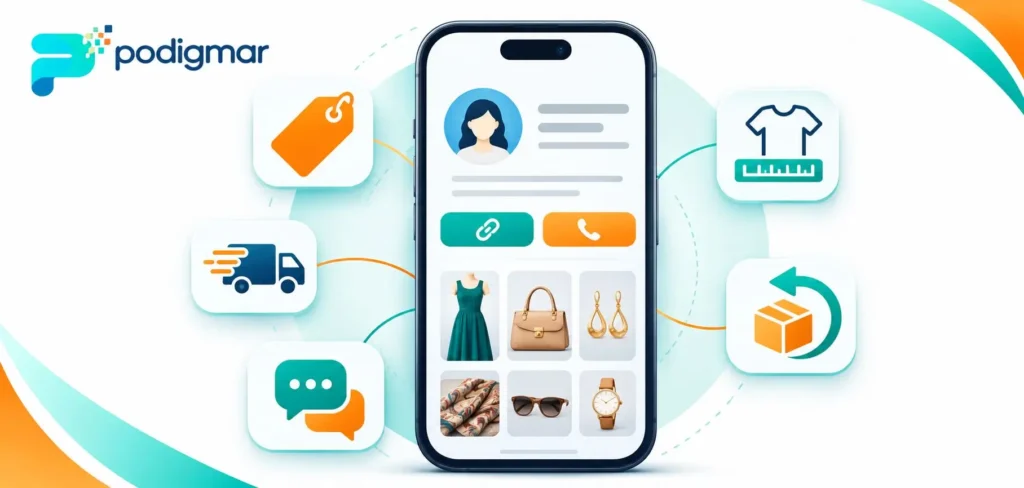
What to check on your profile
Profile name: Use your brand name and, where natural, a relevant product or business description.
Bio: Explain your products and your main customer benefit in simple language.
Location and delivery: Mention your service area or delivery coverage when relevant.
Contact details: Make it easy for customers to reach you through the available contact options.
Profile link: Direct visitors to a useful destination, such as your website, product collection, catalogue, or WhatsApp ordering channel.
Pinned posts: Highlight important information such as your best-selling products, ordering instructions, customer reviews, and current collections.
A clear profile helps visitors understand your business without searching through dozens of posts.
Check Whether Your Content Builds Trust
Customers may like your products but hesitate to purchase because they are unsure whether your business is reliable.
This is particularly important for online retail businesses. Customers cannot physically inspect a product before ordering, so they often look for signs that the seller is trustworthy.
A professional-looking Instagram feed is useful, but presentation alone may not be enough.
Build confidence through genuine information
Consider adding:
- Real customer reviews and feedback.
- Genuine product photos and videos.
- Customer-submitted product experiences, shared with permission.
- Clear business contact information.
- Delivery and return policies.
- Product demonstrations.
- Answers to frequently asked questions.
- Consistent and helpful responses to customer messages.
For retailers in Pakistan, delivery information can also influence buying decisions. Explain whether you offer nationwide delivery, which courier arrangements you use, and whether cash on delivery is available if your business supports it.
Avoid using exaggerated claims or fabricated testimonials. Trust grows when customers can verify what your business promises.
Make the Buying Journey Simple
Even interested followers may not purchase if your ordering process is confusing.
Consider this situation:
A customer watches your Reel, visits your profile, and wants to order a product. However, the post does not explain how to buy it. Your bio contains several unrelated links, and your WhatsApp number is difficult to find.
The customer may leave instead of working out the process. A clear buying journey should be part of your wider 90-day retail marketing plan, with measurable actions and business goals.
Your Instagram account should provide a clear path from product discovery to purchase.
Review your buying journey
Step 1: Discovery
A customer discovers your business through a Reel, post, Story, recommendation, or advertisement.
Step 2: Interest
They visit your profile, explore your products, and look for relevant information.
Step 3: Consideration
They check prices, product details, reviews, delivery information, and available options.
Step 4: Enquiry or purchase
They click your website link, contact you through WhatsApp or Instagram Direct, or use another ordering method.
Step 5: Conversion
They complete the order, provide the required details, and receive confirmation.
Every step should be clear and convenient.
Reduce unnecessary steps
- Add a clear call to action to product posts.
- Use a direct product link where possible.
- Make WhatsApp or Instagram messaging easy to access.
- Explain how to place an order.
- Respond to product questions promptly.
- Keep product availability and prices updated.
- Avoid sending customers through several unnecessary pages.
If your business accepts orders through Instagram Direct or WhatsApp, create a simple process for handling enquiries and confirming orders.
Use Stories and Highlights to Support Sales
Instagram Stories give retailers an opportunity to communicate with their audience more regularly and share timely product information.
However, Stories should not become a random collection of reposts and promotional messages.
Use them to answer customer questions and make products easier to explore.
Useful Story ideas for retailers
- New arrivals and product launches.
- Product demonstrations.
- Frequently asked questions.
- Customer reviews.
- Behind-the-scenes content.
- Available colours, sizes, or variations.
- Current offers and promotions.
- Delivery and ordering instructions.
Instagram Highlights can keep important information accessible after Stories disappear.
Consider organising Highlights into categories such as:
- New Arrivals
- Best Sellers
- Customer Reviews
- How to Order
- Delivery
- FAQs
- Offers
This gives new visitors a simple way to learn about your business before contacting you.
Check Your Calls to Action
Your content may be interesting, but are you telling people what to do next?
A post that only displays a product without a clear next step may leave potential customers unsure about how to enquire or order.
A call to action (CTA) guides the audience towards a specific action.
Examples of useful retail CTAs
| Content Type | Suggested CTA |
|---|---|
| Product showcase | Explore the collection on our website. |
| New arrival | Message us to check availability. |
| Product demonstration | Contact us for product details. |
| Customer review | Discover what makes this product popular. |
| Promotional post | View the offer and ordering details. |
| Product comparison | Visit our website to compare options. |
Choose a CTA that matches the content and the next step in your buying journey.
Avoid using several competing CTAs in one post. A clear instruction is usually easier to follow.
Measure More Than Follower Growth
Follower growth is one useful social media metric, but it cannot tell you whether your Instagram activity is generating business results.
Retailers should monitor actions that show whether people are moving closer to a purchase.
Instagram Insights can help you review available account and content performance information. Your website analytics, order records, and enquiry tracking can provide additional context.

Metrics worth monitoring
| Metric | What It Helps You Understand |
|---|---|
| Reach | How many accounts your content reaches. |
| Profile visits | Whether people want to learn more about your business. |
| Website link clicks | Whether visitors are exploring your website. |
| Messages and enquiries | Whether people are asking about your products. |
| Saves and shares | Whether your content is useful or worth revisiting. |
| Product page visits | Whether visitors are exploring specific products. |
| Add-to-carts | Whether website visitors are showing buying interest. |
| Completed orders | Whether your marketing is contributing to sales. |
Do not assume that every sale comes directly from Instagram. Customers may discover your business on Instagram and complete their purchase later through WhatsApp, a website, or a physical store.
Where possible, use consistent tracking methods to understand which channels and campaigns contribute to enquiries and orders.
Create a Practical Instagram Improvement Plan
You do not need to rebuild your entire Instagram strategy at once. Start by identifying the biggest problems in your current account and improving them systematically.
Here is a practical four-week plan for retail businesses.
1st Week : Review your audience and profile
- Check whether your followers match your target customers.
- Review your profile name, bio, contact details, and links.
- Update pinned posts and important Highlights.
- Identify content that attracts irrelevant engagement.
2nd Week : Improve product content
- Create clearer product photos and videos.
- Add useful product information.
- Publish demonstrations and educational content.
- Include relevant customer questions in your content plan.
Week 3: Improve trust and the buying journey
- Add genuine reviews and customer experiences.
- Explain ordering, delivery, and return policies.
- Test your website and WhatsApp links.
- Make the enquiry and ordering process easier.
Week 4: Review performance
- Compare reach, profile visits, link clicks, and enquiries.
- Identify content that attracts relevant customers.
- Review the questions and objections customers raise.
- Plan your next month around the results.
Use this plan as a starting point. The improvements that matter most will depend on your products, audience, and current buying process.
Frequently Asked Questions
Your followers may not match your target customers, or your content may not provide enough product information or buying motivation. An unclear profile, weak trust signals, and a complicated ordering process can also prevent followers from becoming customers.
Start by attracting relevant followers, publishing useful product content, showing genuine customer experiences, and making ordering simple. Include clear calls to action and give visitors an easy way to ask questions or purchase.
Both can provide useful information, but neither should be your only measure of success. Retailers should also monitor relevant profile visits, product enquiries, website activity, and completed orders.
There is no single posting frequency that works for every retail business. Choose a realistic schedule that allows you to publish useful, consistent content without sacrificing quality. Review performance and adjust your schedule based on audience response and business capacity.
Yes. Stories can highlight new arrivals, demonstrate products, answer questions, share genuine reviews, and direct interested customers towards an ordering channel. Use Highlights to keep important information accessible on your profile.
Not necessarily. Before increasing advertising activity, check your audience relevance, product presentation, offer, profile, and buying journey. Paid campaigns can help reach new potential customers, but they will not automatically solve problems that prevent people from purchasing.
Instagram can be an important discovery and communication channel, but retailers should consider how it works alongside their website, WhatsApp, search visibility, paid advertising, and physical sales channels. A connected marketing approach can make it easier for customers to discover and buy from your business.
Turn Your Instagram Audience into Business Opportunities
Growing your Instagram following is only one part of retail marketing. The real opportunity comes from attracting the right audience, communicating product value, building customer confidence, and creating a smooth buying journey.
If your retail business is getting followers and engagement but struggling to generate sales, it may be time to review the complete customer journey rather than simply publishing more content.
At Prodigmar, we help retail businesses build practical digital marketing strategies that connect social media activity with business goals. From audience targeting and content planning to Meta Ads and conversion optimisation, our approach focuses on helping retailers make their marketing more effective.
Want to Understand What Is Holding Your Retail Marketing Back?
Contact Prodigmar to discuss your retail marketing goals and explore opportunities to improve your results.
Contact Prodigmar

