
Meta Ads for retail businesses are paid advertisements across Meta platforms, including Facebook and Instagram. A useful retail strategy connects those advertisements with organic content, a clear offer and a measurable path to purchase or enquiry.
Your Instagram posts get likes, advertisements generate clicks. Your WhatsApp keeps buzzing with “price please?” Yet sales barely move.
The missing piece may sit between the advertisement and the sale.
This guide explains how retailers in Pakistan can improve that journey, while separating three different goals: online purchases, salon appointments and showroom enquiries.
Because a heart emoji looks nice, but your supplier still expects payment.
Give Organic Social and Paid Ads Different Jobs
Organic social media gives customers somewhere to explore your business. Use it to explain products, answer questions and show how your team works.
Paid advertising distributes selected messages through campaigns. Meta’s advertising overview recommends choosing an objective that matches your desired outcome, such as sales, leads or awareness.
Build both around the same customer questions.
For example, publish an organic demonstration explaining a product’s fit or materials. Then test advertising that highlights a relevant benefit and directs shoppers to the product.
Explore Prodigmar’s social media marketing services for support planning that content.
Define the Outcome Before Choosing an Objective
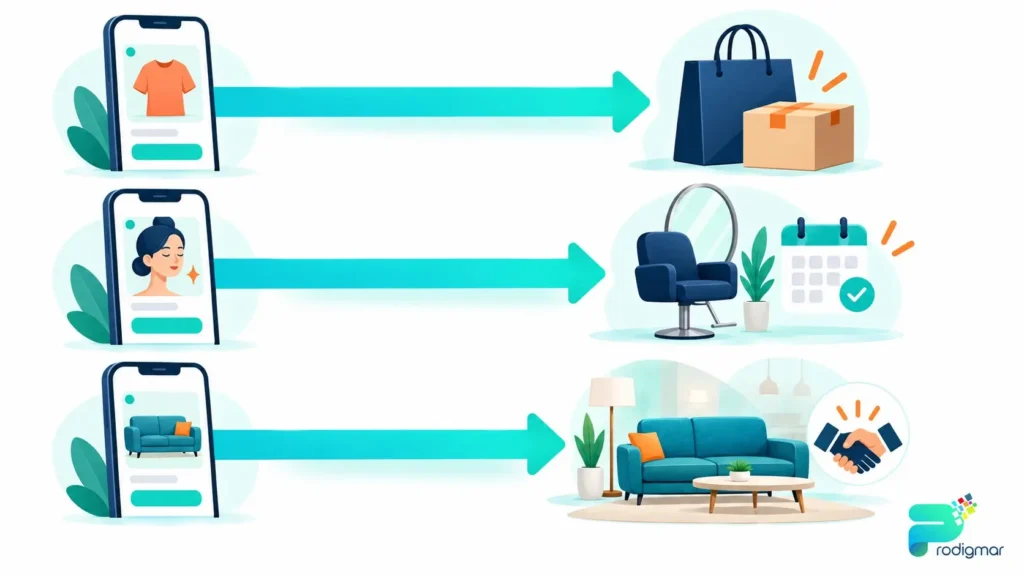
An online order, a salon booking and a furniture enquiry represent different stages of commitment.
Choose your campaign objective, conversion location and performance goal around the action you need. Available combinations can differ by account and destination.
| Business Model | Business Outcome | Campaign Starting Point to Evaluate |
|---|---|---|
| Online retailer | Completed purchases | Sales with an appropriate purchase event |
| Salon | Confirmed appointments | Leads with a suitable booking or enquiry route |
| Furniture showroom | Qualified enquiries that become visits and sales | Leads with relevant qualification questions |
Treat these as starting points, not universal settings.
A salon enquiry still needs an available slot and confirmation. A showroom lead still needs a sales conversation. An online order may still face cancellation or return.
Keep those distinctions visible in reporting.
Understand Why Engagement Does Not Become Sales
Before changing your audience, inspect the journey.
Common possibilities include:
- The advertisement attracts curiosity without explaining the product.
- Customers cannot find prices, delivery details or availability.
- The landing page shows something different from the advertisement.
- The offer reaches people outside your service area.
- Your team replies late or misses enquiries.
- Reporting counts clicks as if they were customers.
These are issues to investigate, not assumptions about your account.
Review conversations and order records. Ask your sales team which questions repeat and where customers lose interest.
Fixing an unclear delivery policy may help more than another round of audience adjustments.

Create Content That Helps People Decide
Strong retail creative shows the product clearly and answers a buying question.
Show Useful Details
For fashion, demonstrate fit, fabric and available options. Furniture content should highlight dimensions, materials and how each piece looks within a room. When promoting salon services, explain the service, process and booking requirements.
Use genuine product photographs and accurate demonstrations. Get permission before featuring identifiable customers or testimonials.
Test Different Messages
Build a small set of distinct creative ideas:
- A product demonstration.
- An answer to a common objection.
- A comparison between suitable options.
- A clear explanation of your service.
- A genuine customer experience, with permission.
Adapt each asset to its placement and preview it before publishing. Keep essential details readable on a phone.
Choose English, Urdu or a mix based on your audience’s conversations. Language should make the offer clearer, not simply make the advertisement look fashionable.
Build an Offer Your Business Can Deliver
An offer does not always require a discount.
It might highlight a useful bundle, a consultation or a defined service package. Explain what customers receive, what it costs and which conditions apply.
For campaigns around Ramadan, Eid or wedding shopping, check stock, staffing and delivery deadlines before advertising.
If you display a starting price, explain what it includes. If delivery costs vary, make that clear before checkout.
Avoid invented urgency and unsupported claims. “Only today” becomes less convincing when customers see it again next Tuesday.
Find Out Why Your Enquiries Are Not Becoming Sales
Share your website or social profile, location and main challenge with Prodigmar. Request a free retail growth audit to help identify priorities across your offer, content, advertising and customer journey.
Request Your Free Retail Growth AuditSend Customers to the Right Destination

Choose the destination according to what customers need next.
Online purchases: Link to the relevant product or collection. Show prices, specifications, availability, delivery information and return terms.
Salon appointments: Use a booking page or managed enquiry route. Explain the service, location and how customers confirm a slot.
Showroom enquiries: Provide useful product information and an easy way to ask about availability, delivery or visiting.
For WhatsApp, prepare a clear response process. Assign responsibility and record whether each conversation becomes a qualified enquiry, booking or sale.
A messaging button opens a conversation. Your team still needs to help the customer move forward.
Improve Lead Quality Through Qualification
A low cost per lead means little if enquiries do not match your business.
Ask a few questions that help your team respond:
- Which product or service interests you?
- Which city or area do you need service in?
- When do you plan to buy or book?
- What size, quantity or option do you need?
Avoid unnecessary questions and sensitive information.
Track what happens after submission. Meta’s official lead-generation guide describes connecting CRM data through the Conversions API to support lead-quality optimisation in eligible setups. Confirm current availability before implementation.
Start with accurate customer records, even if your team initially uses a spreadsheet.
Retarget With a Relevant Next Message
Retargeting means advertising again to eligible audiences who previously interacted with your business.
Plan the message around their interest. Someone who explored furniture may need measurements or delivery information. An existing customer may find care advice more useful than another introductory advertisement.
Where supported, exclude completed purchasers or confirmed bookings from campaigns that no longer apply to them.
Meta’s Custom Audience terms describe customer-list audiences using information such as email addresses and phone numbers. Review applicable permissions and terms before uploading customer data.
Keep audience groups manageable. Small businesses do not need dozens of narrowly separated campaigns.
Measure Purchases, Appointments and Enquiries Separately
Use business records alongside Ads Manager.
| Business Model | Track Beyond Clicks |
|---|---|
| E-commerce | Orders, cancellations, returns, revenue and acquisition costs |
| Salon | Qualified enquiries, confirmed bookings, attendance and customer revenue |
| Showroom | Qualified enquiries, appointments, visits and completed sales |
Before launch, ask your developer to verify relevant tracking events. Test customer actions and check that each event represents what its name suggests.
If browser and server tracking both report an action, check for duplicate counting.
For cash-on-delivery orders, separate submitted orders from delivered, paid orders. Compare advertising reports with your order system before judging profitability.
Report advertising spend separately from creative and management fees. Return on ad spend measures attributed revenue against advertising spend; it does not measure profit.
Start With a Focused Testing Plan
Choose a sustainable budget based on margins, cash flow and your ability to fulfil demand. There is no universal daily budget for Pakistani retailers.
Start with one clear offer and a manageable creative test. Record what you changed and review outcomes over a period that suits your buying cycle.
Improve weak destinations and follow-up before increasing spend. Expand when business results support the decision.
Build a Clearer Path From Social Media to Sales
Prodigmar’s Facebook Ads services support campaign planning and management within a wider retail growth strategy. Bring your biggest challenge—unqualified enquiries, abandoned purchases or empty appointment slots—to a focused conversation about your next priorities.
Book Your Retail Growth Strategy CallFrequently Asked Questions
They can support product discovery, enquiries and purchases. Suitability depends on your audience, offer, margins and customer journey. Test against business outcomes rather than assuming every retailer will achieve the same results.
Choose the tool around your goal. Meta describes Ads Manager as a tool for creating, managing and measuring campaigns. Use it when you need a structured campaign workflow.
Review pricing clarity, customer suitability, availability and response quality. Messages indicate interest, but they do not prove purchase intent. Track conversations through to their actual outcome.
Set an affordable test budget using your margins and cash flow. Include production and management costs, then adjust spending using qualified leads, completed sales and acquisition costs.
Yes, you can evaluate available messaging or lead-form routes. You still need clear product information, reliable follow-up and a way to record bookings or sales. Confirm destination options inside your account.