 Skip to content


Acquiring new customers is important for retail growth. However, attracting a customer once does not guarantee that they will return. Retailers that focus exclusively on new customer acquisition may find themselves spending repeatedly on advertising without building a dependable base of returning buyers.
Retail customer retention strategies help businesses strengthen existing customer relationships, encourage repeat purchases and improve the value generated from customer acquisition.
For retail businesses in Pakistan, retention can involve practical activities such as personalised email marketing, permission-based WhatsApp follow-ups, loyalty rewards, customer segmentation and better post-purchase experiences.
This guide explains how to build a customer retention system, measure its performance and choose strategies that match your products, customers and business model.
What Is Customer Retention in Retail?
Retail customer retention is a business’s ability to maintain relationships with existing customers and encourage them to make additional purchases over time.
Unlike customer acquisition, which focuses on attracting first-time buyers, retention focuses on keeping customers engaged after their initial transaction.
For example, a Lahore-based fashion retailer may attract a customer through Instagram advertising. After the customer receives their order, the business could provide care instructions, recommend complementary products and share relevant new arrivals with customers who have agreed to receive marketing messages.
The goal is not simply to send more promotions. It is to make the next purchase easier, more relevant and worthwhile.
Customer retention commonly involves:
- Delivering a reliable shopping and delivery experience.
- Providing helpful post-purchase communication.
- Recommending products based on customer needs.
- Recognising repeat customers through appropriate rewards.
- Resolving complaints and improving customer support.
- Measuring whether customers return and purchase again.
A successful retention strategy combines these activities into a consistent customer experience.
Why Customer Retention Matters for Retail Businesses
Retailers often invest in Google Ads, Meta Ads, search engine optimisation and social media campaigns to attract new customers.
These channels can generate valuable first purchases. However, the business may struggle to grow profitably if every subsequent sale requires another expensive acquisition campaign.
1. Reduce Dependence on New Customer Acquisition
Returning customers provide opportunities for additional revenue without requiring the business to repeat the entire first-time acquisition process.
Retention is not free. Email platforms, customer support, discounts and loyalty programmes all have costs.
Nevertheless, a well-managed retention system can help retailers reduce their dependence on constantly attracting unfamiliar customers.
2. Improve Customer Lifetime Value
Customer lifetime value (CLV) represents the value a business expects to receive from a customer throughout their relationship.
When customers purchase more frequently, maintain their relationship longer or choose higher-value products, their lifetime value may increase.
Retailers should measure this against product margins, discounts, fulfilment expenses and retention costs rather than focusing on revenue alone.
3. Build Stronger Customer Relationships
Reliable delivery, transparent communication and responsive support can increase customers’ confidence in a retailer.
A customer who trusts a business may be more willing to explore new products or return when another need arises.
4. Support More Sustainable Retail Growth
Customer acquisition and retention should work together.
Acquisition introduces customers to the business, while retention helps develop the relationship after the first purchase.
For retailers investing in multiple marketing channels, this creates an opportunity to improve the economics of their overall growth strategy.
How to Measure Retail Customer Retention
Before introducing email campaigns, WhatsApp promotions or loyalty programmes, retailers should understand how many customers already return.
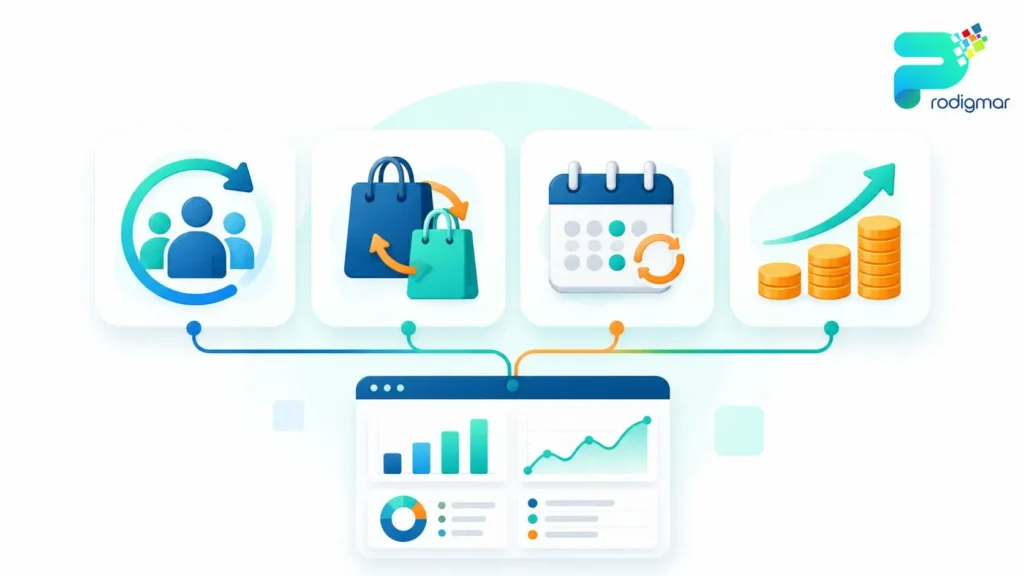
Four useful metrics are customer retention rate, repeat purchase rate, purchase frequency and customer lifetime value.
Customer Retention Rate
Customer retention rate measures the proportion of customers from an existing customer group who remain customers during a defined period.
A commonly used formula is:
Customer Retention Rate = ((Customers at End − New Customers Acquired) ÷ Customers at Start) × 100
For example, suppose a retailer begins a period with 500 customers, ends with 560 and acquires 160 new customers.
The calculation is:
((560 − 160) ÷ 500) × 100 = 80%
This illustrates the standard formula. However, retailers should define what qualifies someone as retained. A customer remaining in a database is not necessarily an active repeat buyer.
For purchase-based retail analysis, cohort retention can provide a more meaningful view.
Repeat Purchase Rate
Repeat purchase rate measures the percentage of unique customers who have placed at least two qualifying orders during a specified observation window.
Repeated Purchase Rate = (Customers With Two or More Purchases ÷ Total Purchasing Customers) × 100
Suppose an online beauty store serves 800 unique purchasing customers during a year, and 240 make at least two purchases.
Its repeat purchase rate is:
(240 ÷ 800) × 100 = 30%
The retailer can then compare performance across acquisition channels, product categories and customer groups.
Purchase Frequency
Purchase frequency shows how often customers buy during a particular period.
Purchased Frequency = Total Orders ÷ Unique Purchasing Customers
If a store receives 1,500 orders from 1,000 unique customers during six months, its purchase frequency is 1.5 orders per customer for that period.
Customer Lifetime Value
A simplified revenue-based estimate is:
Average Order Value × Purchase Frequency × Customer Lifespan
For example, if a customer’s average order is Rs 4,000, they purchase three times annually and remain active for two years, their estimated lifetime revenue is Rs 24,000.
This is an illustrative calculation, not a profit forecast. A more useful commercial model accounts for gross margin, fulfilment costs, returns and retention expenses.
| Metric | What It Measures | Business Use |
|---|---|---|
| Customer retention rate | Customers retained across a period | Understand ongoing customer relationships |
| Repeat purchase rate | Share of customers buying more than once | Evaluate second-purchase performance |
| Purchase frequency | Average orders per customer | Monitor buying behaviour |
| Average order value | Revenue per order | Evaluate order size |
| Customer lifetime value | Estimated value over a relationship | Inform acquisition and retention spending |
| Time between purchases | Typical gap between orders | Plan relevant follow-up timing |
These metrics should use consistent date ranges, customer identifiers and order definitions.
9 Retail Customer Retention Strategies That Encourage Repeat Purchases
1. Improve the Experience After the First Purchase
Customer retention begins before the next marketing message.
If the original purchase involves late delivery, inaccurate product descriptions, confusing returns or poor communication, additional promotions may have limited value.
Retailers should review the complete post-purchase journey, including order confirmation, fulfilment, delivery and customer support.
For example, a furniture retailer could provide clear delivery expectations, assembly guidance and accessible support for customers who have questions after receiving their orders.
Practical action: Review complaints, returns and delivery-related enquiries to identify recurring problems before investing in more promotional messages.
2. Use Email Marketing to Maintain Customer Relationships
Email marketing allows retailers to communicate with customers who have agreed to receive relevant messages.
Rather than sending the same promotion to everyone, retailers can create campaigns based on purchase history, customer interests and buying behaviour.
Useful retail email campaigns include:
- Welcome messages for new subscribers.
- Order-related updates and helpful product information.
- Product care and usage guidance.
- Relevant recommendations following a purchase.
- Replenishment reminders for suitable products.
- New collection announcements.
- Win-back campaigns for inactive customers.
For example, a skincare retailer could share instructions on how to use a purchased product before introducing a suitable complementary item.
The message should provide value beyond a discount.
Practical action: Start with one post-purchase email sequence and evaluate its engagement, conversions, unsubscribes and profitability.
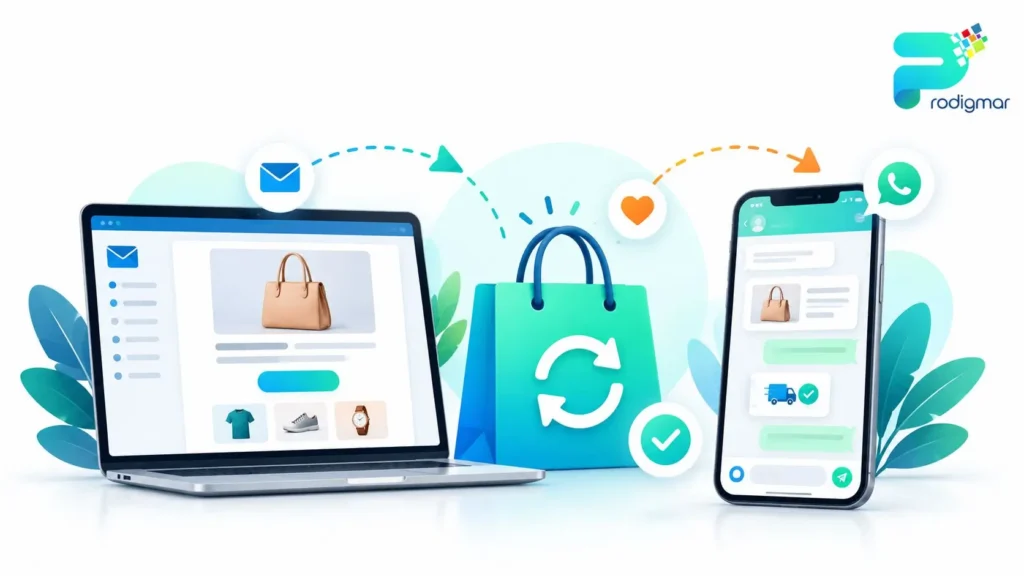
3. Build Permission-Based WhatsApp Follow-Up Campaigns
WhatsApp can be a useful customer communication channel for Pakistani retailers, particularly when customers already use it for product enquiries and order-related conversations.
However, possessing a customer’s phone number does not automatically mean the business has permission to send marketing messages.
Retailers should obtain appropriate opt-in, identify their business clearly, respect opt-out requests and follow applicable WhatsApp Business policies and local requirements.
A practical WhatsApp retention sequence might include:
After delivery: Ask whether the product arrived correctly and provide a support contact.
After a suitable usage period: Share relevant care information or a useful product tip.
When the product may need replacing: Offer a replenishment reminder to customers who agreed to receive it.
When a relevant product becomes available: Share a personalised recommendation rather than a generic mass promotion.
Message timing should depend on the product and customer expectations.
For example, a furniture customer is unlikely to need frequent replacement reminders, while a buyer of regularly consumed personal-care products may benefit from occasional replenishment updates.
Practical action: Establish consent records and a clear unsubscribe process before introducing promotional WhatsApp automation.
4. Segment Customers Based on Purchase Behaviour
Customer segmentation involves dividing customers into meaningful groups so that each receives more relevant communication.
Retailers can start with simple segments:
- First-time customers.
- Customers who recently made a second purchase.
- Frequent purchasers.
- High-value customers.
- Customers who have not purchased within an expected buying cycle.
- Customers interested in specific product categories.
A more structured approach is RFM segmentation, which considers:
Recency: How recently a customer purchased.
Frequency: How often the customer purchases.
Monetary value: How much the customer spends.
For example, a jewellery retailer might communicate differently with customers who regularly purchase gifts and those who bought a single engagement ring.
Both groups can be valuable, but their future needs are different.
Practical action: Create three initial customer segments using available purchase records before investing in complex automation.
5. Introduce a Loyalty Programme With Clear Value
Retail loyalty programmes reward customers for continued engagement or purchases.
Common options include points, repeat-customer discounts, exclusive access, birthday benefits and tier-based rewards.
However, loyalty programmes should not automatically rely on aggressive discounting.
A fashion retailer could provide early access to new collections, while a beauty store might offer points redeemable against future purchases.
The reward must be understandable and financially sustainable.
Before launching a programme, calculate the expected reward cost and evaluate whether it encourages additional profitable purchases rather than merely discounting orders customers would have placed anyway.
Practical action: Test one straightforward loyalty benefit and compare participating customers with a suitable comparison group.
6. Personalise Product Recommendations
Relevant recommendations help customers discover products that complement their previous purchases.
For example:
- A bedding customer might appreciate matching pillowcases.
- A customer purchasing a smartphone could be interested in a compatible protective case.
- A skincare customer may benefit from a complementary product suited to their needs.
- A fashion buyer could receive recommendations based on previously purchased categories.
Personalisation should be based on reliable information, not unsupported assumptions about a customer’s preferences.
It is also important to avoid recommendations that conflict with the customer’s purchase history or current needs.
Practical action: Identify the most common complementary product combinations and test recommendations with a relevant customer segment.
7. Create Replenishment and Reorder Reminders
Some retail categories naturally support repeat purchases because products are consumed or replaced.
Examples include selected beauty products, personal-care items, household supplies and other regularly purchased goods.
A replenishment campaign should consider the likely usage period, quantity purchased and available customer preferences.
For example, if customers commonly reorder a particular product after several weeks, the retailer could test a reminder shortly before that interval.
Avoid assuming every customer consumes products at the same rate.
Practical action: Analyse historical time-between-purchase data and use it to establish a reasonable reminder window.
8. Re-engage Inactive Customers
Win-back campaigns target customers who have not returned within a meaningful period.
A retailer should first define inactivity based on its products.
A customer who has not purchased clothing for three months may behave differently from someone who has not purchased a sofa for three years.
Win-back campaigns might include:
- A reminder about relevant new products.
- A request for feedback.
- A useful product guide.
- A personalised recommendation.
- A carefully evaluated incentive.
Repeatedly messaging unresponsive customers can damage trust and increase marketing costs.
Practical action: Define inactivity by product category and limit campaign frequency.
9. Use Customer Feedback to Improve Retention
Customer feedback can reveal problems that sales reports alone cannot explain.
A retailer may discover that customers appreciate its products but dislike unclear delivery information, inconsistent sizing or difficult returns.
Useful feedback sources include customer support conversations, return reasons, post-purchase surveys and genuine customer reviews.
Collecting feedback is only valuable when the business acts on it.
Practical action: Review the most frequent customer complaints monthly and assign responsibility for resolving the underlying issues.
Email Marketing vs WhatsApp Marketing for Retail Retention
Both channels can support customer retention, but they serve different purposes.
| Consideration | Email Marketing | WhatsApp Marketing |
|---|---|---|
| Best suited to | Detailed content and structured campaigns | Short, timely and conversational messages |
| Content format | Guides, offers, newsletters and product recommendations | Concise updates, support and relevant reminders |
| Automation | Welcome, post-purchase and win-back sequences | Opted-in messaging and approved business workflows |
| Customer experience | Suitable for information customers can revisit | Useful when timely interaction is expected |
| Main risk | Irrelevant emails and poor list quality | Intrusive messaging and consent problems |
| Measurement | Clicks, conversions, unsubscribes and revenue | Responses, qualified actions, opt-outs and conversions |
Neither channel is automatically better.
Retailers should select channels based on customer preferences, consent, product type, operational capacity and measurable results.
For many businesses, a coordinated approach can be useful: email for detailed product education and WhatsApp for selected, timely interactions.
How Customer Segmentation Improves Retention
Sending identical messages to every customer is rarely the most relevant approach.
Segmentation helps retailers match communication with different customer needs.
| Customer Segment | Likely Objective | Example Communication |
|---|---|---|
| First-time buyer | Encourage a successful second experience | Product guidance and relevant recommendations |
| Repeat buyer | Maintain engagement | Early access or complementary products |
| High-value customer | Strengthen the relationship | Personalised service and relevant benefits |
| Replenishment customer | Make reordering convenient | Timely reminder based on purchase history |
| Inactive customer | Understand or renew interest | Feedback request or relevant new arrival |
Start with customer groups that can be identified accurately using available data.
Avoid collecting unnecessary personal information simply to make marketing messages more personalised.
How Retention and Customer Acquisition Work Together
Retention and acquisition are connected through customer economics.
A retailer acquiring customers through paid advertising needs to understand what those customers contribute after their first order.
For example, imagine a store spends Rs 1,200 to acquire a new customer who places a Rs 3,000 order.
If the gross margin is 40%, the first order generates Rs 1,200 in gross profit before fulfilment, payment fees, returns and other expenses.
In this simplified example, the acquisition cost consumes the entire first-order gross profit.
A subsequent purchase may improve the customer’s contribution, but only if the additional margin exceeds the costs of generating and fulfilling that purchase.
This is why retailers should examine:
- Customer acquisition cost.
- First-order contribution margin.
- Repeat purchase rate.
- Repeat-order contribution margin.
- Customer lifetime value.
- Retention campaign expenses.
A higher repeat purchase rate is valuable when it contributes to healthier customer economics, not simply when it increases order volume.
Retailers can connect this analysis with a broader retail marketing strategy to evaluate how customer acquisition, website conversion and repeat purchases support one another.
Customer Retention Strategies for Different Retail Industries
Retention opportunities vary considerably by industry.
Fashion and Apparel
Fashion retailers can focus on size guidance, new collections, complementary products, seasonal relevance and loyalty benefits.
Beauty and Personal Care
Beauty retailers can use product education, replenishment reminders and carefully selected recommendations that reflect customer preferences.
Restaurants and Food Businesses
Restaurants can encourage appropriate return visits through reliable service, convenient ordering, relevant offers and loyalty programmes.
Jewellery
Jewellery retailers may benefit from product care information, milestone-related reminders and personalised service rather than frequent generic promotions.
Furniture and Home
Furniture businesses can focus on delivery satisfaction, after-sales support, care guidance, accessories and long-term customer relationships.
Electronics and Gadgets
Electronics retailers can offer setup guidance, compatible accessories, warranty support and relevant upgrade information.
eCommerce Stores
Online retailers can combine post-purchase email flows, customer segmentation, reorder reminders, loyalty incentives and improved support experiences.
The appropriate strategy depends on purchase frequency, margins, customer expectations and the nature of the product.
How to Build a 30-Day Retail Customer Retention Plan
A retention programme does not need to begin with expensive software or complicated automation.
Retailers can start with a focused four-week implementation plan.

Week 1: Establish Your Baseline
Review the previous six to twelve months of order data, where available.
Identify unique customers, repeat purchasers, average order value and the time between purchases.
Check whether customer records and marketing permissions are accurate.
Week 2: Identify Customer Segments
Create initial groups such as first-time buyers, repeat customers and inactive customers.
Choose one group with a clear opportunity for improvement.
For example, a beauty retailer might prioritise customers who have made their first purchase but have not yet reordered.
Week 3: Launch One Retention Campaign
Introduce a relevant email or permission-based WhatsApp sequence.
Keep the message useful, clearly branded and easy to opt out of.
Use an appropriate comparison group where possible to understand whether the campaign generated additional purchases.
Week 4: Evaluate and Improve
Review campaign performance, customer responses, conversions, revenue and costs.
Compare results against the baseline and identify what should be improved.
Do not judge the programme solely on message opens or clicks.
The goal is to improve customer relationships and profitable repeat purchasing over time.
Common Retail Customer Retention Mistakes
Retail businesses can undermine retention efforts when they prioritise message volume over customer experience.
Common mistakes include:
- Sending promotions without appropriate consent.
- Offering repeated discounts without measuring profitability.
- Treating every customer as though they have identical needs.
- Ignoring delivery problems and customer complaints.
- Measuring engagement without tracking purchases.
- Sending replenishment reminders for products with long replacement cycles.
- Using inaccurate or duplicated customer records.
- Failing to coordinate acquisition and retention reporting.
- Continuing ineffective campaigns without testing improvements.
Avoiding these mistakes can help retailers build a more sustainable approach to repeat purchases.
Frequently Asked Questions About Retail Customer Retention
Effective strategies include improving post-purchase service, using permission-based email and WhatsApp communication, segmenting customers, providing relevant product recommendations and offering worthwhile loyalty benefits. The best combination depends on the retailer’s products, customers and purchasing patterns.
Start by identifying when customers typically make their second purchase. Improve the first-order experience, address customer complaints and test relevant follow-up messages or product recommendations. Measure repeat purchases and profitability to understand what works.
WhatsApp can support retention through customer service, relevant updates and opted-in promotional communication. Businesses should obtain appropriate consent, respect customer preferences and avoid excessive messaging.
There is no universal retention rate that applies to every retail business. Results depend on the product category, purchase cycle, customer cohort and measurement period. Retailers should compare consistent internal metrics over time and use genuinely comparable external benchmarks where available.
Email marketing helps retailers maintain relationships through product education, post-purchase communication, personalised recommendations and relevant reminders. Its effectiveness should be evaluated using conversions, customer behaviour and business outcomes.
Customer retention measures whether customers continue purchasing or maintaining a relationship with a business. Customer loyalty describes a stronger preference or commitment that may influence customers to choose that business repeatedly. A retained customer is not necessarily loyal.
Customer lifetime value helps retailers estimate the value generated by customer relationships. When calculated using realistic margins and costs, it can inform decisions about acquisition budgets, loyalty programmes and retention investments.
Build a More Sustainable Retail Growth Strategy
Customer retention is not simply about encouraging customers to purchase again. It is about delivering consistent value, improving the customer experience and creating relevant opportunities for customers to return.
For retail businesses in Pakistan, email marketing, WhatsApp follow-ups, customer segmentation and loyalty programmes can become useful parts of a wider growth strategy when they are implemented responsibly and measured properly.
The strongest approach connects customer acquisition, conversion, customer experience and repeat purchasing rather than treating them as separate activities.
Get Your Free Retail Growth Audit
Are you spending money to attract retail customers but struggling to generate repeat purchases?
Prodigmar helps retail businesses evaluate their marketing approach, customer journeys and opportunities for more sustainable growth.
Get Your Free Retail Growth Audit

