 Skip to content

Getting people to notice your retail business is important, but getting them through your shop doors is what creates opportunities for in-store sales. If you run a clothing store, beauty shop, electronics outlet, furniture showroom, or grocery business in Lahore, attracting nearby customers should be an important part of your marketing strategy.
Many retailers invest in social media posts and online advertising but struggle to connect those activities with physical store visits. People may see your products online, interact with your content, or search for your business without ever visiting your location.
The problem may not be your products. Potential customers might not know where your shop is, whether it is worth visiting, what offers you provide, or how to reach you. Increasing physical store visits should be part of a wider retail marketing strategy focused on business growth
To increase store footfall in Lahore, you need a practical approach that combines local discovery, relevant promotions, clear directions, and consistent measurement.
This guide explains how to plan these activities and turn local marketing into more opportunities for in-store visits.
Understand Who You Want to Attract
Before spending money on promotions, identify the customers most likely to visit your store.
Your target audience will depend on your products, prices, location, and customer needs. A fashion boutique may attract people looking for seasonal clothing, while an electronics shop may receive visitors comparing specifications, prices, and warranties.
Your location also matters. A store in Gulberg may attract a different mix of customers from a neighbourhood shop in Johar Town, DHA, Model Town, or Township.
Start by answering these questions:
- Who usually purchases from your store?
- Which products attract the most customer interest?
- Where do your existing customers live or work?
- Are customers willing to travel to your location?
- What reasons would encourage someone to visit your shop?
- Which nearby areas are realistic for your business to target?
Use your existing customer records, conversations, enquiries, and sales information to identify patterns.
For example, a furniture showroom might find that customers often visit after comparing products online. A clothing retailer may attract more visits when customers see a new collection or a seasonal promotion.
What to improve: Focus your marketing on people who can realistically visit your store and have a genuine reason to do so.
Improve Your Google Business Profile
When people search for a shop, product, or service nearby, they may use Google Search or Google Maps to discover local businesses.
Your Google Business Profile helps customers understand what your store offers and how to visit it. An incomplete or outdated profile can make it harder for potential customers to choose your location.
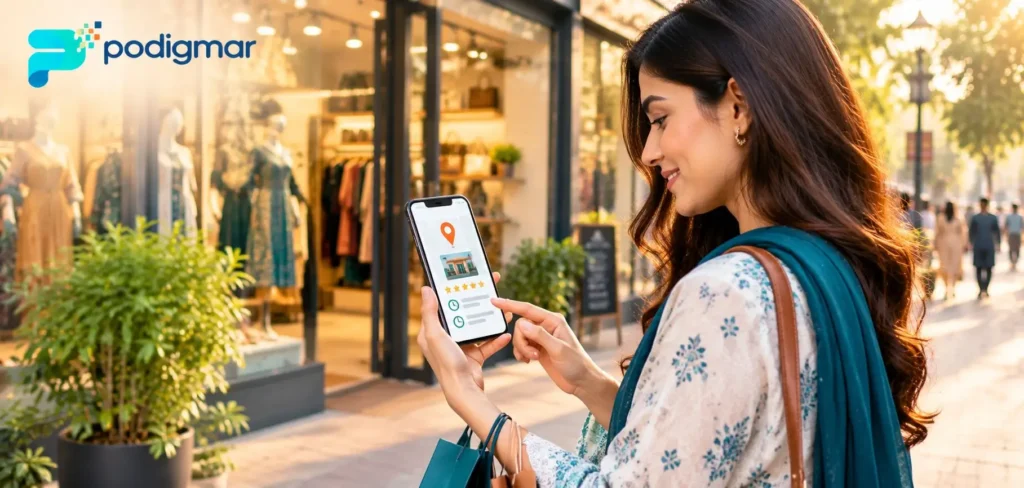
What should your profile include?
Review these important details:
- Correct business name.
- Accurate store address.
- Updated phone number.
- Correct business category.
- Current opening hours.
- Website link, if available.
- Clear photographs of your storefront, interior, and products.
- Relevant business information.
- Accurate map location.
Add photographs that help people recognise your shop when they arrive. A picture of the entrance, signage, and surrounding storefront can make the location easier to identify.
You should also encourage genuine customers to leave reviews after their visits. Respond professionally to feedback and address concerns where appropriate.
Do not create fake reviews or offer incentives in exchange for positive ratings. Focus on building a reliable reputation through real customer experiences.
Practical tip: Check your profile regularly, especially when your opening hours, phone number, or store location changes.
Use Local SEO to Attract Nearby Shoppers
Local SEO helps your retail business appear when people search for relevant products or shops in a particular area.
For example, someone might search for:
- Clothing stores in Gulberg Lahore.
- Furniture shops in Johar Town.
- Cosmetics stores near DHA Lahore.
- Electronics shops in Lahore.
- Bridal wear boutiques in Lahore.
These searches can indicate that someone is actively looking for a place to visit. Local search visibility works best when it supports a complete retail marketing plan for your business.
How to improve your local search visibility
Create useful location-related website content
Your website should explain what you sell, where your store is located, and which customers you serve.
Include your location naturally in relevant page titles, headings, descriptions, and business information. Avoid repeating the same location keyword unnecessarily.
Create dedicated store location pages
If your business has multiple branches, give each location its own useful page. Include the address, opening hours, contact details, photographs, and directions.
Keep business information consistent
Use the same business name, address, and phone number across your website and relevant business listings.
Add useful product and service information
Customers should be able to understand what they can find at your store before travelling there.
Local SEO is a long-term activity. It may take time to improve visibility, so combine it with other marketing methods while monitoring progress.
Make Your Store Easy to Find and Visit
A customer may be interested in your products but decide not to visit if finding your shop seems difficult.
This can happen when your address is incomplete, your map pin is inaccurate, or your marketing content does not explain where the store is located.
Make visiting your business as straightforward as possible.
Include clear directions in your marketing
Add your complete address to your website and relevant social media profiles. Use a working Google Maps location link so customers can open directions easily.
You can also explain useful location details, such as:
- Nearby landmarks.
- Main roads or entrances.
- Available parking information.
- Nearby commercial areas.
- Store opening hours.
- Contact details for location enquiries.
For example, a retailer in Gulberg should make it easy for visitors to identify the correct building or shopping area rather than simply mentioning Lahore.
Use location-focused content
Create short videos showing your storefront, entrance, nearby landmarks, and route to the shop.
These videos can be shared through Instagram Reels, Facebook, and Stories. They help potential customers recognise the location before arriving.
What to improve: Do not assume customers already know where your store is. Give them the information they need to plan a visit confidently.
Create Offers That Give People a Reason to Visit
Local visibility helps customers discover your business, but a relevant offer can give them an additional reason to visit.
Retail promotions should be designed around your products, customer needs, and business margins. A discount is not always necessary. You can also encourage visits through product launches, seasonal collections, demonstrations, and exclusive in-store experiences.
Retail offer ideas
In-store-only promotions
Offer a promotion that customers can redeem when visiting your physical location. Explain the conditions clearly.
New collection launches
Invite customers to visit and explore newly arrived products before promoting them more widely.
Product demonstrations
Electronics, beauty, home, and lifestyle retailers can organise demonstrations that help customers understand products before buying.
Bundle offers
Combine relevant products into a package that provides clear value to customers.
Seasonal campaigns
Plan promotions around relevant shopping periods, such as Eid, wedding season, back-to-school shopping, or seasonal clothing collections.
Customer appreciation offers
Create special offers for existing customers to encourage repeat visits.
Before launching a promotion, calculate its expected cost and check whether the offer supports your sales and profit goals.
Avoid advertising a promotion without explaining its validity, availability, conditions, or redemption process.
Use Meta Ads to Reach People Around Your Store
Facebook and Instagram advertising can help retailers introduce their products and offers to potential customers in relevant locations.
For a physical store, the campaign should do more than generate likes or video views. Its creative and messaging should encourage a useful next action, such as checking the location, contacting the store, or visiting during a promotion.
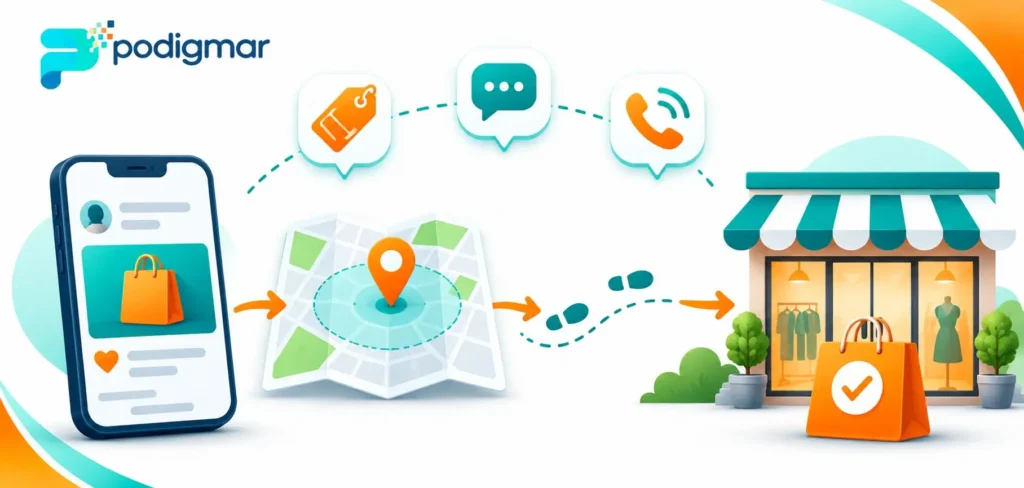
How to plan a local advertising campaign
Choose a relevant location
Use the available location-targeting options to reach people in areas that make sense for your store. Your target area should reflect realistic customer travel distances rather than covering the entire city without a clear reason.
Promote a specific reason to visit
Instead of advertising only your business name, highlight something customers can explore at the store.
Examples include a new collection, product demonstration, seasonal offer, or recently opened showroom.
Use local creative
Show actual products, your storefront, and useful location information. Mention the area or neighbourhood where the store operates.
Include a clear call to action
Tell people what to do next. Depending on the campaign, this might be to view directions, contact the business, or visit the store.
Monitor campaign results
Track enquiries, direction requests where available, offer redemptions, and other indicators of physical visits.
Remember that an advertising platform’s reported reach or engagement does not automatically represent actual store visits. Compare campaign data with your own business records.
If your campaigns generate clicks but struggle to produce purchases, review why your Meta Ads get clicks but no sales.
Use Social Media to Build Local Awareness
Your social media content should help people discover your store and understand why they should visit.
Many retailers focus heavily on product photographs without showing the actual shopping experience. Potential customers may want to see the store, explore available collections, understand product quality, or learn about current offers before deciding to visit.
Create content that answers these questions.
Content ideas for physical retailers
- Store tours showing the interior and product displays.
- New arrivals and collection previews.
- Short product demonstrations.
- Videos showing how products look or work.
- Customer feedback and genuine experiences.
- Behind-the-scenes preparation.
- Seasonal promotions.
- Staff introductions and shopping assistance.
- Directions and parking information.
For example, a Lahore clothing boutique could publish a Reel showing its latest collection, followed by a Story explaining the store location and opening hours.
Use location tags where relevant and write captions that clearly explain where customers can find your shop.
The goal is to connect online discovery with an actual store visit.
Build Partnerships with Nearby Businesses
Your neighbouring businesses can provide opportunities to reach people who already shop in your area.
Consider partnerships with businesses that serve a similar audience without directly competing with your products.
For example:
- A clothing boutique could collaborate with a nearby beauty salon.
- A furniture showroom could work with an interior design business.
- A bakery could partner with a nearby event-planning business.
- A sportswear retailer could collaborate with a local fitness studio.
Possible activities include joint promotions, shared events, product demonstrations, and cross-promotion through social media.
Choose partnerships that offer genuine value to both businesses. Agree on the promotion, responsibilities, timing, and how results will be measured.
Local partnerships can help your store reach new audiences without depending entirely on paid advertising.
Measure Whether Your Marketing Generates Store Visits
A campaign may receive thousands of views and still produce very few physical visits. That is why retailers should measure business activity rather than relying only on social media engagement.
Start with simple tracking methods that your team can maintain.
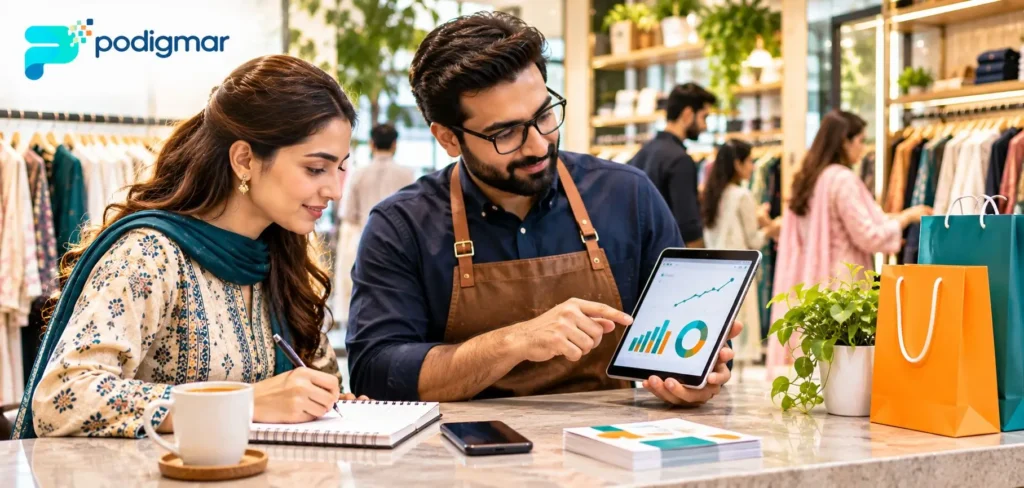
Store footfall measurement methods
Daily visitor count
Record how many people enter your store each day. Compare the numbers before and after a campaign.
Offer redemption
Give a campaign-specific offer or code to customers and record how many people redeem it in-store.
Customer source question
Ask customers a simple question: “How did you hear about our store?”
Possible answers could include Google Maps, Instagram, Facebook, a friend, or a nearby advertisement.
Campaign-specific tracking
Use separate links, offer codes, or contact methods for different promotions so you can identify which campaigns generate interest.
Sales comparison
Compare store visits with completed transactions to understand whether additional footfall is translating into sales.
Important retail metrics
| Metric | What it tells you |
|---|---|
| Daily store visitors | How many people enter your store. |
| Direction requests | Whether people are looking for directions through available platforms. |
| Calls and enquiries | Whether potential customers are contacting you. |
| Offer redemptions | How many customers respond to a specific promotion. |
| Store conversion rate | How many visitors complete a purchase. |
| Average transaction value | How much customers spend per transaction on average. |
| Campaign cost per visit | How much marketing spend is associated with each measured visit. |
For example, if a promotion costs PKR 15,000 and you record 50 visits associated with that promotion, the illustrative campaign cost per measured visit is PKR 300.
This is a simple calculation, not proof that every visit was caused by the campaign. Use a consistent tracking method and compare results with your normal store activity.
Follow a 30-Day Store Footfall Improvement Plan
You do not need to launch every marketing activity at once. Start with the basics, improve local visibility, promote a clear reason to visit, and measure the response.
Here is a practical 30-day starting plan.
1st Week : Fix your local presence
- Review your Google Business Profile.
- Check your address, phone number, and opening hours.
- Verify your Google Maps pin.
- Add clear storefront and product photographs.
- Update your website with accurate store information.
- Prepare a simple baseline record of daily visitors.
2nd Week : Improve your content and directions
- Create a short store tour.
- Publish product-focused Reels and Stories.
- Share your location and directions.
- Highlight important customer information.
- Prepare one clear offer or reason to visit.
Week 3: Launch a local promotion
- Choose an offer that supports your business goals.
- Create Facebook and Instagram campaign content.
- Target relevant local audiences.
- Include clear location information.
- Use a campaign-specific code or tracking method.
Week 4: Measure and improve
- Compare store visitors with your baseline.
- Review enquiries and offer redemptions.
- Identify which content attracted relevant customers.
- Calculate campaign costs.
- Review customer feedback.
- Decide which activities to continue, improve, or stop.
After 30 days, use the results to plan your next campaign. Continue testing rather than assuming that one promotion will work equally well for every product or customer group.
Frequently Asked Questions
Improve your Google Business Profile, use local SEO, publish location-focused social media content, promote relevant in-store offers, and make directions easy to access. Measure store visits and campaign responses to identify which activities work best.
An accurate Google Business Profile can help people discover your business through Google Search and Maps. Complete your business information, add genuine photographs, maintain correct opening hours, and provide an accurate location.
Yes. Retailers can use Meta Ads to promote products, events, and in-store offers to relevant local audiences. However, campaign results should be measured through enquiries, offer redemptions, and store visit records rather than engagement alone.
In-store promotions, seasonal discounts, new collection launches, product demonstrations, and relevant bundles can give customers a reason to visit. Choose offers that match your audience and protect your profit margins.
Record daily visitor numbers, ask customers how they discovered your store, and track campaign-specific offer redemptions. Compare these results with your normal store activity before and after each campaign.
Not necessarily. Your target area should reflect your products, customer locations, store accessibility, and realistic travel distances. Start with relevant nearby areas and expand when your results justify it.
The time required depends on your location, audience, competition, offer, and marketing activity. Some promotions may generate interest quickly, while local search visibility and brand awareness generally require consistent effort.
Turn Local Visibility into More Store Visits with Prodigmar
Attracting more customers to your physical store requires more than posting regularly or running occasional advertisements. You need a connected strategy that helps people discover your business, understand your offers, find your location, and feel confident about visiting.
At Prodigmar, we help retail businesses develop practical marketing strategies that connect digital visibility with business growth. From local SEO and Google Ads to Meta Ads, social media, and conversion optimisation, we focus on marketing activities that support measurable business goals.
Whether you operate a clothing boutique, beauty store, electronics shop, furniture showroom, or another retail business in Lahore, the right strategy can help you reach more relevant customers.
Want to Attract More Customers to Your Retail Store?
Contact Prodigmar to discuss your business goals and explore opportunities to improve your retail marketing results.
Contact Prodigmar

