 Skip to content

A retail marketing strategy in Pakistan should answer four questions: Who are your customers? Why should they choose you? How will you reach them? How will you measure success?
Without clear answers, marketing can become a collection of posts, promotions and invoices. Your team stays busy, but nobody knows what actually brings customers through the door.
This guide explains how to connect your audience, budget, channels and customer experience into a practical plan for store visits, online orders and repeat business.
What Is a Retail Marketing Strategy?
A retail marketing strategy defines how your business will attract customers, help them buy and encourage them to return. It connects your products, positioning, pricing and sales channels.
Retail marketing includes online and in-store activity, as Shopify’s retail marketing guide explains.
Your strategy sets the direction. Your marketing plan lists the actions, deadlines and responsibilities. Posting a product video is a tactic; deciding which customer problem that video should solve belongs to the strategy.
Understand Your Customers and Their Questions
“Everyone in Pakistan” is too broad to guide useful marketing.
Define customers by their location, needs, buying occasion and spending constraints. A Lahore furniture showroom and an online jewellery store need different messages and buying journeys.
Start with evidence from your business:
- Questions customers ask in-store or through WhatsApp.
- Reasons shoppers abandon an enquiry.
- Common delivery, sizing or warranty concerns.
- Products customers return or exchange.
- Search queries in Google Search Console.
Turn repeated questions into useful content. A furniture buyer may need measurements and material details. A clothing shopper may need accurate sizing and exchange information.
Choose English, Urdu or a mix based on the language your customers actually use. Let customer conversations guide that decision.
Set a Clear Goal and Explain Your Value
Choose one primary business objective: more completed orders, qualified enquiries, store visits or repeat purchases.
Record your starting point, choose a review date and assign responsibility. Define a qualified enquiry so your team can distinguish a suitable prospect from a casual question.
Then explain why someone should choose your business. Replace vague claims such as “best quality” with details you can support: materials, product specialisms, delivery coverage or a clear service process.
Keep that message consistent across your website, advertisements and store.
Followers can help you understand reach. They cannot pay your electricity bill. Connect marketing goals to outcomes your business can use.
Choose Channels That Match the Buying Journey
Give each channel a specific job rather than launching everywhere at once.
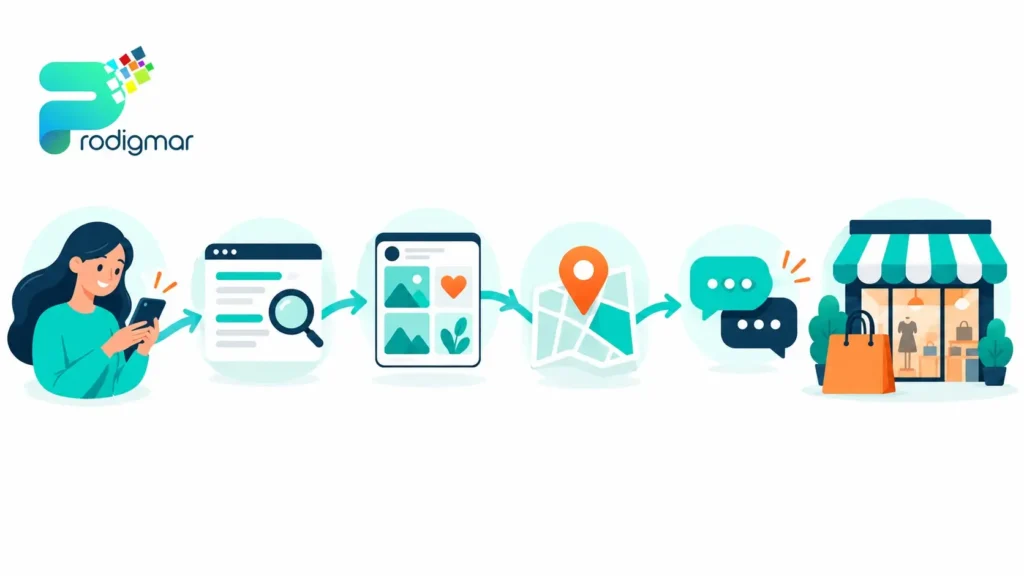
| Channel | Potential Role | Useful Measure |
|---|---|---|
| SEO | Help shoppers find products and buying advice | Relevant organic enquiries and purchases |
| Google Search Ads | Reach people searching for related products | Acquisition cost and completed sales |
| Facebook and Instagram | Demonstrate products and generate interest | Qualified enquiries and purchases |
| Google Business Profile | Make local store information accessible | Calls, direction requests and website visits |
| Email and WhatsApp | Support enquiries and repeat business | Resolved enquiries and repeat orders |
Answer Buying Questions Through SEO
Publish accurate product information and useful guides. Google’s people-first content guidance encourages original, reliable content that helps readers.
Explain dimensions, uses and limitations clearly. Add original photographs or demonstrations where they help customers decide. Explore Prodigmar’s SEO services for support connecting this content to your website.
Match Advertising to the Destination
Google says Search Network ads can appear near search results for searches related to your keywords.
Send visitors to a relevant product or category page. A specific advertisement should not leave customers searching your entire website again.
For social campaigns, show the product in context and give viewers one clear next step. Prodigmar’s Google Ads services and Facebook Ads services support these channels.
Connect Online Discovery With Your Store

For an eligible local business, maintain an accurate Google Business Profile. Google recommends complete business information, updated hours, photographs and review responses in its local visibility guidance.
Show your address, contact details, opening hours and genuine access information on your website. Explain delivery and collection options where available.
Start with areas you can serve reliably. Expand beyond Lahore when customer demand and operational capacity support it.
Remember: a direction request shows interest, not a confirmed store visit or sale.
Get Your Free Retail Growth Audit
Getting attention but too few enquiries? Share your website or social profile, location and main challenge with Prodigmar. Request a review to help identify your next priorities.
Request Your Free Retail Growth AuditMake Buying Easier Before Increasing Traffic
Check your customer journey on a phone. Can someone understand the product, find the price and complete the next step?
Include relevant specifications, clear photographs, availability, delivery charges and return terms. Avoid promises your team cannot fulfil.
Test checkout, enquiry forms and contact buttons. Confirm that your team receives submissions and knows who should respond.
For WhatsApp enquiries, ask only for details you need. Buying a shirt should not feel like applying for a passport.
Plan Your Budget Around Business Economics
There is no universal retail marketing budget for Pakistan. Your margins, cash flow, stock and objectives should guide spending.
Separate advertising costs from content production, website improvements, staff time and agency fees.
Before setting an acquisition budget, review what an order leaves after product costs and relevant variable expenses, such as packaging, payment processing and delivery subsidies.
That remaining amount must also contribute to overheads and profit. It is not automatically your advertising allowance.
Choose a sustainable test budget and a clear audience. Agree what evidence would justify continuing, changing or stopping each campaign.
Build Repeat Business
Start retention with dependable service and helpful communication.
Consider product-care advice, requested restock notifications or relevant new arrivals. Ask permission before sending promotional messages and provide an easy way to stop them.
Adapt your approach to the category. Fashion customers may value sizing guidance; furniture buyers may need care instructions; restaurant customers need current menus and ordering details.
These are planning examples, not promised results. Use actual customer feedback to decide what deserves your time.
Follow a Practical 90-Day Plan

Treat the first 90 days as an implementation and learning period, not a guaranteed results deadline.
| Period | Priority | Key Actions |
|---|---|---|
| Days 1–30 | Build foundations | Review customer questions, choose goals, check tracking and improve priority pages |
| Days 31–60 | Launch focused activity | Publish useful content, test selected campaigns and improve follow-up |
| Days 61–90 | Refine using evidence | Review enquiry quality, completed sales and costs; adjust priorities |
Assign an owner to every task. Content, advertising and sales follow-up should support the same objective.
Measure Outcomes Beyond Clicks
Track qualified enquiries, completed orders, new customers and repeat purchases alongside traffic.
Use consistent definitions:
- Customer acquisition cost: defined acquisition costs divided by new customers acquired.
- Average order value: sales revenue divided by orders, using a consistent refund policy.
- Return on ad spend: attributed revenue divided by advertising spend; this does not measure profit.
Record WhatsApp clicks, conversations and sales separately. Compare platform reports with order records rather than adding overlapping revenue claims together.
Review the dashboard with your sales team each month. Ask which enquiries became customers, what objections delayed purchases and whether stock or delivery problems affected results. Use those answers to improve your next campaign instead of judging performance from clicks alone.
Build Your Retail Growth Plan With Prodigmar
Need help choosing priorities? Prodigmar’s retail marketing services in Pakistan connect SEO, advertising, content and website improvements.
Bring your biggest growth challenge to a focused conversation about your next steps.
Request Your Free Retail Growth AuditFrequently Asked Questions
It is a plan for reaching suitable customers, encouraging purchases and building repeat business. It should reflect your products, margins, locations, delivery coverage and customer needs.
Choose based on how customers discover and buy your products. Fix missing store information or weak product pages before paying to attract more visitors.
Base spending on margins, cash flow and objectives. Include advertising, content and management costs. Start with a sustainable test budget and adjust using actual sales evidence.
Keep local business information accurate, explain what customers can find in-store and promote relevant offers. Compare online interest with actual visits and sales.
Timing depends on the channel, competition, buying cycle and execution. Advertising can generate visits after launch, while SEO requires ongoing work. Neither guarantees purchases within a fixed period.


