Prodigmar’s 7 Hidden Performance Max Secrets to Dominating Google Ads in 2026


Introduction: The PMax Paradox (What Most Agencies Miss)
Performance Max (PMax) campaigns have been touted as the future of Google Ads, transforming how businesses connect with their customers. However, despite its immense potential, many companies struggle to see significant results. The reason? Most businesses rely on Google’s default automation, assuming it’s enough to generate substantial returns. The truth is, PMax requires a more thoughtful approach—strategic setup and constant management are crucial. Without this, even the most sophisticated advertising tools will fall short.
Prodigmar has unlocked the hidden potential of Performance Max through advanced strategies, and now, we’re revealing the 7 secrets that have allowed us to achieve extraordinary results for our clients. These are not common strategies; they are proprietary insights that can truly help businesses dominate Google Ads in 2026.
The 7 Hidden Performance Max Secrets
Secret 1: The Zero-Based Audience Signal Strategy

To kick off your PMax campaign, you can’t simply upload customer lists and expect optimal results. Instead, consider adopting the Zero-Based Audience Signal Strategy, a game-changing tactic that focuses on creating hyper-targeted custom segments. These segments are not just based on basic behaviors; they are based on specific interactions, such as users who visited certain product pages but didn’t complete a purchase.
This approach introduces high-intent signals to the algorithm, driving more precise targeting. By continually updating these audience signals with the latest data trends (such as the past 7 days of activity), you ensure that PMax is always working with fresh, high-quality insights. This keeps the campaign constantly aligned with your business objectives.
Why it works: By feeding Google Ads new, unique signals, your campaigns become smarter and more effective, focusing on users who are likely to convert.
Secret 2: Budget Segmentation for Scalability
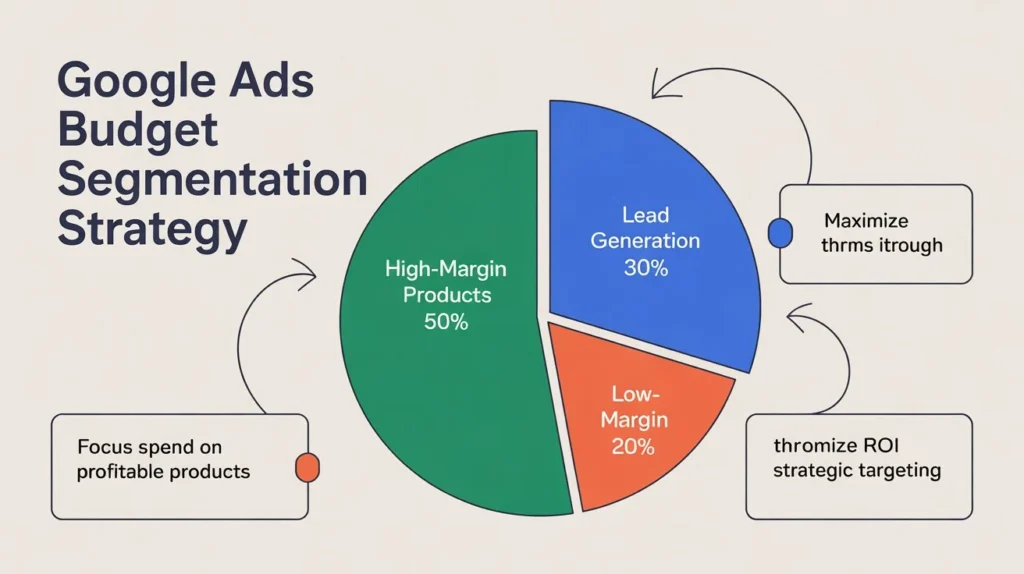
If you’ve been running Google Ads with a single campaign budget, you’re likely losing out on scaling opportunities. Budget segmentation is a powerful tool that allows you to divide your PMax campaigns based on business goals or product margins. For example, consider creating one PMax campaign for high-margin products and another for lead generation with lower volume.
This strategy prevents low-margin products from draining the budget that’s meant for your most profitable goals. By customizing how funds are allocated across different product lines, you ensure that your marketing budget is being used in the most effective way possible.
Why it works: Properly segmented budgets ensure that high-value campaigns aren’t underfunded while low-margin products don’t eat into high-ROI opportunities.
Secret 3: The Asset Group Exhaustion Test

Asset groups are a core component of any PMax campaign. However, Google Ads often exhausts their creative potential if not consistently monitored. Treat each asset group like a mini-ad set. Once an asset group’s performance plateaus, it’s time to pause and refresh it with new assets.
The Asset Group Exhaustion Test involves setting specific metrics (such as a CTR below a certain threshold) and monitoring these performance markers regularly. When these criteria are met, it’s time to pause that asset group and introduce new creative. This ensures your PMax campaign never lacks fresh material to engage your audience.
Why it works: Asset groups can become stale if left unchecked. Constantly refreshing them prevents the campaign from becoming repetitive and boosts performance.
Secret 4: Negative Keyword Exclusion via the Account Manager Hack

PMax lacks built-in functionality for managing negative keywords, which can lead to unwanted clicks and wasted spend. But don’t worry—there’s a workaround. The secret is leveraging the Google Account Manager or Google Support Channel to implement granular negative keyword lists at the account level. This approach ensures that PMax campaigns respect these exclusions, even when the campaign itself doesn’t offer native negative keyword control.
By proactively building a comprehensive negative keyword list before launching, you prevent your ads from appearing in irrelevant searches. For instance, a robust list could easily span 400+ words, ensuring that PMax focuses only on relevant traffic.
Why it works: Without the right negative keyword strategy, PMax campaigns can waste a lot of budget on irrelevant searches. This hack allows you to control what Google Ads avoids.
Secret 5: Integrating Off-Platform Signals (CRM Data Feed)
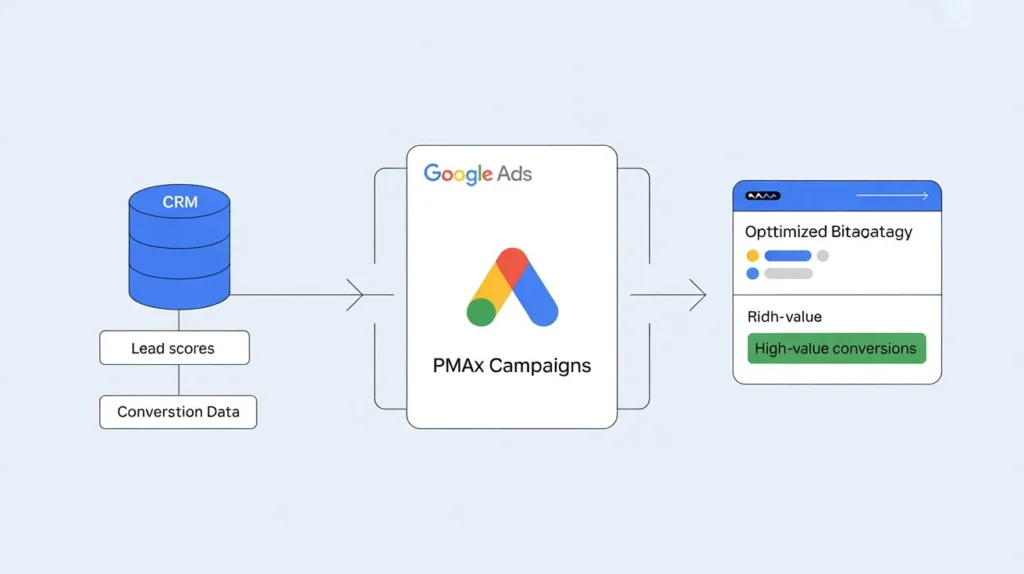
To truly optimize PMax, you must move beyond basic conversion tracking. Enter the Off-Platform Signal Strategy, which focuses on feeding CRM data (like lead quality scores) into your campaigns. By integrating this valuable data into PMax, you help the algorithm learn which conversions lead to the most revenue, rather than just counting volume.
Utilizing tools like API integrations to sync offline conversion data in real time is one of the most effective strategies to enhance performance. For instance, syncing CRM data with PMax ensures that Google Ads targets leads that are more likely to generate high revenue.
Why it works: PMax becomes much more effective when it knows which conversions actually bring in revenue, not just traffic.
Secret 6: Creative Asset Group Isolation for Control
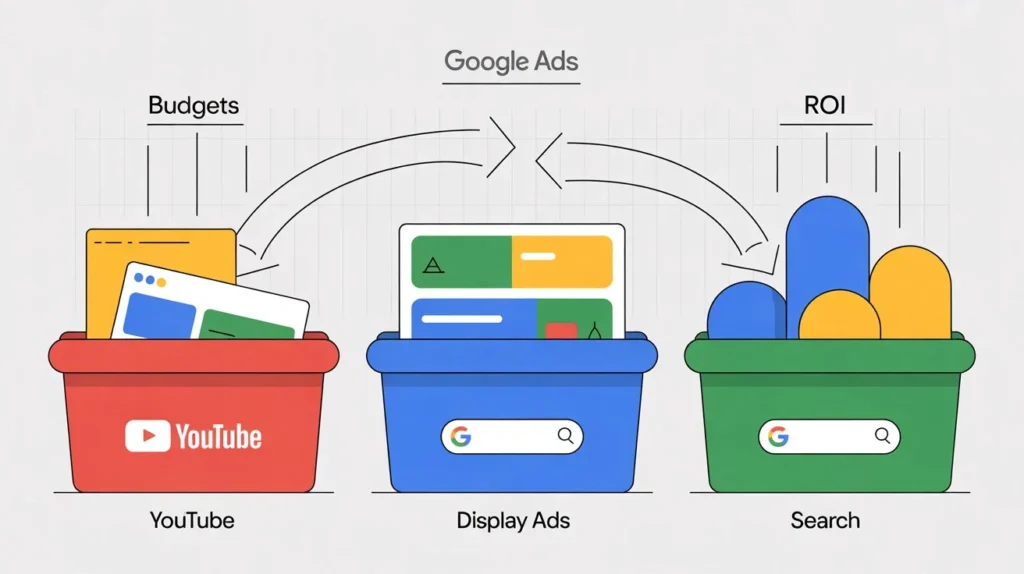
In an ideal PMax campaign, you want to have control over where your ads are placed. One way to do this is by isolating creative asset groups. For example, create an asset group with only video assets to target YouTube placements. Another asset group could be dedicated to Display Ads, allowing you to control how and where your ads appear.
By isolating these assets, you direct budget towards high-ROI channels like YouTube and Display, ensuring your ads are placed in the most effective environments. This strategy also allows you to protect your brand’s image and message by controlling the type of content that is associated with it.
Why it works: Dedicated asset groups give you greater control over where your ads show up, ensuring better quality placements and higher ROI.
Secret 7: The Bidding Strategy “Reset” (The Algorithm Kickstart)
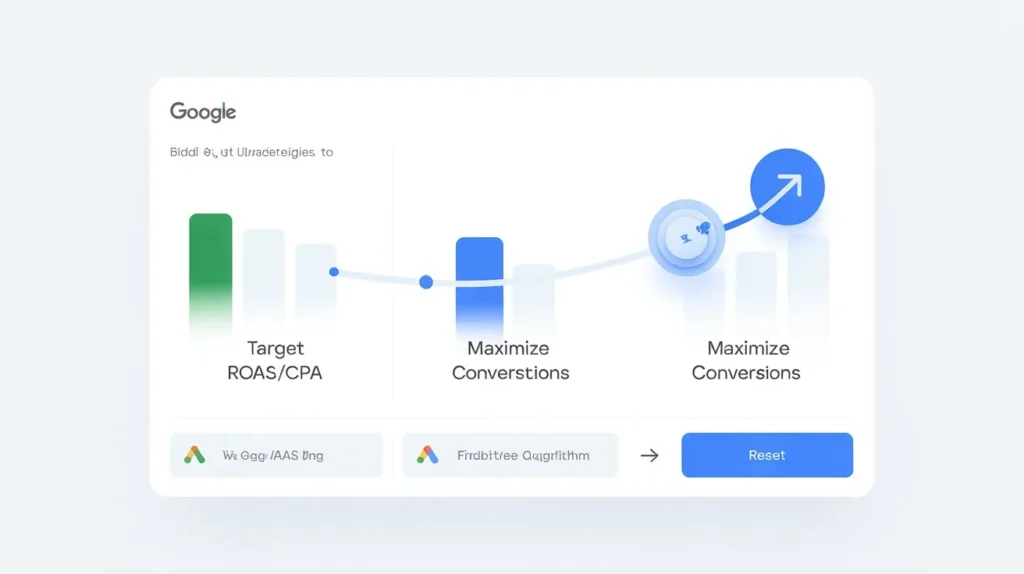
Sometimes, PMax campaigns hit a performance plateau. When this happens, a bidding strategy reset is often the best solution. Switching from Target ROAS or CPA to Maximize Conversions or Maximize Conversion Value for a short period (such as 7 days) can kickstart the algorithm with fresh data. This temporary reset helps inject new life into a stagnant campaign by teaching PMax to refocus on new learning patterns.
The key here is timing—switching strategies at the right moment gives your campaign a boost without disrupting long-term goals.
Why it works: A bidding reset can stimulate the algorithm to explore new patterns, bringing fresh insights to drive better performance.
Optimizing CTR in Performance Max Campaigns:
CTR (Click-Through Rate) is one of the key performance indicators (KPIs) that can make or break your Google Ads campaigns. It measures the ratio of clicks to impressions—how often people click your ad when they see it. A higher CTR typically indicates that your ads are engaging and relevant to the audience they’re being shown to.
If you’d like to dive deeper into strategies for improving CTR in your Performance Max campaigns, download our detailed guide by clicking the link below:
Conclusion: Why You Need an Agency for PMax Dominance

To effectively leverage Performance Max, you need more than just basic setup and automation. Managing PMax campaigns requires constant optimization, advanced strategies, and expert knowledge of Google’s system. These 7 secrets are just the tip of the iceberg, but implementing them requires dedicated expertise—something in-house teams often lack.
The Prodigmar Difference is clear: Don’t settle for mediocre results. By partnering with an agency that understands the ins and outs of PMax campaigns, you can dominate Google Ads and see real returns on your investment.
Take Action Now: Book a free PMax audit with us today, and let’s get started on optimizing your campaigns for success in 2026.
Frequently Ask Questions
What is Performance Max in Google Ads and why is it important?
Performance Max is a Google Ads campaign type designed to maximize conversion value across all of Google’s channels—Search, YouTube, Display, and more—using machine learning and automation. It’s important because it allows advertisers to reach a wider audience with fewer manual adjustments, leveraging data to optimize performance across Google’s entire network. However, to truly dominate Google Ads in 2026, Performance Max campaigns must be set up strategically and monitored continuously for optimal results. Prodigmar's 7 secrets unlock the full potential of this powerful tool.
How do I create custom audience segments in Performance Max?
Why is budget segmentation important for Performance Max campaigns?
How can I optimize asset groups in Performance Max campaigns?
What is the importance of using offline CRM data in Performance Max?
Integrating offline CRM data into Performance Max is essential for improving conversion quality. By feeding lead quality scores, conversion data, and customer behaviors from your CRM into Google Ads, you provide PMax with deeper insights into which conversions lead to actual revenue. This allows Google’s algorithm to prioritize higher-value leads rather than just focusing on volume. With this data, you can optimize the bidding strategy for profit, not just conversions, ensuring more meaningful and profitable outcomes from your campaigns.