How to Set Up a Paid Search Advertising Campaign That Converts
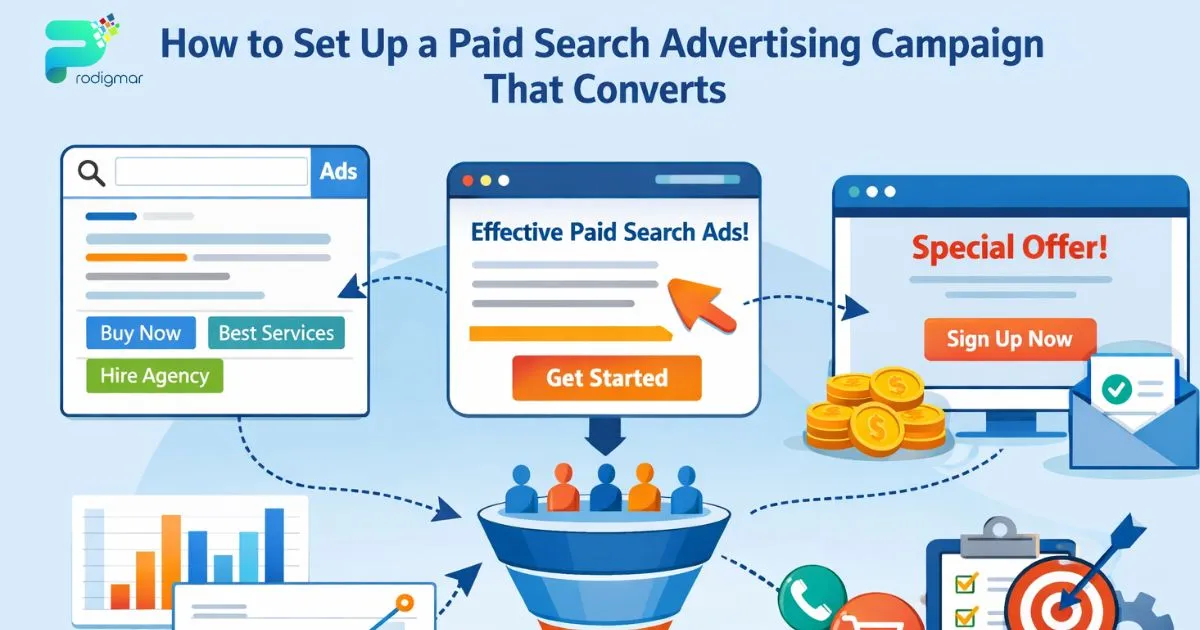
Paid search advertising can feel simple on the surface. You choose keywords, write ads, set a budget, and wait for sales. In reality, most paid search campaigns fail because they skip strategy and focus only on spending.
A paid search advertising campaign should not burn money. It should attract high-intent users, guide them smoothly, and convert them with purpose. This guide explains how to build a paid search campaign that converts consistently—without guesswork or gimmicks.
Paid search advertising allows businesses to display ads on search engines like Google and Bing when users search for specific keywords. You only pay when someone clicks your ad, which makes this model measurable and performance-driven.
Platforms such as Google Ads run auctions behind the scenes. Advertisers bid on keywords, but money alone does not win. Search engines also consider relevance, ad quality, and landing page experience.
According to Google’s official documentation, ads with higher relevance and better user experience often pay less per click than poorly structured campaigns (Google Ads Help).
How Paid Search Differs from Organic Search
Organic search relies on long-term SEO efforts. Paid search delivers immediate visibility.
The key difference lies in control and speed. Paid search lets you choose exactly when and where your ads appear. Organic traffic builds over time and depends heavily on search engine algorithms.
Smart brands use both. Paid search drives fast, high-intent traffic, while SEO builds long-term authority.
Setting Clear Goals Before Launching Your Campaign
Many campaigns fail before they even start. The reason stays simple: unclear goals.
Every paid search advertising campaign needs a defined purpose. Without one, optimization becomes impossible.
Are you aiming for leads, phone calls, demo bookings, or online sales? Each goal requires a different setup.
Defining Conversions, Budgets, and Success Metrics
Conversions should match real business outcomes, not vanity clicks.
Common conversion goals include:
Form submissions
Purchases
Calls
Newsletter sign-ups
Budgets must align with expected returns. Google recommends starting with a budget that allows at least 20–30 clicks per day for meaningful data collection.
Track metrics that matter:
Cost per conversion
Conversion rate
Return on ad spend (ROAS)
Clicks alone do not pay the bills.
Keyword Research for High-Intent Paid Search Campaigns
Keyword research sits at the heart of every converting campaign. The wrong keywords attract the wrong audience.
Paid search works best when you target intent, not curiosity.
Tools like Google Keyword Planner and SEMrush help identify search volume, competition, and commercial intent.
Choosing Keywords That Signal Buying Intent
High-intent keywords often include:
“Buy”
“Pricing”
“Hire”
“Service”
“Near me”
For example:
“Paid search advertising agency” converts better than “what is paid search.”
Avoid overly broad keywords. They drain budgets fast and deliver low conversion rates.
Long-tail keywords usually convert better because they reflect clearer intent.
Structuring Your Paid Search Campaign the Right Way
Campaign structure affects performance more than most advertisers realize.
A clean structure improves relevance, Quality Score, and control over spend.
Campaigns, Ad Groups, and Keyword Organization
Use this hierarchy:
Campaign: Budget and targeting level
Ad Groups: Tightly themed keyword groups
Ads: Highly relevant to each keyword set
Avoid dumping hundreds of keywords into one ad group. Google explicitly recommends grouping closely related keywords to improve ad relevance and Quality Score.
A tidy structure saves money and boosts performance.
Writing Paid Search Ads That Attract Clicks and Conversions
Ads should speak directly to user intent. Clever wording helps, but clarity converts.
People scan ads quickly. You have seconds to earn attention.
Crafting Headlines and Descriptions That Sell
Strong ads include:
Clear value propositions
Direct benefits
A clear call to action
Example:
“Launch a Paid Search Advertising Campaign That Actually Converts”
Avoid vague claims. Focus on outcomes, not buzzwords.
Google Ads data shows that ads closely aligned with keyword intent achieve higher click-through rates and Quality Scores.
Designing Landing Pages That Turn Clicks into Leads
Sending paid traffic to a generic homepage kills conversions.
Landing pages must continue the conversation started by the ad.
Matching Ad Messaging with Landing Page Experience
Consistency builds trust. If your ad promises “Free Paid Search Audit,” the landing page should repeat that promise clearly.
High-converting landing pages include:
Clear headlines
Simple forms
Fast loading speed
Mobile optimization
According to Google’s Page Experience guidelines, slow pages increase bounce rates and reduce conversion potential.
Setting Bids, Budgets, and Targeting Options
Bid strategies influence both cost and performance. Choose them carefully.
Google Ads offers manual and automated bidding options. Each works best in different scenarios.
Balancing Cost-Per-Click and Conversion Goals
Start with manual or enhanced CPC if data remains limited. Move to automated strategies like Target CPA once conversions stabilize.
Target users based on:
Location
Device
Time of day
Audience intent
Refined targeting prevents wasted spend and improves return.
Tracking Performance and Measuring What Matters
If you cannot measure it, you cannot improve it.
Conversion tracking forms the backbone of every paid search advertising campaign.
Using Conversion Tracking and Analytics Correctly
Set up:
Google Ads conversion tracking
Google Analytics 4 integration
Track actions that generate revenue, not just clicks.
Google’s documentation stresses the importance of accurate tracking to allow smart bidding algorithms to function properly.
Bad data leads to bad decisions. No exceptions.
Optimizing Your Paid Search Campaign for Better Results
Optimization keeps campaigns profitable over time.
Set a weekly review schedule. Small adjustments add up.
Improving Quality Score and Reducing Wasted Spend
Improve Quality Score by:
Tightening keyword relevance
Refining ad copy
Enhancing landing page experience
Add negative keywords regularly. They block irrelevant searches and protect your budget.
According to Google Ads best practices, higher Quality Scores reduce CPC and improve ad visibility.
Need Expert Paid Search Tips? Message Prodigmar on Instagram
Want real-world paid search advertising advice tailored to your business goals from our experts? Follow us on Instagram and leave a comment to get your FREE Paid Search Optimization Report!
https://www.instagram.com/prodigmaroffical
Common Paid Search Mistakes That Hurt Conversions
Most mistakes happen early—and cost money fast.
What Most Businesses Get Wrong Early On
Common issues include:
Targeting broad keywords
Ignoring landing page quality
Chasing clicks instead of conversions
Skipping negative keywords
Paid search rewards discipline, not impatience.
When to Hire a Paid Search Advertising Agency
Managing paid search requires time, testing, and expertise. Many businesses reach a point where internal efforts stall.
That moment signals the need for expert help.
How Prodigmar Helps Brands Scale Paid Search Profitably
Prodigmar builds data-driven paid search advertising campaigns focused on conversions, not just traffic.
Our team:
A successful paid search advertising campaign does not rely on luck. It relies on structure, intent, clarity, and continuous improvement.
When goals stay clear, keywords stay focused, ads stay relevant, and tracking stays accurate, paid search becomes one of the most powerful growth channels available.
Build smart. Optimize often. Spend with purpose.
A paid search advertising campaign shows ads on search engines when users search for specific keywords. You pay only when someone clicks, making it a highly measurable and intent-driven marketing channel.
Paid search campaigns can generate traffic immediately, but consistent conversions usually appear within 2–4 weeks. This period allows enough data for optimization and smarter bidding decisions.
Focus on high-intent keywords that signal buying behavior, such as “pricing,” “hire,” or “service near me.” Avoid broad informational terms that attract clicks without conversion intent.
Landing pages continue the promise made in your ad and guide users toward conversion. Clear messaging, fast load speed, and mobile optimization significantly improve conversion rates.
Hire an agency when ad spend increases, results plateau, or in-house expertise becomes limited. A professional agency helps reduce wasted spend and scale campaigns profitably.
 Sending paid traffic to a generic homepage kills conversions.
Landing pages must continue the conversation started by the ad.
Sending paid traffic to a generic homepage kills conversions.
Landing pages must continue the conversation started by the ad.
 Want real-world paid search advertising advice tailored to your business goals from our experts? Follow us on Instagram and leave a comment to get your FREE Paid Search Optimization Report!
https://www.instagram.com/prodigmaroffical
Want real-world paid search advertising advice tailored to your business goals from our experts? Follow us on Instagram and leave a comment to get your FREE Paid Search Optimization Report!
https://www.instagram.com/prodigmaroffical