Starting a startup is a bit like opening a restaurant in a city of ten million people, with no sign outside and no listing on any map. The food might be great. Nobody will ever know.
That is the real problem digital marketing solves. It is not about “going viral” or chasing trends. It is about building the systems that help the right people find you, trust you, and eventually buy from you — without burning through your entire runway in the process.
This guide walks through a complete digital marketing strategy for startups in 2026: how much to budget, which channels to prioritise, and how to avoid the mistakes that quietly drain founder time and cash. Every statistic here comes from a named, current industry source, so you can verify it yourself or share it with your team. If you would rather have a team build and run this for you, you can explore Prodigmar’s digital marketing services.
Posting on Instagram because a competitor does it is not a strategy. It is a guess. And guesses are expensive when your runway is measured in months, not years.
A strategy gives you a sequence: who you are talking to, what you want them to do, which channels reach them, and how you will know if it worked. Without that sequence, marketing becomes a series of disconnected experiments that rarely compound.
Budget allocation backs this up. According to the 2025 CMO Survey reported by Single Grain, overall marketing budgets rose to 9.4% of company revenue in 2025, up from 7.7% the year before. For early-stage startups specifically, the recommended range is much higher
Industry analysis from Asymmetric puts it plainly: startups pursuing growth are often advised to allocate 15–30% of revenue (or projected revenue) to marketing, with the right figure depending on competition, customer acquisition cost, and how much runway is left in the bank.
Seed-stage founders often hear they should spend 10–20% of funding on marketing, scaling toward 25–40% once they hit Series A, according to startup budget research from GTM8020. That is a wide range, but it reflects reality — a pre-revenue product validating demand needs a very different approach than a company scaling a proven offer.
Here is an uncomfortable truth: “everyone” is not your audience. “Everyone” does not click ads, does not read blog posts, and definitely does not open emails from a brand they have never heard of.
Before spending a single rupee, dollar, or dirham on marketing, define who you are actually trying to reach. This includes their demographics, the problems keeping them up at night, where they spend time online, and what would make them trust a new brand enough to try it.
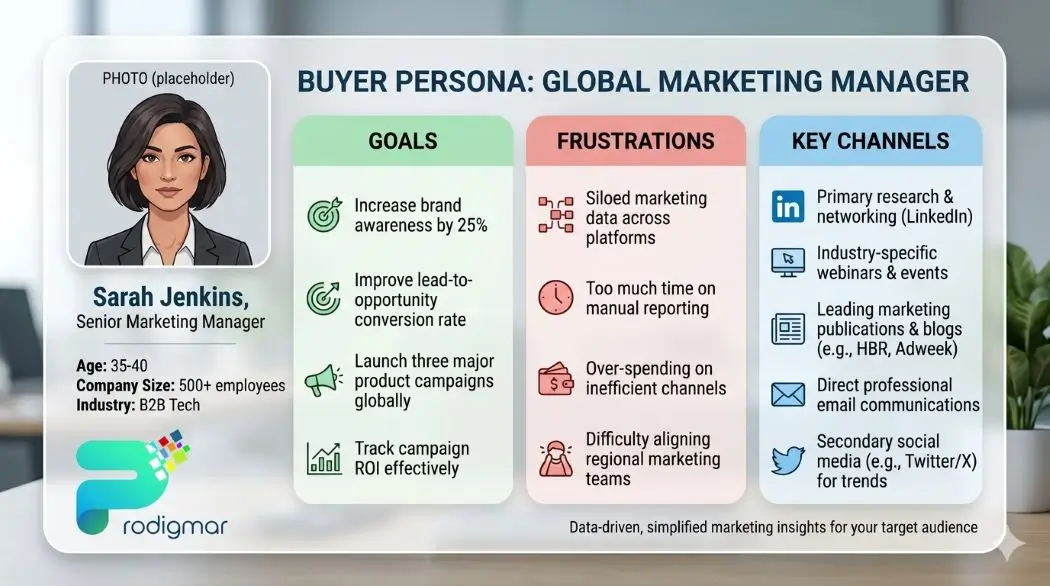
| Attribute | Example (B2B SaaS startup) | Example (D2C ecommerce startup) |
| Job title / role | Operations Manager, 50-200 employee company | Working professional, 25-40 years old |
| Primary goal | Reduce manual reporting time | Find quality products without overpaying |
| Biggest frustration | Too many disconnected spreadsheets | Unsure which brands are trustworthy online |
| Preferred channels | LinkedIn, Google search, email | Instagram, TikTok, Google search |
| Content that builds trust | Case studies, comparison guides | Reviews, short-form video, UGC |
This table is a starting point, not a finished product. Talk to five to ten real prospects or early customers before locking it in. Their actual words — the phrases they use to describe their problems — often become your best ad copy and headlines later.
Brand awareness is what happens before someone is ready to buy. It is the reason they recognise your name when they finally do need what you sell.
For a startup, brand foundation does not mean an expensive rebrand. It means consistency: the same logo, colours, tone of voice, and messaging across your website, social profiles, and any ads you run. When someone sees three different versions of your brand in one week, it reads as unprofessional, even if each individual piece looks fine.
Consistency compounds. A brand someone has seen three times in different contexts feels more established than one they have only seen once — even if both are equally new.

Reading a playbook is one thing. Executing it while running a startup is another. If you’d rather have a team handle your SEO, content, social media, and paid ads — so you can focus on building your product — Prodigmar works with startups across Pakistan, the USA, UK, and UAE to do exactly that.
Search Engine Optimisation is the slow-cooked meal of digital marketing. It takes longer than a paid ad, but the result tends to be worth the wait — and it keeps paying off long after the work is done.
The numbers back this up clearly. According to a 2026 SEO statistics report from SeoProfy, a well-executed SEO campaign can yield a median ROI of around 748%, meaning roughly $7.48 returned for every $1 spent, with some sectors reporting returns above 900%.
Position matters enormously too. SE Ranking data cited by BizIQ shows the #1 organic result earns roughly 39.8% of clicks, the #2 result earns 18.7%, and the #3 result earns 10.2%. The drop-off after position one is steep, which is exactly why SEO is a long game — but also why it is worth playing.
Instead of guessing keywords, look at what your audience is actually typing into Google. Tools like Google Search Console, Ubersuggest, or even Google’s “People Also Ask” boxes reveal real questions. Long-tail keywords — longer, more specific phrases — are usually easier to rank for and attract visitors who are closer to making a decision.
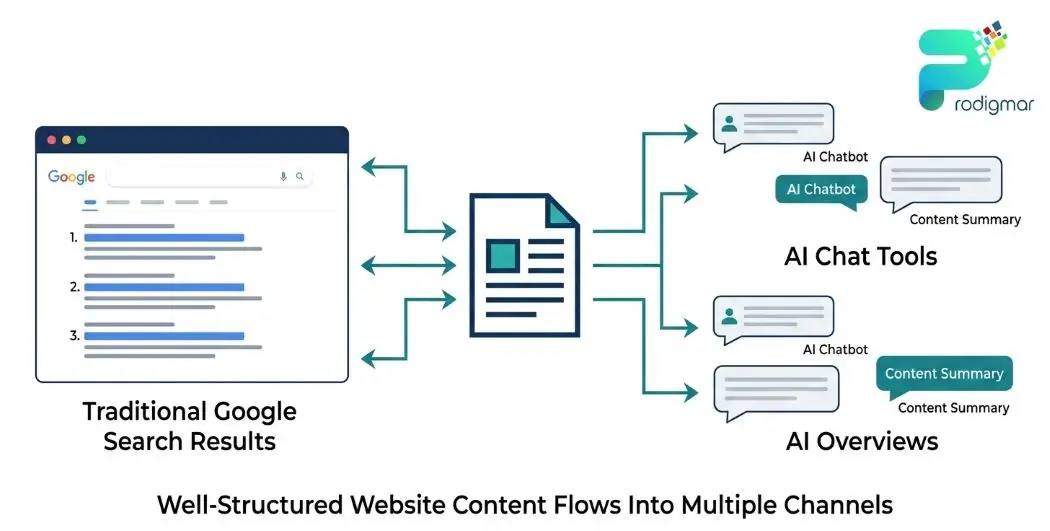
There is also a newer frontier worth watching: AI search. Tools like ChatGPT, Gemini, and Perplexity increasingly answer questions directly, often pulling from well-structured, factual web content. Writing clear, well-sourced content with a logical structure helps with traditional SEO and gives you a better shot at being referenced by AI search tools too — a practice sometimes called generative engine optimisation, or GEO. Prodigmar’s SEO and content services are built around both traditional SEO and this newer AI-search layer.
Content marketing is how a startup with zero brand recognition starts to look credible. A blog post that genuinely answers a question someone is searching for does more for trust than a polished ad ever could.
Research from Oliver Munro’s 2026 B2B SEO report found that companies publishing 16 or more blog posts per month generate 4.5 times more leads than infrequent publishers, and that long-form content over 2,000 words earns 77.2% more backlinks than shorter articles.
You do not need to publish 16 posts a month from day one. But this data makes one thing clear: consistency and depth both matter more than perfection.
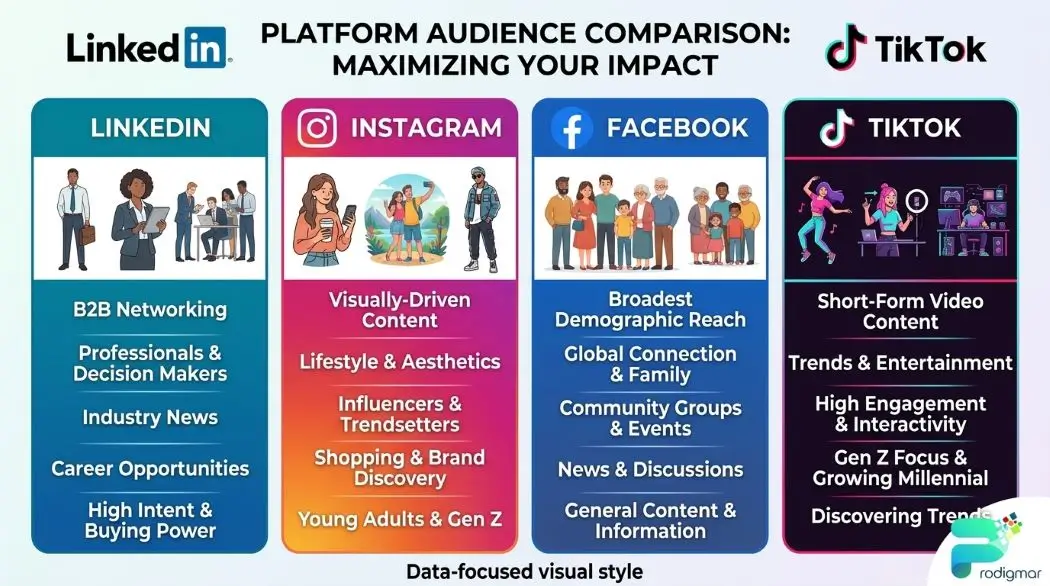
Here is the part where a lot of startups get it backwards: they try to be everywhere, post inconsistently on five platforms, and burn out within a month.
A better approach is to pick one or two platforms where your audience actually spends time, and show up there consistently. A B2B SaaS startup will usually get more out of LinkedIn than TikTok. A D2C fashion brand will usually get more out of Instagram and TikTok than LinkedIn.
| Platform | Best Suited For | Content Style |
| B2B startups, service providers, recruiting | Industry insights, case studies, thought leadership | |
| D2C brands, visual products, lifestyle | Photos, short videos, behind-the-scenes content | |
| Local businesses, community-driven brands | Updates, events, customer interaction | |
| TikTok / Short video | Younger audiences, product demos | Quick, authentic, entertaining clips |
Consistent posting matters more than the platform itself. A brand that posts thoughtfully twice a week for a year will usually outperform one that posts daily for two weeks and then disappears. If managing this consistently feels like too much on top of everything else, Prodigmar’s social media management services can take it off your plate.
Email marketing has a reputation problem. People assume it is outdated because it is not as flashy as a viral video. The data tells a very different story.
According to a 2026 email marketing report from InboxAlly, the average ROI of email marketing is estimated between $36 and $42 for every $1 spent — a return that consistently outperforms paid ads, social ads, and even SEO in many comparisons.
HubSpot’s 2025 marketing data adds more context: email marketing delivers a 2.8% conversion rate for B2C brands and 2.4% for B2B brands — figures that compare favourably against most other channels
The catch is that Email Marketing only works if you have a list, and lists take time to build. The earlier a startup starts collecting email addresses — through a simple signup form, a free resource, or a newsletter — the sooner this channel starts paying off.
Traffic without leads is just a number on a dashboard. The goal of every channel above — SEO, content, social, email — ultimately feeds into one question: how do visitors become contacts you can follow up with?
It helps to think of your website as a series of small “yes” moments rather than one big sales pitch. Each yes — reading an article, downloading a guide, booking a call — moves someone closer to becoming a customer.
If SEO and content marketing are the slow-cooked meal, paid advertising is the microwave option. It is faster, but it can also be more expensive if not managed carefully — and the results stop the moment you stop paying.
For startups with limited budgets, the key is testing small before scaling. Google Ads tends to work well for capturing people actively searching for a solution (high intent), while Meta Ads (Facebook and Instagram) often work better for building awareness among people who are not yet searching but match your target profile
| Channel | Suggested Share of Paid Budget | Why |
| Google Search Ads | 40-50% | Captures high-intent searches; easier to measure direct ROI |
| Meta Ads (Facebook/Instagram) | 30-40% | Builds awareness and retargets website visitors |
| Retargeting (across platforms) | 10-20% | Re-engages visitors who did not convert the first time |
This split is a starting framework, not a fixed rule. The right mix depends on where your audience spends time and which channel shows the best early results in your own data. The most important habit is reviewing performance weekly in the first month and adjusting based on what the numbers actually say — not what you assumed beforehand. Prodigmar’s paid advertising management services include this kind of ongoing optimisation
People buy from brands other people trust. For a startup with no track record, reviews and testimonials are often the fastest way to borrow trust from early customers.
The good news is that most happy customers will leave a review if you simply ask — most people do not think to do it unprompted, but are willing to once nudged.
A handful of detailed, specific reviews often does more for credibility than a large number of generic five-star ratings with no context.
| Common Mistake | Better Approach |
| Trying to be active on every platform at once | Choose one or two platforms your audience actually uses |
| Posting content without any strategy or goal | Tie every piece of content to a specific audience need |
| Ignoring analytics until something goes wrong | Review key metrics weekly, even briefly |
| Giving up on SEO after a few months | Treat SEO as a 6-12 month investment, not a quick fix |
| Using low-quality visuals to save time | Invest in a few high-quality templates or assets used consistently |
Most of these mistakes share a common root: treating marketing as a series of one-off tasks instead of a connected system. The fix is rarely more effort — it is usually more focus.

Search itself is changing. AI Overviews and AI chat tools are increasingly answering questions directly, sometimes without the user clicking through to a website at all.
According to Oliver Munro’s 2026 B2B SEO statistics report, Google’s AI Overviews now appear for around 13% of queries, and first-position organic click-through rates have dropped from roughly 28% to 19% as a result.
This is not a reason to panic, or to abandon SEO — organic search still drives 53% of all website traffic according to 2026 data from BizIQ. It is a reason to write content that is genuinely clear, well-structured, and well-sourced, since that is exactly the kind of content AI tools tend to draw from.
Short-form video and authentic, behind-the-scenes content also continue to grow in importance. For startups, this is good news — authenticity does not require a big budget, just consistency and a willingness to show up as you actually are.
Start with a clearly defined audience, a fast and clear website, and one or two content or social channels you can maintain consistently. SEO and email marketing tend to offer the strongest long-term return for limited budgets, while paid ads can be added later for faster, targeted results.
Industry benchmarks vary by stage. General small business guidance suggests 7-12% of revenue toward marketing, while early-stage startups are often advised to allocate 15-30% of revenue or funding, depending on growth goals and competition
It depends on timeline and budget. Paid ads can generate traffic and leads within days, which suits startups needing quick validation. SEO takes longer — often 3-12 months to show meaningful results — but tends to deliver stronger returns over time and keeps working without ongoing spend.
This varies by channel. Paid advertising can show results within days to weeks. Email marketing can show results quickly once a list exists. SEO and content marketing typically take several months, with many businesses seeing measurable returns within 3-12 months.
Yes, particularly in specific niches or local markets. Larger brands often target broad audiences with broad messaging, while startups can focus on specific customer problems with more personal, targeted content — something that often resonates more with niche audiences.
Generative Engine Optimisation refers to creating content that AI tools like ChatGPT, Gemini, and Perplexity are likely to reference when answering user questions. It overlaps heavily with good SEO practice — clear structure, factual accuracy, and credible sourcing — so startups investing in solid content already have a head start.

Click to chat
No spam. No commitment. Just real insights.
We’ll contact you on WhatsApp about your audit. No commitment required.
No spam. No commitment. Just real insights.
We’ll contact you on WhatsApp about your audit. No commitment required.