The AI’s rapid impact on digital marketing is transforming how brands engage with their audiences in 2025. At prodigmar, we harness advanced machine learning, powerful predictive analytics, and hyper-personalisation to craft campaigns that react instantly to customer behaviour. These intelligent systems process massive data sets in seconds, enabling real-time engagement and more accurate forecasting than ever. Companies adopting automation tools and data-driven strategies gain a strong competitive edge, reducing costs while increasing conversions.
As artificial intelligence evolves, the balance between human creativity and algorithmic precision keeps shifting, opening new opportunities for customer retention, smarter advertising, and faster decision-making across every digital channel.
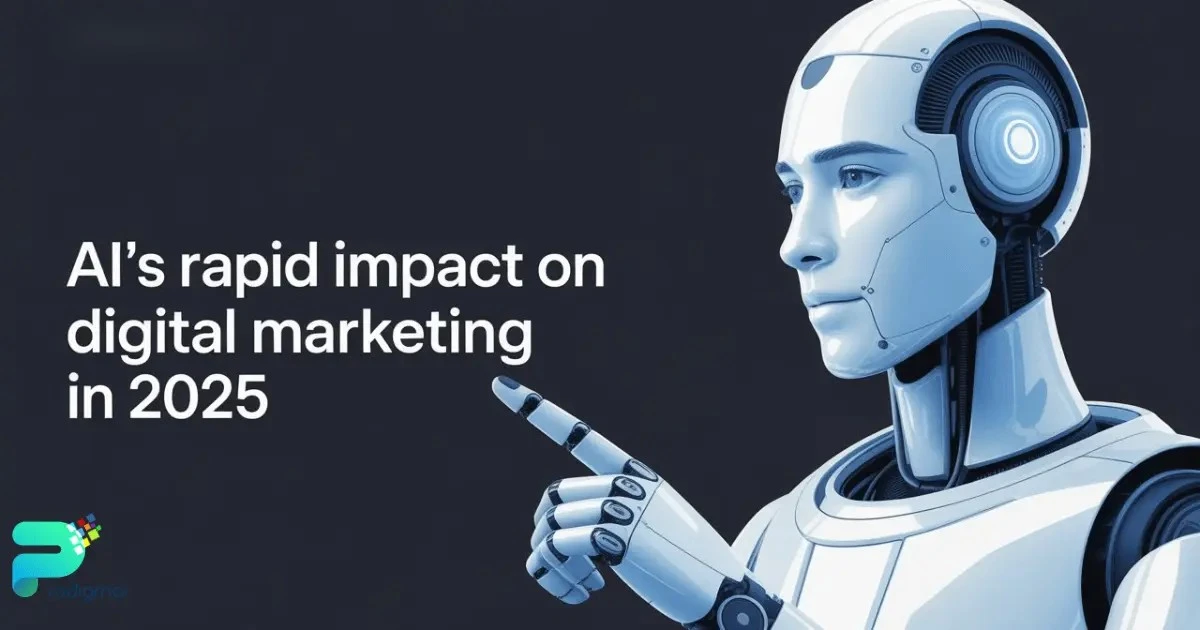
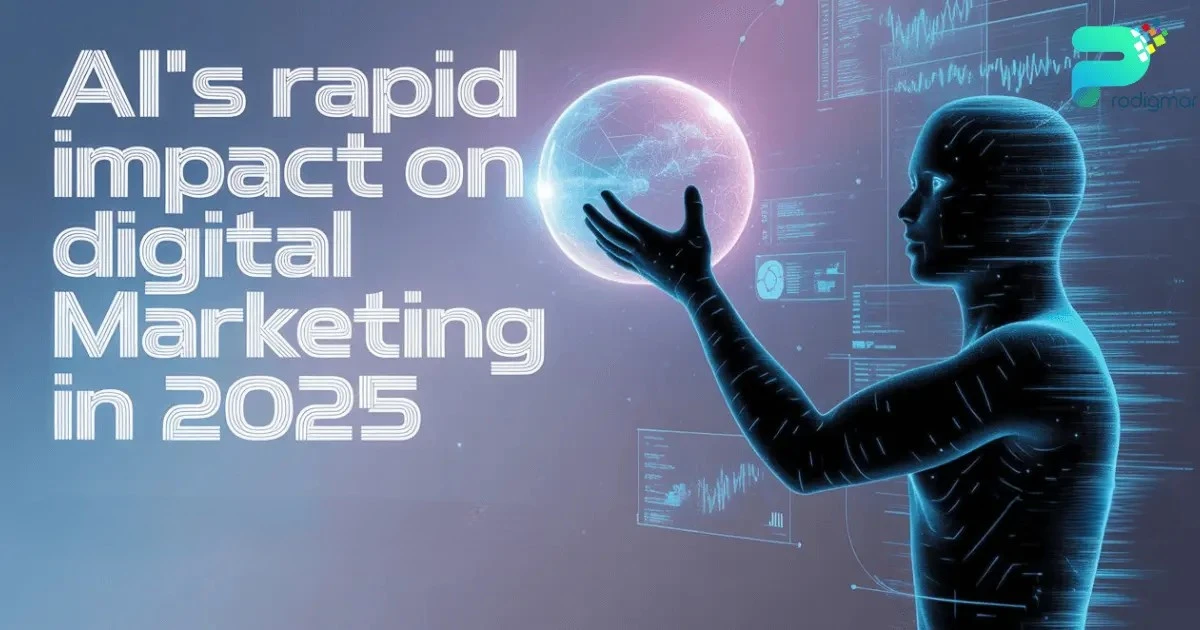
AI’s rapid impact on digital marketing is changing how brands find and serve customers. Advances in machine learning and natural language processing let systems analyse huge data sets and automate tasks once done by humans. In 2025, marketers use these capabilities to speed decision-making and create more relevant customer experiences.
Companies that adopt AI gain efficiency and sharper insight. The shift from manual processes to automated, data-driven workflows is accelerating, making AI central to modern marketing operations.
AI now shapes core marketing strategy by identifying high-value audiences and predicting which campaigns will perform best. Tools that automate segmentation, scoring, and campaign orchestration let teams plan smarter and act faster.
Marketing leaders use AI to allocate budgets, prioritise channels, and design customer journeys that optimise conversion, lifetime value, and resource use across the funnel.
AI transforms raw data into actionable insight. With predictive analytics, businesses forecast trends, detect churn risks, and estimate lifetime value more accurately than before. This capability turns historical data into future opportunity.
| AI Tool | Primary Use |
|---|---|
| Advanced Analytics Platforms | Customer behaviour modelling and forecasting |
| CRM AI Modules | Lead scoring and next-best action |
| Attribution Engines | Channel performance & ROI optimisation |
Hyper-personalisation means every message can match a user’s context, preferences, and moment. AI sifts signals from browsing, purchase history, and device data to serve content that resonates immediately.
Real-time decisions—delivering offers, nudges, or support at the right moment—boost conversions and create deeper customer loyalty.
Generative AI now helps produce blog copy, social posts, images, and short video edits. Combining content generation with SEO intelligence lets teams scale content while keeping relevance to search intent and ranking signals.
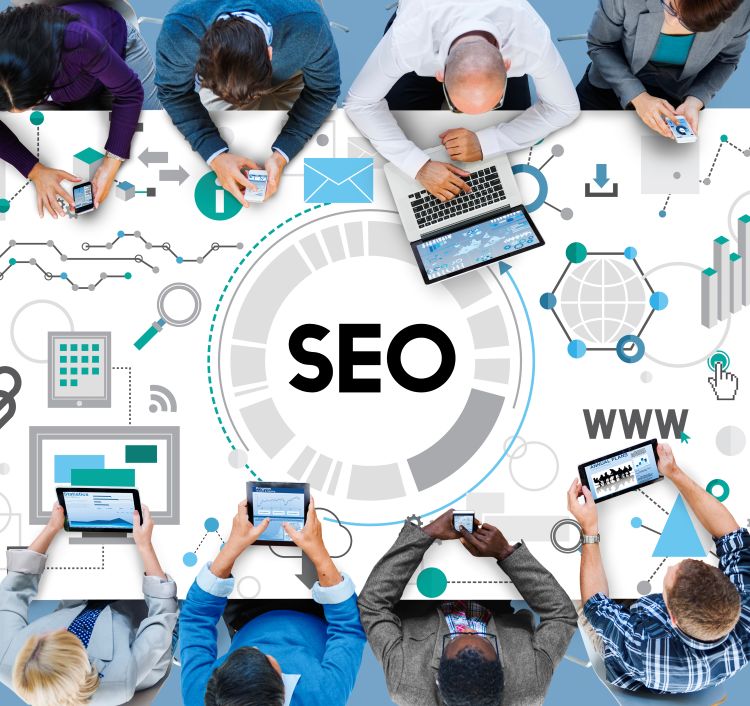
Programmatic advertising uses AI to automate media buying and target audiences with precision. Systems adjust bids and creatives in real time to maximise performance.
These AI-driven campaigns reduce waste, improve ROI, and allow advertisers to test and iterate faster than traditional approaches.
AI-powered chatbots, virtual assistants, and sentiment engines deliver faster support and deeper insights into customer moods and needs. These tools help resolve issues quickly and personalise follow-ups.
Churn prediction models highlight customers at risk, enabling targeted retention offers that preserve lifetime value and reduce turnover.
Collecting and applying personal data carries regulatory and ethical obligations. Marketers must ensure transparency, proper consent, and secure handling of customer data to comply with laws like GDPR.
Implementing ethical AI governance protects trust and reduces legal risk. Clear policies and audit trails help brands demonstrate compliance and responsible use.
AI handles scale and pattern-finding, while humans bring creativity, judgment, and emotional intelligence. The future requires skilled teams that can interpret AI output and craft strategic, empathetic campaigns.
Upskilling staff in data literacy and AI collaboration ensures organisations extract maximum value without losing human perspective.
Start with an audit of current systems, data quality, and use cases. Prioritise pilot projects that solve real marketing problems, then scale what works. Invest in training and cloud infrastructure to support AI workloads.
Quick adoption plan: Audit systems, choose tools, train teams, and measure impact. This pragmatic path minimises risk and accelerates results.
AI’s rapid impact on digital marketing is reshaping strategy, operations, and customer experience. Companies that combine AI’s analytical power with human creativity will lead markets in 2025 and beyond.
Adopt thoughtfully, govern responsibly, and focus on measurable outcomes to turn AI advances into sustained business advantage.
AI is driving hyper-personalised campaigns, real-time customer engagement, and data-driven insights, making marketing faster and more accurate.
Experts predict the global AI market will exceed $300 billion by 2025, with digital marketing as one of its fastest-growing sectors.
AI shapes the future by automating tasks, enhancing predictive analytics, and improving customer targeting for higher ROI.
Yes, digital marketing demand continues to rise as businesses rely on AI-powered strategies to reach larger audiences.
Top choices include ChatGPT, Google’s Bard, and HubSpot AI, depending on campaign needs and data requirements.

Click to chat
No spam. No commitment. Just real insights.
We’ll contact you on WhatsApp about your audit. No commitment required.
No spam. No commitment. Just real insights.
We’ll contact you on WhatsApp about your audit. No commitment required.