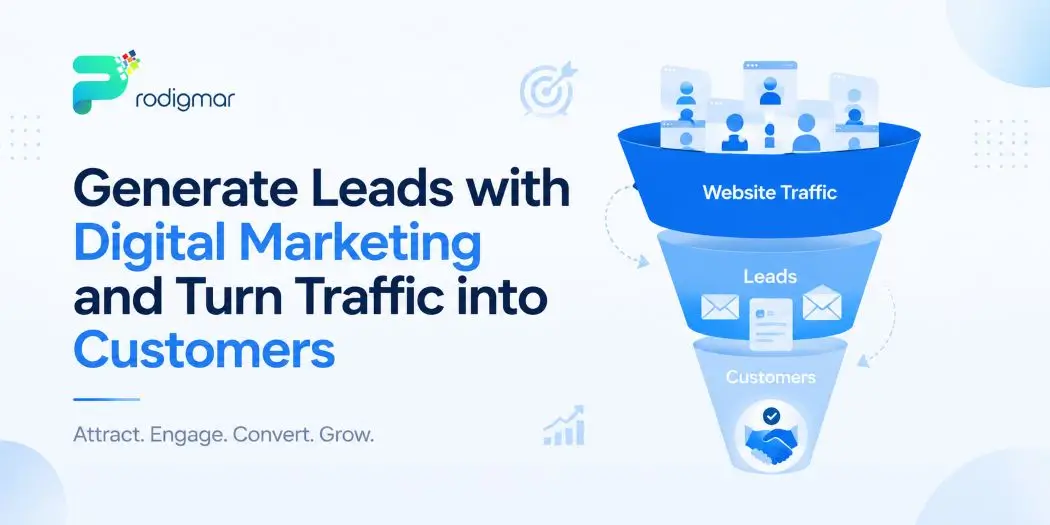
Traffic feels great. Watching your analytics dashboard climb is satisfying, almost addictive. But here’s the uncomfortable truth: traffic doesn’t pay your bills. Customers do.
Most businesses don’t struggle to get people to their website. They struggle to turn those visitors into actual leads, and then into paying customers. That gap is exactly where digital marketing lead generation earns its keep.
In HubSpot’s 2026 State of Marketing report, 29.6% of marketers named lead generation one of their biggest ongoing challenges<sup>[1]</sup>. So if your numbers feel stuck, you’re not alone – you’re in good company with thousands of marketers staring at the same problem.
This guide breaks down how to generate leads with digital marketing using channels that actually work: SEO, paid ads, social media, and email. We’ll also cover how to convert that traffic once it lands, because a lead generation strategy without a conversion plan is just an expensive way to say hello.
Digital marketing lead generation is the process of attracting potential customers online and capturing their contact information before they buy. Think of it as the bridge between “someone found your website” and “someone is ready to talk to your sales team.”
It’s not one tactic. It’s a system built from several moving parts:
Here’s where it gets a little less fun. HubSpot also found that nearly 30% of marketers reported a drop in search traffic as more people turn to AI tools for quick answers instead of clicking through to websites<sup>[1]</sup>. Search behavior is shifting, and businesses that rely on a single channel are feeling it first.
That’s exactly why a multi-channel approach to digital marketing lead generation isn’t optional anymore. It’s risk management.
A visitor becomes a lead the moment they hand over an email, fill out a form, or book a call. From there, they often move into the Marketing Qualified Lead (MQL) stage — someone who’s shown real interest, not just curiosity. Understanding this progression matters, because it shapes everything from your content to your follow-up emails.
Let’s get into the channels themselves. Each one plays a different role, and the businesses that win usually use more than one at the same time.
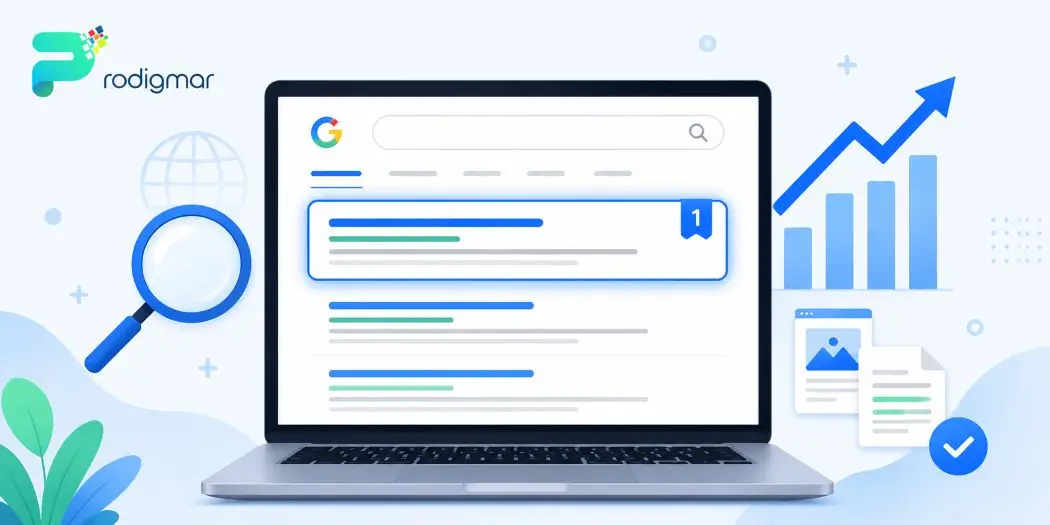
SEO is the slow cooker of digital marketing. It takes longer to “finish,” but the results tend to last, and they don’t disappear the moment you stop paying for clicks.
SEO lead generation works by ranking your website for the exact terms your future customers are typing into Google. Someone searching “digital marketing agency near me” isn’t browsing for fun — they’re shopping. Capture that intent, and you’ve got a warm lead, not a cold one.
A few things actually move the needle here:
Good SEO also compounds. A blog post you publish today can keep generating leads two years from now, long after a paid ad campaign would have run out of budget.
If SEO is the slow cooker, PPC lead generation is the microwave. You pay, you show up, almost instantly.
Google Ads lead generation puts your business at the very top of search results for keywords your competitors are also bidding on. The tradeoff is simple: speed costs money. The moment your budget runs out, so does your visibility.
PPC works best when your landing page matches your ad’s promise exactly. Promise a free quote in the ad? The landing page better have a quote form, not a generic homepage. Mismatched expectations are the fastest way to burn ad spend without anything to show for it.
| Factor | SEO | PPC |
|---|---|---|
| Speed | Slow, builds over months | Immediate |
| Cost over time | Lower long-term cost | Ongoing cost per click |
| Longevity | Lasts after you stop investing | Stops the moment budget runs out |
| Best for | Long-term, sustainable lead flow | Quick campaigns, product launches, testing offers |
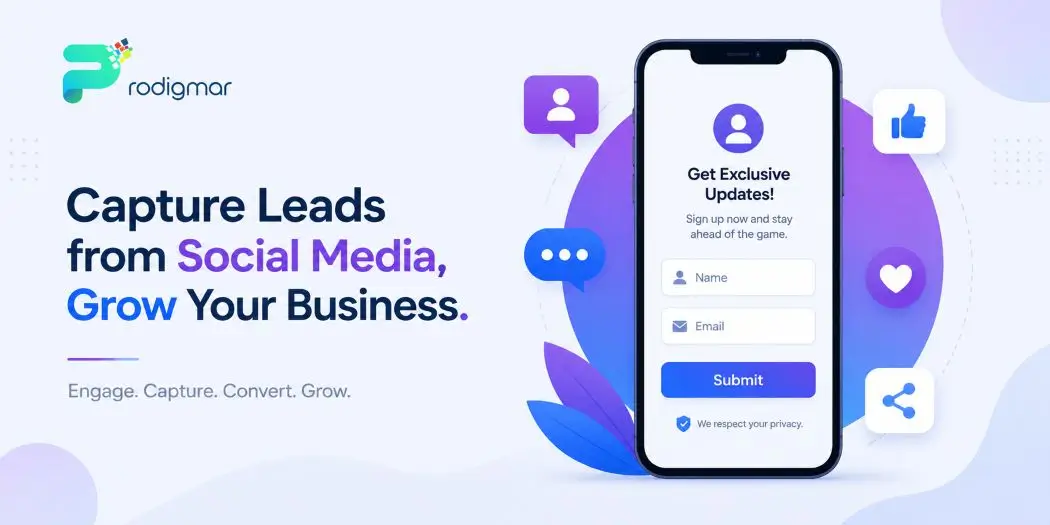
Social media lead generation has matured well beyond “post and pray.” Platforms like Facebook, Instagram, and LinkedIn now offer built-in lead forms, so people never even have to leave the app to express interest.
LinkedIn, in particular, has become the go-to channel for B2B. HubSpot reported that 42% of marketers used LinkedIn in their strategy last year, up 11% from the year before<sup>[1]</sup>. And according to Sprout Social, 89% of B2B marketers already use LinkedIn for lead generation, with 62% calling it genuinely effective<sup>[2]</sup>.
For B2C brands, Facebook Ads and audience targeting still carry a lot of weight, especially when paired with retargeting campaigns that bring back people who clicked but didn’t convert the first time. Most people don’t buy on the first visit. Retargeting just accepts that reality instead of fighting it.
Email gets dismissed a lot. “Isn’t email dead?” No — and the data backs that up. eMarketer found that half of marketers say email marketing has the single biggest impact on their overall lead generation results<sup>[3]</sup>.
Even younger audiences haven’t tuned out. Statista found that 79% of Millennials and 57% of Gen Z actually enjoy receiving brand emails<sup>[3]</sup>. Yes, even Gen Z – the generation famous for skipping everything – still opens their inbox.
The real lever here is marketing automation. Instead of blasting the same message to everyone, automation lets you send the right email at the right moment based on what someone actually did. HubSpot’s research shows segmented email campaigns see 30% higher open rates and 50% higher click-through rates than generic, one-size-fits-all sends<sup>[4]</sup>. Segmentation isn’t a nice-to-have. It’s the difference between someone reading your email and someone deleting it on sight.
This is also where CRM integration earns its place. Without a CRM tying your emails to your leads, you’re basically nurturing strangers in the dark.
Building and managing SEO, PPC, social, and email all at once is a full-time job - usually several full-time jobs. Prodigmar builds complete digital marketing campaigns designed to do exactly that, channel by channel, without the guesswork.
Get a Free Lead Generation Audit →Getting traffic is step one. Converting it is the part most businesses underinvest in, which is a shame, because it’s usually cheaper to fix than buying more ads.
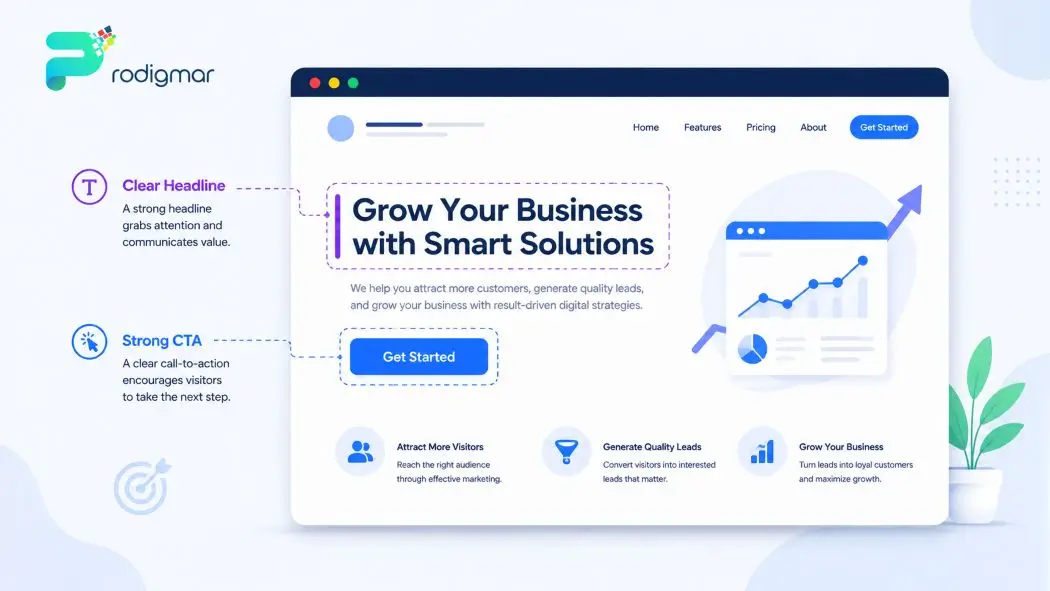
A good landing page has one job, and only one job. Not “explain your whole company.” Just: get this visitor to take this one action.
Unbounce analyzed 41,000 landing pages and more than 460 million visitors, and found a median conversion rate of 6.6%, with the top 10% of pages converting above 11%<sup>[5]</sup>. The gap between average and great isn’t about luck. It usually comes down to a clear headline, one focused offer, and a call-to-action that tells people exactly what happens next.
“Learn More” is not a call-to-action. It’s a shrug. Try “Get My Free Quote” or “Book a 15-Minute Call” instead — specific, low-friction, and honest about what’s coming.
Nobody hands over their email address for nothing. Lead magnets — free guides, checklists, audits, templates — give people a reason to trade their contact details for something useful.
Keep your lead capture forms short. Every extra field is one more reason for someone to abandon the form and go do something else with their afternoon. Name and email is often enough. You can always ask for more once they trust you.
Once a lead is captured, it needs a home. That’s what CRM integration does – it keeps every lead trackable instead of buried in someone’s inbox.
From there, leads move through your sales pipeline: awareness, consideration, decision. Each stage needs a different kind of content. Someone in the awareness stage isn’t ready for a pricing page. Someone in the decision stage doesn’t need another blog post — they need a clear next step.
Understanding the customer journey means matching your message to where someone actually is, not where you wish they were. A visitor reading an introductory blog post has different customer intent than someone comparing pricing pages at midnight.
Get this alignment right, and website conversions tend to follow naturally. Get it wrong, and you’ll keep wondering why “great” traffic isn’t turning into anything.
Not all leads are created equal, and a B2B buyer behaves nothing like a B2C shopper.
B2B digital marketing lead generation usually involves longer sales cycles, multiple decision-makers, and a heavier reliance on trust-building content like case studies and whitepapers. Nobody approves a five-figure contract after seeing one Instagram ad. LinkedIn, detailed content, and consistent follow-up tend to carry the weight here.
B2C lead generation strategies move faster. Decisions happen quickly, often driven by emotion, urgency, or a really good photo. Paid advertising and retargeting carry more of the load, since the goal is often to convert within days, not months.
Neither approach is “better.” They’re just solving different problems, for different buyers, on different timelines.
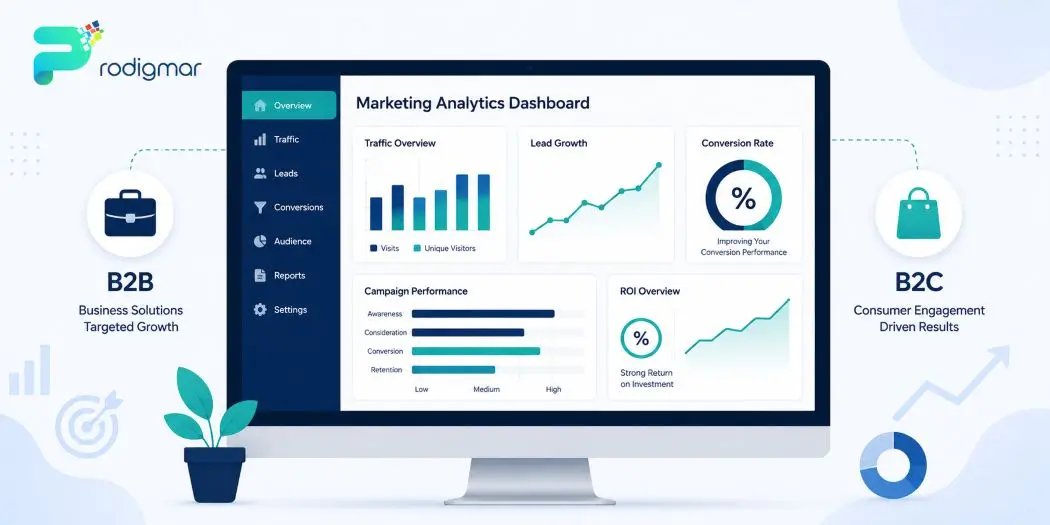
Generating leads is only half the story. If you can’t measure what’s working, you’re basically marketing with your eyes closed.
Not every form fill deserves equal excitement. Tracking Marketing Qualified Leads separately from raw leads helps you focus effort where it actually pays off. Encouragingly, 94% of marketers reported that lead quality improved over the past year, according to HubSpot<sup>[6]</sup> — a sign that the industry is finally chasing quality over sheer volume.
Your core numbers to watch: cost-per-lead, conversion rate, and lead-to-customer rate. Vanity metrics like raw traffic feel good but rarely pay the bills on their own.
Return on Investment ties your spending directly to revenue, which is the only conversation that really matters to a business owner. Yet only 31.1% of marketing teams currently track Return on Marketing Investment (ROMI) directly, per HubSpot’s data<sup>[6]</sup> – which is a little wild, considering how much budget gets justified with “trust me, it’s working.”
Cost matters too, and it’s climbing. HubSpot’s 2026 State of Marketing report puts the median B2B cost-per-lead at $213, up from $198 the year before<sup>[7]</sup>. That trend alone is a good reason to track ROI properly instead of guessing.
You've seen the full picture: SEO, ads, social, email, conversion optimization, and the tracking that ties it all together. Doing all of it well, at the same time, is exactly why most businesses bring in a team that does this every day.
Prodigmar manages the entire lead generation engine - strategy, execution, and reporting - so you're not stuck juggling five different vendors and three different dashboards.
Book Your Free Strategy Call Today →Generating leads with digital marketing isn’t about picking one “magic” channel and hoping it carries the whole business. It’s about combining SEO, paid ads, social media, and email into a system — and pairing that system with a conversion path that actually turns visitors into customers.
Traffic without a plan to capture and nurture it is just an expensive number on a dashboard. Build the system instead, and that traffic starts paying for itself.
Ready to put this into action? Explore Prodigmar’s digital marketing services →
Digital marketing lead generation is the process of attracting potential customers through online channels — SEO, paid ads, social media, and email — and capturing their contact details so your sales team can follow up.
Digital marketing generates leads by combining channels rather than relying on just one. SEO and content attract people actively searching, paid ads accelerate visibility, social media builds trust, and email keeps nurturing people who aren't ready to buy yet.
There's no single winner — it depends on your industry and sales cycle. SEO tends to win on long-term volume and lower cost-per-lead over time, while PPC wins on speed. B2B businesses often lean on LinkedIn and email, while B2C brands lean harder on paid social.
Yes. SEO captures people who are already searching for a solution, which usually means higher intent. It takes longer to build than paid ads, but the leads it generates tend to keep coming in without ongoing ad spend.
The best strategy in 2026 isn't a single tactic — it's an integrated approach combining SEO, PPC, social, and email, all tied together through CRM tracking and lead nurturing. Businesses relying on just one channel are more exposed as search and social behavior keeps shifting.
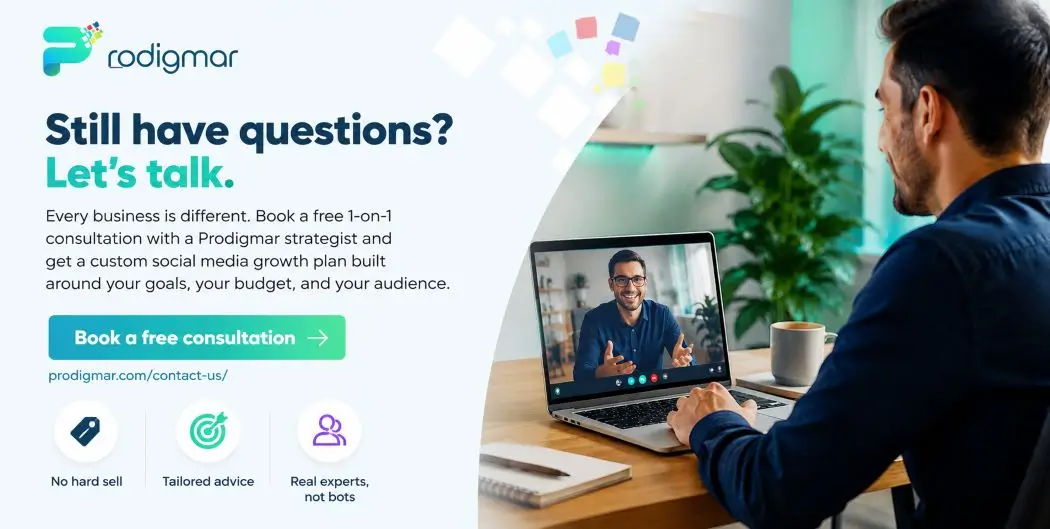
Every business is different. Book a free 1-on-1 consultation with a Prodigmar strategist and get a custom social media growth plan built around your goals, your budget, and your audience.
Click to chat
No spam. No commitment. Just real insights.
We’ll contact you on WhatsApp about your audit. No commitment required.
No spam. No commitment. Just real insights.
We’ll contact you on WhatsApp about your audit. No commitment required.