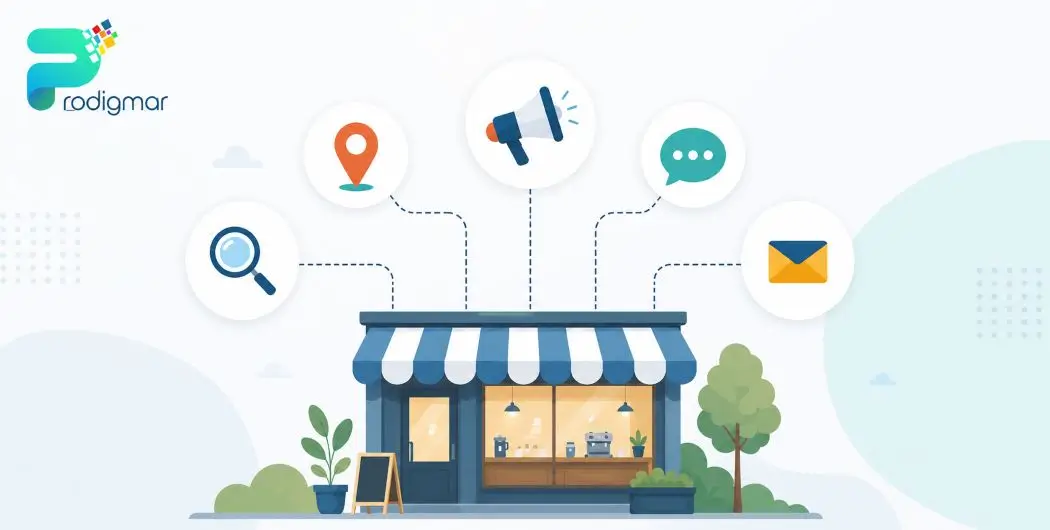
Most local business owners don’t have a marketing problem. They have a marketing traffic jam. A boosted Facebook post here, a rushed Google Ads campaign there, maybe a flyer stuck under a windshield wiper for old times’ sake. None of it talks to the other pieces, and none of it adds up to real growth.
A solid local business digital marketing plan fixes that. It ties your local SEO, PPC advertising, content, and social media together so every dollar and every hour pulls in the same direction. This guide walks through exactly how to build one, step by step, without the jargon or the guesswork.
A local business digital marketing plan is a written strategy that helps a business attract and win customers in a specific geographic area. It’s different from a national or ecommerce strategy because everything centers on location: your Google Business Profile, local search results, nearby customer intent, and community trust.
A complete plan usually pulls together five core pieces: local SEO, PPC advertising, content marketing, social media marketing, and a way to turn all that traffic into actual leads. The rest of this guide breaks down each one.
Before touching a single marketing channel, get specific about who you’re serving. Look at your existing customers. What neighborhoods do they live in? What service radius makes sense for your business? Are they homeowners, renters, young families, retirees?
Your Google Business Profile insights and your own customer records are the fastest way to answer these questions. You don’t need a fancy research firm. You need to actually look at the data you already have sitting in front of you.
“Get more traffic” is not a goal. It’s a wish. A real goal sounds like “generate 20 qualified leads a month from local search” or “book 15 new consultations by the end of the quarter.” Specific numbers force specific decisions about where your budget goes.
Here’s a simple way to match your goals to the right channel:
| Goal Type | Primary Channel |
|---|---|
| Brand awareness in your area | Social media marketing |
| Fast lead generation | PPC advertising / Google Ads |
| Long-term organic traffic | Local SEO |
| Repeat customers and trust | Email marketing + content marketing |
Our team at Prodigmar builds custom SEO and PPC strategies for small businesses. Let us look at your goals and tell you exactly where to start.
Get a Free Strategy Consultation →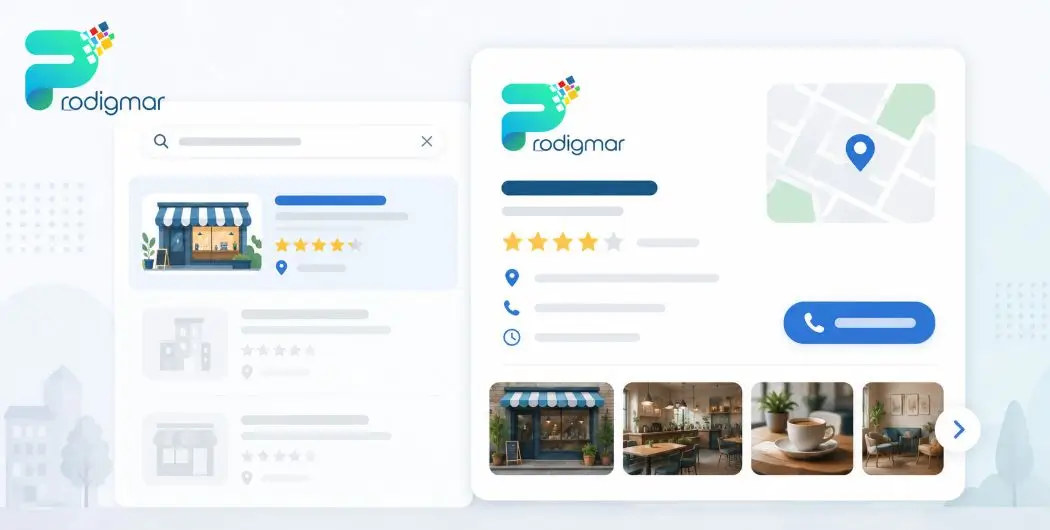
Your Google Business Profile is often the very first thing a potential customer sees. Keep your name, address, and phone number consistent everywhere online. Add real photos, pick accurate categories, and post updates regularly. Answer the Q&A section yourself instead of leaving it to strangers.
If you serve multiple areas, build a dedicated page for each one instead of cramming every suburb into your homepage. Use schema markup so search engines understand exactly what your business does and where. And don’t ignore mobile speed. A slow site loses local customers before they even see your offer.
Customer reviews do double duty: they influence buying decisions and they signal trust to Google’s local algorithm. Ask happy customers for reviews right after a good experience, and respond to every review, good or bad, in a professional tone. Ignoring a bad review is worse than getting one.

This is the question every local business owner eventually asks: is SEO or PPC better for local businesses? The honest answer is that they solve different problems.
| Comparison | Local SEO | PPC Advertising |
|---|---|---|
| Speed to results | Months | Days |
| Cost structure | Time and content investment | Pay per click |
| Longevity | Compounds over time | Stops when budget stops |
| Best use case | Long-term visibility | Immediate leads, promotions |
Your best content ideas are sitting in your inbox and your phone calls right now. Whatever questions customers ask you before they buy, that’s your next blog post. Local guides, how-to articles, and FAQs all work well because they match how people actually search.
A blog post earns attention. A landing page earns a customer. Build dedicated pages for your core services and locations, each with one clear call-to-action. Don’t make visitors hunt for a phone number or a form.
Facebook and Instagram tend to work well for community-facing businesses like restaurants, salons, and home services. LinkedIn makes more sense for B2B service providers. You don’t need to be everywhere. You need to be where your customers already are.
Organic social builds community and trust over time, but reach on most platforms has gotten stingy. A modest paid budget targeted at your local area stretches your content further than posting alone ever will.
Whether you need SEO, Google Ads, or both - Prodigmar's small business marketing team will build a strategy around your budget and goals. No jargon. No fluff.
Talk to a Prodigmar Strategist →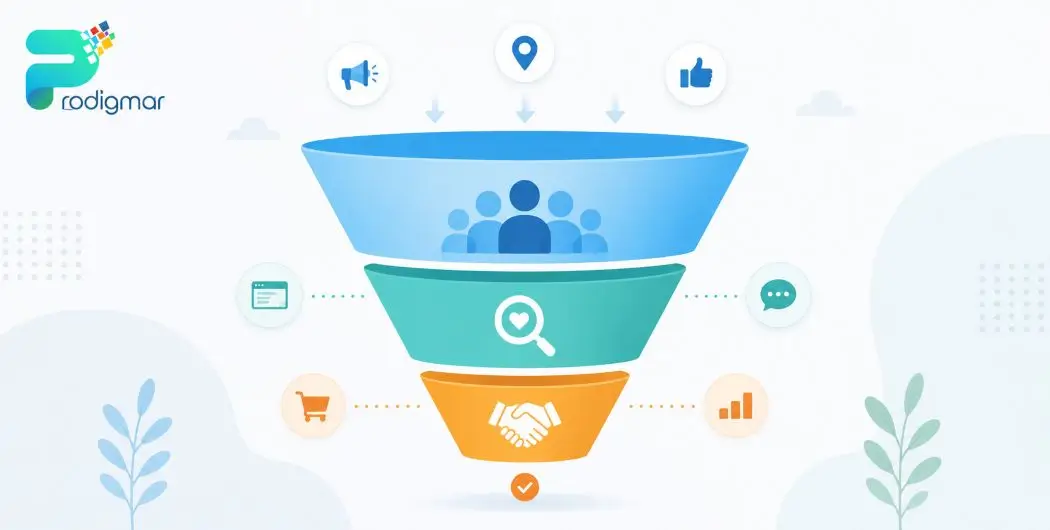
Traffic without conversion is just a vanity number. Map out your customer journey: awareness, consideration, decision. Someone finding you through local search results isn’t ready to buy in the same way someone reading your pricing page is.
Retargeting and email marketing catch the people who almost converted but didn’t. A visitor who left your quote form half-filled is far warmer than a stranger, and a simple retargeting ad or follow-up email often closes that gap.
Here’s a number worth writing down: the U.S. Small Business Administration recommends that small businesses spend around 7 to 8% of gross revenue on marketing, with newer businesses often needing more to build initial awareness. That percentage should stretch across local SEO, PPC advertising, content, and social media, not get dumped entirely into one channel.
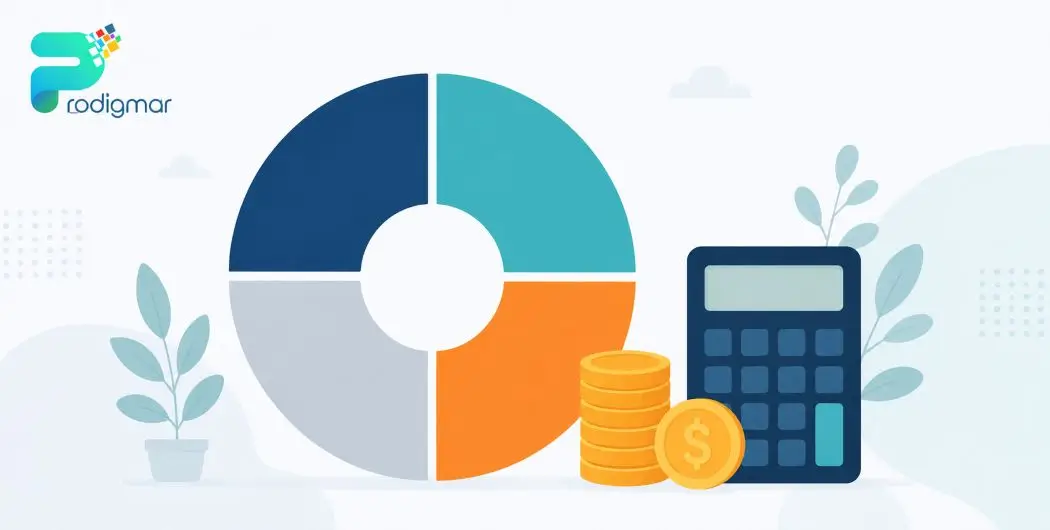
A sample monthly split for a small local business might look like this:
| Channel | Suggested Allocation |
|---|---|
| Local SEO | 30% |
| PPC advertising / Google Ads | 35% |
| Content marketing | 20% |
| Social media marketing | 15% |
Once your budget is set, track what it’s actually doing. Conversion rate and cost per lead matter far more than raw traffic numbers. A thousand visitors who don’t call you are worth less than fifty who do.
A strong local business digital marketing plan isn’t about picking the trendiest channel. It’s about making local SEO, PPC advertising, content, and social media work as one system instead of five separate experiments. Start with your audience, build your local SEO foundation, add PPC where you need speed, and track everything against real numbers.
Ready to stop guessing and start growing? Talk to Prodigmar about building a digital marketing plan tailored to your local market, your budget, and your goals.
Once your budget is set, track what it’s actually doing. Conversion rate and cost per lead matter far more than raw traffic numbers. A thousand visitors who don’t call you are worth less than fifty who do.
A local business digital marketing plan is a documented strategy that combines local SEO, PPC advertising, content marketing, and social media marketing to attract and convert nearby customers.
Start by defining your audience and setting clear goals, then build a local SEO foundation, add PPC advertising for faster results, and set up a system to track leads and conversions.
Neither wins outright. Local SEO builds long-term, compounding visibility, while PPC advertising through Google Ads delivers faster leads. Most local businesses benefit from running both together.
The SBA recommends small businesses under $5 million in revenue allocate roughly 7 to 8% of gross revenue to marketing, though newer businesses often spend more to build initial awareness.
PPC advertising can generate leads within days. Local SEO typically takes three to six months to show meaningful ranking and traffic improvements.

Every business is different. Book a free 1-on-1 consultation with a Prodigmar strategist and get a custom social media growth plan built around your goals, your budget, and your audience.
Click to chat
No spam. No commitment. Just real insights.
We’ll contact you on WhatsApp about your audit. No commitment required.
No spam. No commitment. Just real insights.
We’ll contact you on WhatsApp about your audit. No commitment required.