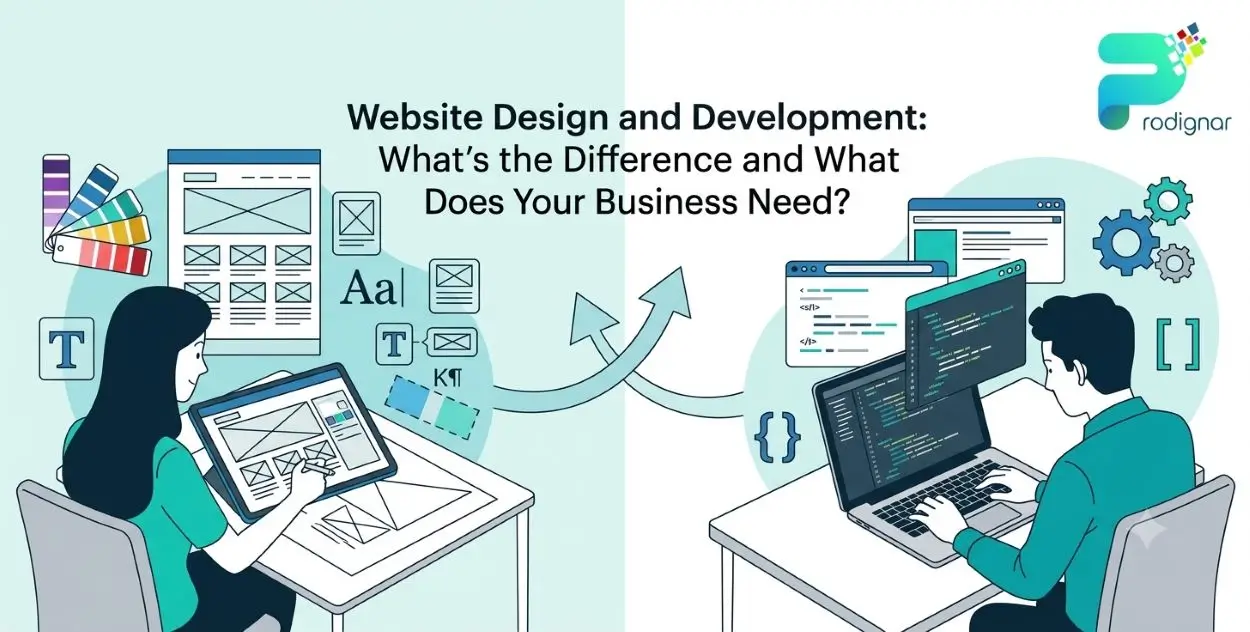
Ask ten business owners what “website design and development” actually means, and you’ll probably get ten different answers.
Some think it’s just about making a site look pretty. Others assume it’s all code and technical wizardry. The truth? It’s both — and if you only get one half right, your website will struggle to do its job.
At Prodigmar, we’ve built and rebuilt websites for businesses that came to us frustrated. Their site looked fine but loaded slowly, or it functioned well but looked outdated and didn’t convert visitors into customers. The reason usually came down to one thing: a mismatch between design and development.
This guide breaks down exactly what website design and development means, how the two pieces work together, what you should expect to pay, and how to choose the right partner for your business.
Here’s the short version, if you’re in a hurry.
Website design is the visual and user-experience side of a website — layout, colors, typography, imagery, and how easy it is to navigate.
Website development is the technical side — the actual coding, functionality, database connections, and backend systems that make the design work in a real browser.
Think of it like building a house. Design is the architectural blueprint and interior styling. Development is the construction crew that pours the foundation, wires the electricity, and makes sure the doors actually open.
You need both. A stunning design with weak development will break, load slowly, or fail on mobile. Solid development with poor design will function, but visitors will bounce before they even see what you offer.
| Aspect | Website Design | Website Development |
|---|---|---|
| Focus | Visual appeal, layout, UX | Functionality, code, performance |
| Tools Used | Figma, Adobe XD, Canva | HTML, CSS, JavaScript, PHP, WordPress, React |
| Output | Wireframes, mockups, style guides | Working, live website |
| Goal | User engagement and brand feel | Speed, security, and functionality |
| Who Handles It | UI/UX designers | Web developers |
| Business Impact | First impressions, trust, conversions | Site speed, SEO, reliability |
Website design is everything a visitor sees and interacts with the moment your site loads. It’s the first impression your business makes — and you don’t get a second chance at that.
Good website design includes:
A well-designed website builds instant trust. Studies consistently show that users form an opinion about a website within seconds, and that opinion heavily influences whether they stay or leave.
Design isn’t just about looking good, though. It’s about guiding visitors toward action — whether that’s filling out a form, calling your business, or making a purchase.
Website development is where design turns into a functioning, living product. This is the technical layer that makes buttons clickable, forms submit correctly, pages load fast, and everything work across browsers and devices.
Website development typically covers:
Without solid development, even the most beautiful design is just a static image. Development is what makes your website actually usable.
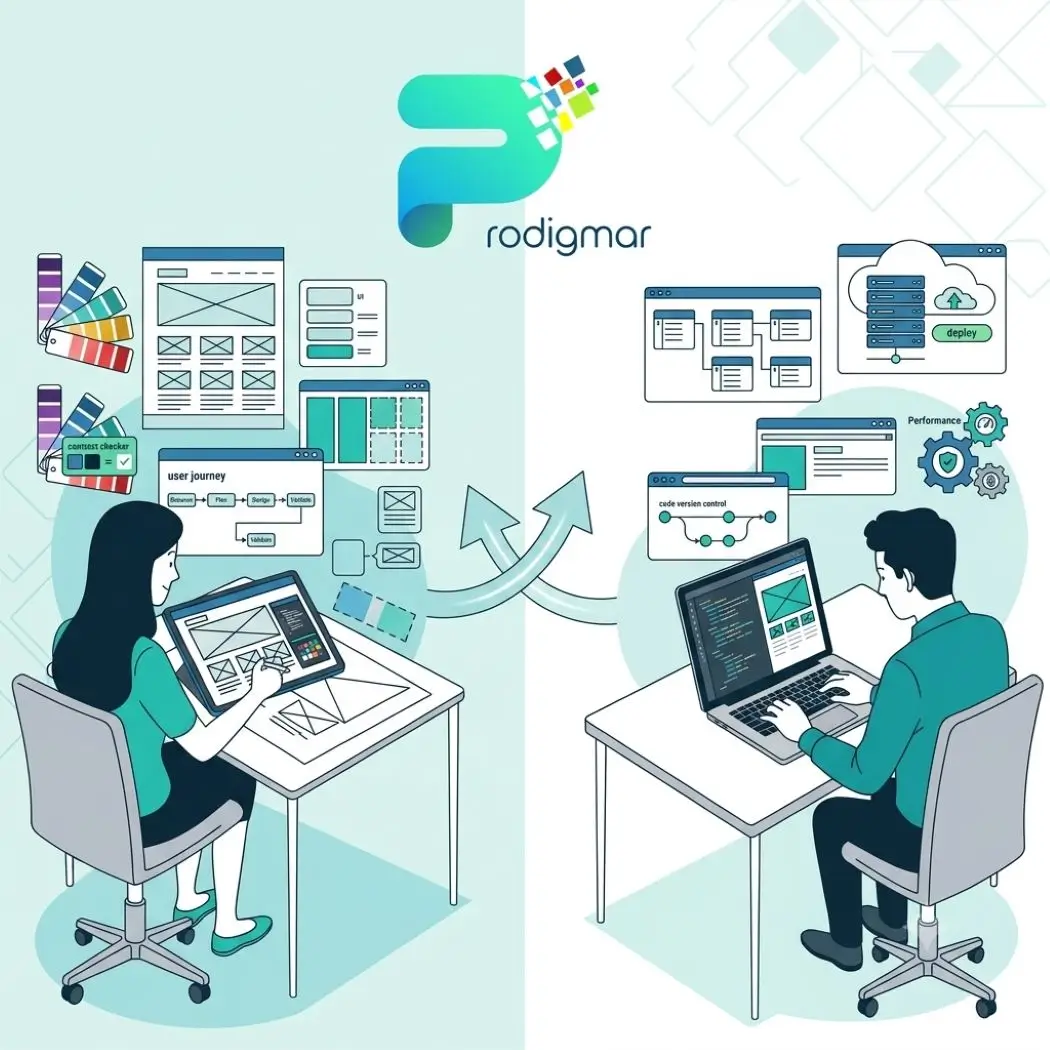
It helps to see the differences side by side, since these two disciplines often get blurred together in casual conversation.
| Website Design | Website Development |
|---|---|
| Answers: "How should it look and feel?" | Answers: "How does it actually work?" |
| Deals with aesthetics and user flow | Deals with code and technical execution |
| Created first, usually as mockups | Built after design is approved |
| Measured by engagement and clarity | Measured by speed, uptime, and function |
| Requires creative and UX skills | Requires programming and technical skills |
In a strong web design and development agency, these two teams work closely together from day one — not in isolated silos. That collaboration is exactly what prevents costly rework later.
Not sure whether your website needs a redesign, a rebuild, or just a few tweaks? Let's talk it through - no pressure, no sales script. We'll review your current site (or your idea, if you're starting fresh) and tell you honestly what it needs.
Book Your Free Website Consultation with Prodigmar → Some businesses try to cut corners by hiring a designer only, or a developer only. Both approaches usually backfire.
Design without development gets you a nice-looking prototype that isn’t actually functional on the web. It can’t process orders, load properly on mobile, or rank on Google.
Development without design gets you a technically working site that visitors don’t trust or enjoy using. Bounce rates climb, and conversions suffer.
When website design and development work together, you get a site that:
This is why most professional website design and development services bundle both under one roof — it’s simply more effective than piecing it together separately.
A complete service package usually includes:
Understanding your business goals, target audience, and competitors before a single pixel is drawn.
Wireframes and mockups that map out layout, navigation, and visual identity.
Turning approved designs into a fully functioning website with clean, efficient code.
Adding your copy, images, and branding elements into the live site.
Optimizing page structure, load speed, meta tags, and mobile-friendliness for search visibility. If you want to go deeper into this piece, our SEO services page breaks down exactly how we help sites rank higher on Google.
Checking cross-browser compatibility, mobile responsiveness, and broken links before launch.
Going live, monitoring performance, and providing maintenance or updates as needed.
At Prodigmar, we treat these as one connected process rather than separate handoffs — which is a big reason our clients see fewer surprises and faster launches.
This is usually the first question business owners ask, and fair enough — budgeting matters.
Costs vary widely depending on complexity:
| Website Type | Typical Cost Range |
|---|---|
| Basic business website (5–10 pages) | $1,000 – $5,000 |
| Custom small business website | $3,000 – $10,000 |
| E-commerce website | $5,000 – $20,000+ |
| Enterprise or custom web application | $20,000+ |
Several factors affect the final number:
A general rule: the cheapest option is rarely the best value. A poorly built website often costs more in the long run through lost leads, security issues, or a full rebuild down the road.
Timelines depend on scope, but here’s a realistic breakdown:
| Website Type | Estimated Timeline |
|---|---|
| Simple business website | 2 – 4 weeks |
| Custom-designed website | 4 – 8 weeks |
| E-commerce website | 6 – 12 weeks |
| Complex web application | 3+ months |
Delays usually happen for the same few reasons: slow content delivery from the client, multiple rounds of design revisions, or scope changes mid-project. Having your content, branding, and goals ready before you start speeds things up significantly.

Small businesses have different needs than large enterprises, and a good agency should treat them that way — not just hand over a scaled-down enterprise package.
For small business website design, priorities usually include:
A local bakery, a law firm, and a plumbing company all need very different websites — but they share one thing in common: their website needs to build trust fast and make it easy for a visitor to take the next step, whether that’s calling, booking, or buying.
Once your site is live, pairing it with the right promotion strategy matters just as much as the build itself. Our digital marketing services for small businesses cover exactly that next step.
We’ve seen these mistakes repeatedly over the years, so it’s worth calling them out directly:
Avoiding these pitfalls early saves both money and headaches down the road.
Your website should be working as hard as you do — attracting leads, building trust, and turning visitors into customers, 24/7. From strategy to design to development, Prodigmar handles it all — so you can focus on running your business.
Start Your Website Project with Prodigmar Today →Not all agencies are created equal. Here’s what to actually look for:
A trustworthy web design and development agency will ask about your business goals before talking about design trends — because the website should serve your business, not the other way around.
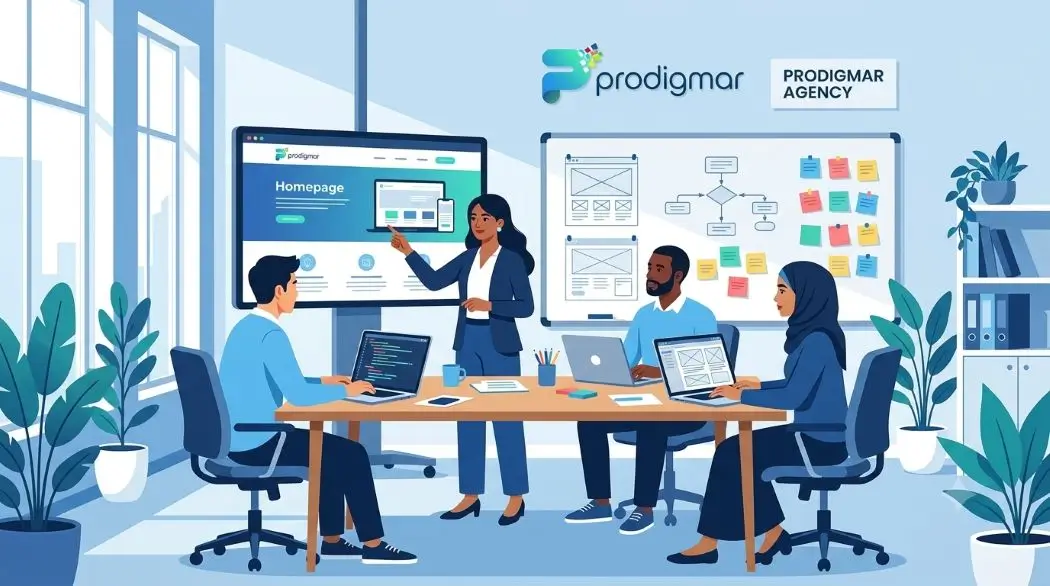
At Prodigmar, we approach every website project as a business tool first, and a design piece second. Our team combines strategic thinking, clean design, and solid development to build websites that actually perform.
Here’s what sets us apart:
Whether you need a brand-new business website or a redesign of an outdated one, Prodigmar builds sites designed to convert visitors into paying customers.
Website design and development is the combined process of creating a website's visual layout (design) and its technical functionality (development). Together, they produce a website that looks professional and works reliably.
Web design focuses on the visual and user experience side — layout, colors, and navigation. Web development handles the technical build — coding, functionality, and backend systems that bring the design to life.
Yes. A website needs strong design to engage visitors and solid development to function properly, load quickly, and stay secure. Skipping either one weakens the final result.
Costs typically range from $1,000 for a basic small business site to $20,000+ for a custom e-commerce platform, depending on complexity, features, and design requirements.
A simple business website usually takes 2 to 4 weeks, while custom or e-commerce sites can take 6 to 12 weeks or longer, depending on scope and content readiness.
Yes, WordPress is a popular choice for business websites because it's flexible, SEO-friendly, and easy to update without needing to code. It works well for small businesses through mid-sized companies.
Yes. Prodigmar offers website redesign services that improve outdated design, fix technical issues, and rebuild sites with better performance and SEO — often using your existing content and branding as a starting point.
Every business is different. Book a free 1-on-1 consultation with a Prodigmar strategist and get a custom social media growth plan built around your goals, your budget, and your audience.
Click to chat