

Your website receives visitors, but orders barely move. Before buying more traffic, investigate what makes the next step difficult. E-commerce conversion optimization in Pakistan means improving the buying journey so more suitable visitors complete a purchase or make a qualified enquiry. It combines clear information, dependable checkout, helpful service and measurement.
For a bedding shop, success might mean an online order. For a custom furniture showroom, it might start with a quotation request. Your website should support the way customers actually buy.
Key takeaways
- Measure purchases, qualified enquiries and delivered orders separately.
- Answer product, payment and delivery questions before customers need to ask.
- Fix broken journeys first, then test improvements against meaningful business results.
Start with a useful conversion baseline
Choose your main outcome before changing the design. Otherwise, a busier WhatsApp inbox can look like progress while sales remain flat.
For a session-based purchase conversion rate, divide sessions containing a purchase by total sessions, then multiply by 100. For example, 20 purchasing sessions from 1,000 sessions equals 2%. This is an illustration, not a Pakistani market benchmark.
Track the journey through product views, cart additions, checkout starts and purchases. Google Analytics provides recommended events including view_item, add_to_cart, begin_checkout and purchase.1
Check the setup with a test order. Verify transaction IDs, currency and values, and check that refreshing the confirmation page does not inflate purchases. Compare analytics with your store records; tracking gaps can create misleading conclusions.

| Business Model | Main Outcome | Supporting Measure |
|---|---|---|
| Online bedding store | Completed purchase | Checkout completion |
| Custom sofa retailer | Qualified quotation request | Enquiry-to-sale rate |
| Store offering cash on delivery | Delivered, paid order | Refusals and cancellations |
Segment results by device, traffic source and product category. Keep your definitions consistent across reporting periods.
Make product discovery straightforward
Arrange categories around how customers shop: bedsheets, curtains, sofas and dining furniture. Avoid making shoppers decode creative collection names before finding everyday products.
Offer relevant filters, such as size, material, colour, price and availability. Show selected filters clearly and make them easy to remove. Check searches that return no results; customers may use different words from your catalogue.
Match each landing page to the promise that brought the visitor there. An advertisement for cotton bedsheets should lead to suitable bedsheets, with the advertised offer visible.
Clear categories also support your wider retail SEO strategy. Discovery and conversion work together: first help people reach the right page, then help them choose.
Build product pages that answer buying questions
Product page optimization starts with uncertainty. What would stop someone buying without touching the product?
For a Lahore furniture retailer, useful details include dimensions, upholstery, frame material, colour options, assembly requirements and delivery coverage. A bedsheet page needs fabric, measurements, included pieces and care instructions.
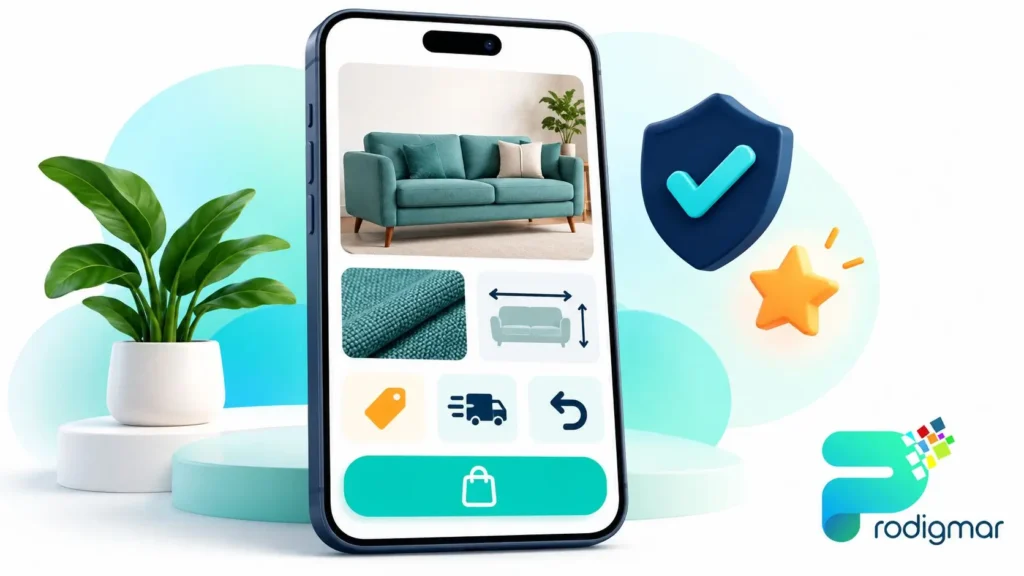
Place these essentials near the buying decision:
- Clear photographs, close-ups and an image showing scale.
- Price in PKR and any variant-dependent changes.
- Availability and a realistic dispatch or production estimate.
- Delivery charges, or a clear explanation of how you calculate them.
- A concise return or exchange summary with the full policy linked.
- One clear primary action, such as “Add to cart” or “Request a quote.”
Distinguish ready stock from made-to-order products. If customisation changes the price, explain the process instead of displaying an unrealistically low starting figure.
Product descriptions should sell, not audition for a poetry prize.
Build trust with details customers can verify
Show your business name, working contact details and an accurate showroom address where relevant. Explain support hours and give customers a practical way to resolve an order problem.
Use genuine reviews and authentic product photographs. Publish clear policies for damaged deliveries, exchanges and refunds. Explain any exclusions for customised products before the order.
Avoid invented reviews, fake scarcity and payment badges for methods you do not support. Trust grows when the website, sales team and delivery experience tell the same story.
Reduce checkout friction and abandonment
Baymard’s checkout research identifies issues such as extra costs, account requirements and complicated checkout among reasons shoppers abandon purchases. Its research is not a Pakistan-specific conversion benchmark.2
Offer guest checkout where your platform allows it. Ask only for information necessary to process and deliver the order. Mark optional fields clearly and explain errors beside the relevant field.
Show the complete payable total before the customer commits. Explain delivery coverage and timing early, especially for bulky furniture or deliveries outside your main service area.
Offer payment methods your business can reliably support. Where you offer cash on delivery, explain eligibility, fees and confirmation steps. For advance payments or deposits, state the amount and remaining balance clearly.
Test failed payments, retry flows and confirmation messages. Preserve the cart when a payment attempt fails. A customer should not need to rebuild the order because a connection dropped.
Review abandonment alongside stock availability, delivery restrictions and traffic quality. A discount cannot fix a checkout button that does nothing.
Not Sure Where Customers Get Stuck?
Ask Prodigmar to review your retail website’s conversion journey and help identify opportunities to turn more visitors into customers.
Get Your Free Retail Growth AuditMake mobile shopping comfortable
Test the complete journey on an ordinary phone using mobile data. Check menus, filters, product options, forms and payment redirects. Keep text readable, controls easy to tap and important information visible without awkward zooming.
Watch for floating chat buttons that cover checkout controls. Compress oversized images and remove unnecessary scripts, but keep product photographs useful.
Google’s Core Web Vitals measure loading, responsiveness and visual stability. Its “good” thresholds are LCP within 2.5 seconds, INP at or below 200 milliseconds and CLS at or below 0.1, assessed at the 75th percentile.3
Use these as diagnostic targets alongside customer behaviour. A good performance score alone does not prove that a page converts well.
Turn WhatsApp enquiries into a measurable sales journey

For custom curtains or furniture, an enquiry can be the correct next step. Give the WhatsApp button a specific purpose, such as “Ask about this sofa,” and include the product reference in the suggested message.
State when customers can expect a response. Ask for the details needed to help: product, size, delivery city and purchase timeframe. Define a qualified enquiry around your business’s actual service criteria.
Separate button clicks, conversations, qualified enquiries, quotations and sales. A WhatsApp click does not confirm that someone sent a message.
Record outcomes in a CRM or organised sales sheet. Link enquiries to eventual orders where practical, and avoid counting the same sale twice across website and sales reports. Keep names, phone numbers and message contents out of Google Analytics.4
Test improvements in a sensible order
Fix broken forms, misleading prices and payment errors immediately. Then prioritise improvements using customer evidence, likely impact and implementation effort.
Write a specific hypothesis: “Showing delivery estimates beside the price will improve completed purchases because shoppers can assess arrival timing earlier.”
Choose a primary metric and guardrails, such as margin, cancellations and support workload. For an A/B test, decide the sample requirements and duration before starting. Avoid declaring a winner after a handful of orders.
If traffic is low, watch customers complete realistic tasks and review repeated sales questions. Before-and-after comparisons can guide decisions, but promotions and seasonality make causal claims unreliable.
Connect this work to your broader retail growth strategy, so advertising, website changes and sales follow-up share the same goals.
Ready to Prioritise Your Next Improvements?
Book a free 30-minute strategy call with Prodigmar to discuss your store, customer journey and measurement priorities.
Request Your Free 30-Minute Strategy CallFrequently asked questions
It is the process of improving a store’s buying journey so more relevant visitors complete a useful action, such as a purchase or qualified enquiry. Measure the outcome, investigate friction and test improvements.
There is no single target suitable for every store. Product price, traffic quality and the buying journey affect results. Compare consistent segments with your own baseline and check profitability alongside conversion rate.
Possible causes include unsuitable visitors, unclear product details, unexpected charges, weak trust or checkout errors. Inspect the journey stage by stage before assuming that your design or advertising is the only problem.
Use checkout for products customers can confidently order themselves. Offer enquiries for purchases that need advice or custom pricing. When both options exist, make their purposes clear and measure their outcomes separately.
Yes. Start with accurate product information, clear delivery costs, working forms and mobile usability. These changes may address the main obstacles. Use evidence before committing to a complete rebuild.
Yes. Start with accurate product information, clear delivery costs, working forms and mobile usability. These changes may address the main obstacles. Use evidence before committing to a complete rebuild.


