
The brands winning with video marketing in 2026 aren’t the ones posting the most. They’re the ones who can point to a specific video and say, “that one paid for itself.”
Video budgets keep climbing. According to Wyzowl’s 2026 State of Video Marketing report, 91% of businesses now use video as a marketing tool, and 93% of marketers call it an important part of their overall strategy. Adoption isn’t the question anymore. ROI is.
And ROI has gotten trickier to prove. Wyzowl also found that 82% of marketers report a good return from video in 2026, down from a record 93% the year before. Nobody’s quite sure why, but the most likely explanation is simple: more brands are making video, so more brands are making mediocre video, and that drags the average down.
This guide skips the trend list nobody needed and goes straight to the strategies that are actually trackable. Ten formats, one funnel framework, and the honest trade-offs for each — so your next video marketing strategy for 2026 has a job to do, not just a view count to chase.
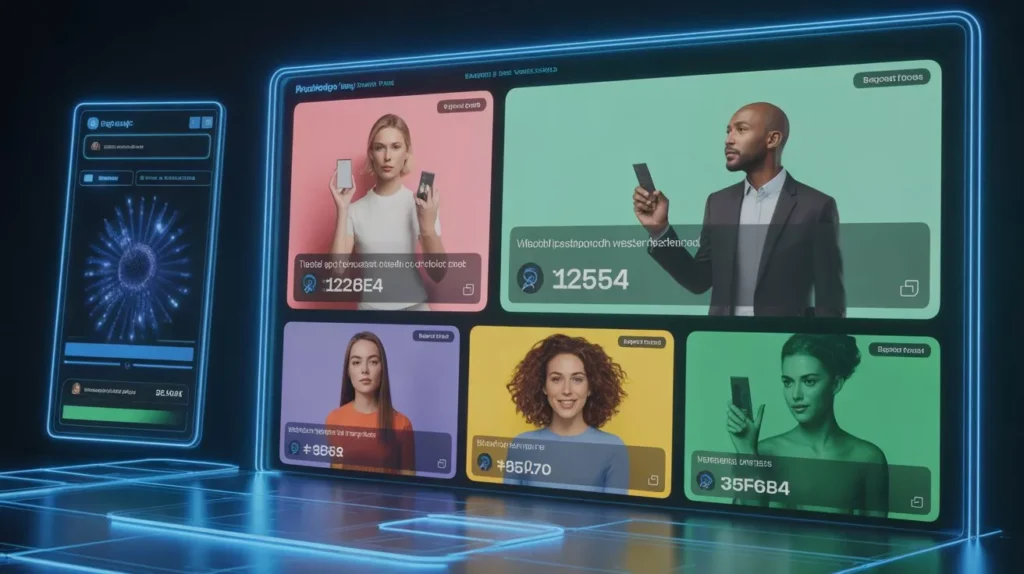
AI video personalization means generating multiple cuts of the same video — different hooks, voiceovers, or calls-to-action — automatically matched to each audience segment.
Instead of one generic ad running to everyone, a returning visitor might see a version that opens with “welcome back,” while a first-time visitor gets a version that opens with a product explainer. Same core footage, different first three seconds.
Here’s where it earns its keep:
The catch: personalization only works if your audience data is clean. Feed it a messy segment list and you’ll just get five mediocre videos instead of one good one.
Short-form video builds topical authority. It doesn’t just chase reach — done right, it makes a brand the go-to answer for a specific question.
The difference between a short-form video that builds authority and one that just adds to the noise usually comes down to one thing: does it live inside a series, or is it a one-off trend jump?
Brands that post consistently on one narrow theme — say, “answering the same customer objection every week” — tend to outperform brands that chase whatever’s trending that day. Platform algorithms notice topical consistency and reward it.
What tends to work:
Wyzowl’s 2026 data backs the format up directly: 71% of people say videos between 30 seconds and two minutes are the most effective length, which lines up neatly with how short-form platforms are built.
If you’re building this out for your own brand, our social media marketing services team handles exactly this kind of series-based short-form planning.
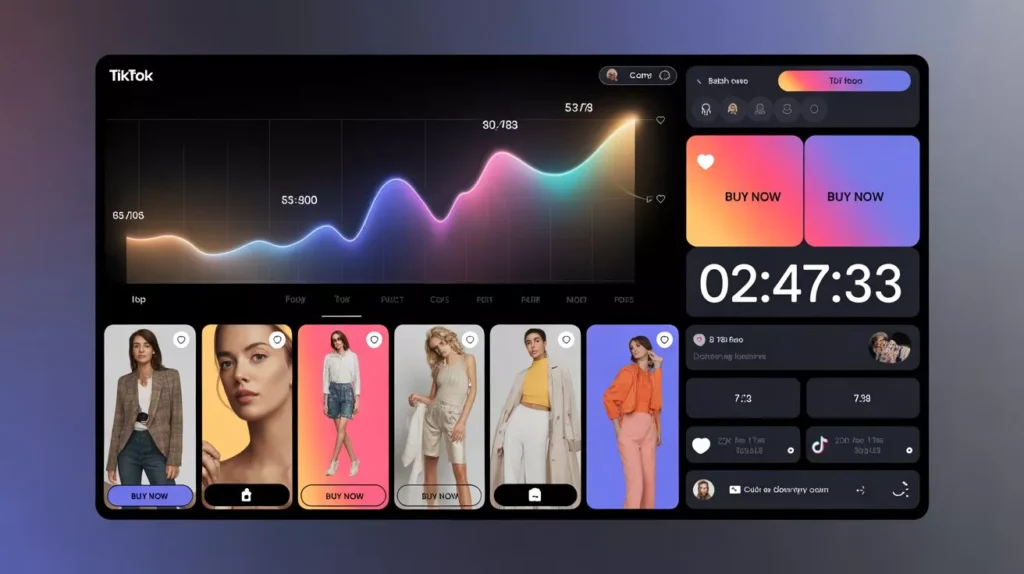
Live shopping merges live video with real-time checkout. It’s not a brand-awareness play — it’s a direct sales channel dressed up as a broadcast.
The numbers explain why brands are paying attention. Industry benchmarking from McKinsey and Coresight Research puts live shopping conversion rates at roughly 9–15%, against 2–3% for a standard e-commerce page. TikTok Shop’s own 2026 analytics, compiled by Dashboardly, show TikTok Live converting at 7.8%, nearly four times higher than TikTok’s feed ads at 2.1%.
Return rates drop too — live shoppers get to ask questions and see the product in motion before buying, which cuts down on the “that’s not what I expected” returns that plague standard online orders.
Who should actually invest here:
Who should probably skip it for now:
Honesty matters more than hype here — live shopping isn’t a universal fit, and pretending otherwise wastes budget.

Fast-rhythm vertical ads use quick cuts — a new visual roughly every one to two seconds — to fight the thumb that’s already scrolling past.
The anatomy of one that actually holds attention:
Sound matters more than most brands assume. Most vertical placements now default to audio-on, so an ad edited in silence is an ad that’s already lost half its impact.
This is also where the format meets the media buy — a great vertical ad still needs the right targeting behind it. Our Facebook Ads services team builds and places exactly this kind of ad, then tracks it against the metrics that actually matter (more on that below).
Social-first video is built for the platform from the first frame — not a long-form asset cut down after the fact.
Shares are a different metric from views, and they respond to different triggers:
A produced ad and a social-first video can promote the exact same offer and get wildly different share counts, purely because one was built for the feed and one was built for a TV screen that no longer exists.
A repurposing framework turns one long-form shoot into eight to twelve platform-native assets, without booking a second filming day.
| Source Asset | Repurposed Into |
|---|---|
| One long-form YouTube video | 3 vertical Reels/Shorts clips |
| Same video | 1 LinkedIn cutdown (talking-head focus) |
| Same video | 1 X/Twitter thread (key quotes + native clip) |
| Same video | 1 blog post with embedded video |
| Same video | 3–4 quote graphics for Instagram/Pinterest |
The workflow is film once, cut many — not re-shoot for every platform. Each cut still needs a platform-native edit (aspect ratio, captions, pacing), not a straight re-upload, or it’ll feel out of place the moment someone scrolls past it.
Interactive video embeds clickable elements — polls, product tags, branching choices — directly inside the player, so watching turns into doing.
A few formats worth testing:
The advantage over a standard end-card CTA is timing. An end-card asks for action after attention has already faded. An in-video CTA catches someone at their most engaged moment.
Customer-generated video converts better than brand-produced video in most ad placements, mostly because it reads as testimony rather than marketing.
The performance gap shows up consistently across ad platform data. Ads built from real customer footage tend to see roughly four times the click-through rate of studio-produced ads, while cost-per-click drops by close to half, according to widely cited 2026 ad benchmarking data. On YouTube specifically, user-generated product videos regularly pull in around ten times more views than the same brand’s produced content.
How to actually source UGC systematically (rather than hoping it happens):
The honest caveat: UGC works because it’s real. The moment it starts looking scripted, it loses the exact advantage that made it worth using.
AR and 3D video let customers interact with a product virtually before buying — which is exactly why the format concentrates almost entirely in e-commerce, retail, and real estate.
Realistic use cases for SMEs in 2026:
This is the highest-cost, most niche-fit format on this list, and it deserves an honest expectations check. If your product isn’t visual or spatial, AR probably isn’t where your next budget increase should go.
A video funnel matches a specific video format to each stage of the buyer journey — awareness, consideration, decision — so every video has a defined job and a way to measure whether it did that job.
| Funnel Stage | Best-Fit Format | Primary Metric |
|---|---|---|
| Awareness | Short-form / UGC | Watch time, reach |
| Consideration | Explainer / comparison | Completion rate, CTR |
| Decision | Testimonial / product demo | Conversion rate |
Not every metric is equally useful. Wyzowl’s 2026 data shows most marketers still measure video success through views (67%) and engagement (63%), while far fewer track it through leads (52%) or actual sales (32%). Views tell you people showed up. They don’t tell you anyone bought anything.
The gap between “views” and “revenue” is exactly where a proper funnel earns its keep. On product pages specifically, WebFX data shows sites with video convert at an average of 4.8%, compared to 2.9% without — a lift that’s hard to ignore once it’s sitting in front of you.
Once video is doing real funnel work, it’s worth pairing it with paid amplification so the right stage reaches the right audience. Our PPC management team builds that pairing — matching video creative to campaign structure so budget goes toward the stage that’s actually underperforming.
Our team handles everything from concept to final cut. Explore Prodigmar’s video editing services or get in touch to talk through a strategy built around your funnel, not just your follower count.
Our team handles everything from concept to final cut. Explore Prodigmar's video editing services or get in touch to talk through a strategy built around your funnel, not just your follower count.
Get in Touch →Winning at video marketing in 2026 isn’t about producing more of it, or chasing every format on this list. It’s about matching the right format to the right funnel stage, and tracking the one metric that actually predicts revenue instead of the one that just looks good in a slide deck.
Start with one funnel stage where you’re weakest, pick one format from this guide, and give it 90 days before judging results. That’s a far more honest test than trying all ten formats at once and hoping something sticks.
Click to chat