Landing Page Optimization for Paid Search Conversions in 2026: Prodigmar’s Expert Guide
Paid search advertising drives targeted traffic fast. However, traffic alone does not pay the bills. Conversions do.
That’s where Landing Page Optimization becomes your most powerful advantage in 2026.
You can run brilliant ads. You can target the right keywords. But if your landing page fails to deliver, your ad budget quietly disappears. In this guide, we break down how Landing Page Optimization improves paid search conversions using real, proven practices aligned with Google’s guidelines and industry standards.
Why Landing Page Optimization Is Critical for Paid Search Success
How Poor Landing Pages Drain Your Ad Spend
Every click costs money. If visitors land on a confusing or slow page, they leave.
Google clearly states that landing page experience influences both Quality Score and ad performance (Source: Google Ads Help Center – Landing Page Experience). A poor experience increases cost-per-click and reduces ad visibility.
In simple terms: bad landing pages make you pay more for worse results.
You wouldn’t invite guests into a messy store. So why send paid traffic to an unoptimized page?
The Connection Between Landing Pages and Conversion Rate
Conversion rate reflects how many visitors take action.
According to research from Google and industry insights from HubSpot, relevance, clarity, and usability directly affect conversions.
When landing pages match user intent, conversion rates improve. When they don’t, bounce rates increase.
Landing Page Optimization bridges that gap between click and action.
2026 Trends: What Users Expect from High-Converting Pages
Users in 2026 expect:
- Fast-loading pages
- Mobile-first design
- Clear value propositions
- Trust signals (reviews, badges, policies)
- Personalized content
Google’s Core Web Vitals remain a ranking and performance factor. Speed and usability no longer act as “nice to have” features. They define performance.
Understanding Conversion Goals for Paid Search Campaigns
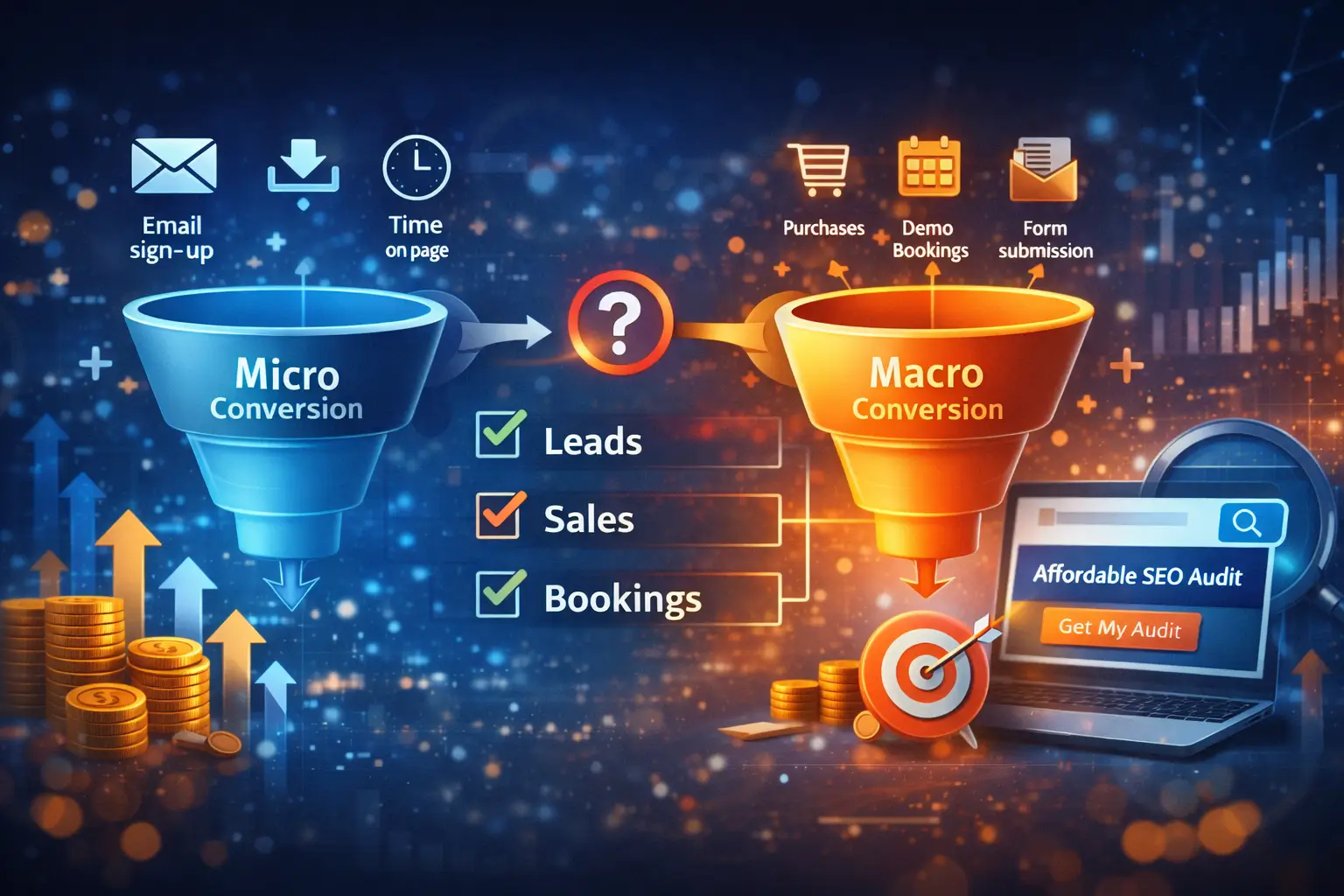
Micro vs. Macro Conversions Explained
Not all conversions look the same.
- Macro conversions: Purchases, demo bookings, form submissions
- Micro conversions: Email sign-ups, downloads, time on page
Micro conversions signal engagement. Macro conversions generate revenue. Smart Landing Page Optimization tracks both.
Setting Clear Objectives Before Optimizing
Before you redesign anything, define your goal.
Do you want leads? Sales? Bookings?
Optimization without clarity feels like driving without a destination. You might move fast, but you won’t know where you’re going.
Use measurable KPIs such as conversion rate, cost per conversion, and bounce rate. Tools like Google Analytics help track these metrics accurately.
Aligning Landing Pages With Ad Intent
Search intent drives everything.
If someone clicks an ad for “affordable SEO audit,” your landing page must deliver exactly that. Not your company history. Not a general services page.
Message match increases trust instantly. Trust increases action.
Key Elements of High-Converting Landing Pages
Strong Headlines That Match Ad Copy
Your headline confirms relevance in seconds.
When the headline mirrors your ad copy, visitors feel confident they clicked the right result. This practice reduces bounce rates and strengthens conversion intent.
Clarity beats cleverness every time.
Engaging Visuals That Improve User Experience
Images and visuals guide attention.
Use product visuals, explainer graphics, or short videos to reinforce your value proposition. Avoid stock overload. Every visual must support your message.
Visual hierarchy keeps users focused on action.
Persuasive Copywriting That Encourages Action
Persuasive copy solves a problem.
Focus on benefits. Highlight outcomes. Address objections.
Short paragraphs improve readability. Clear language improves trust. Specific promises convert better than vague claims.
Avoid fluff. Every sentence should move the reader closer to action.
Clear and Prominent Call-to-Actions (CTAs)
Your CTA must stand out.
Use action-oriented phrases like:
- Get My Free Audit
- Start My Trial
- Book My Consultation
Place CTAs strategically above the fold and after key sections. Limit competing buttons. Confused users rarely convert.
Expert Tip: Boost Your Paid Search Conversions with Prodigmar
Need actionable tips to boost your paid search conversions?
- Follow Prodigmar on Instagram for expert paid search strategies.
- Comment on our posts to get your FREE Paid Search Optimization Report today! https://www.instagram.com/prodigmaroffical
Optimizing Page Layout and Design for Maximum ROI
Mobile-Friendly Design That Converts
Mobile traffic dominates paid search.
Google uses mobile-first indexing. If your landing page struggles on mobile, your conversions will too.
Ensure:
- Responsive design
- Large, tappable buttons
- Fast loading speed
- Simple navigation
Test your pages using Google’s PageSpeed Insights tool.
Page Speed Optimization and Its Impact on Quality Score
Speed influences both user experience and ad performance.
Google confirms that landing page experience affects Quality Score. Faster pages improve user satisfaction and reduce abandonment.
Compress images. Minimize scripts. Use caching.
Even a one-second delay can reduce conversions significantly, according to industry research from Think with Google.
Using White Space and Visual Hierarchy Effectively
White space improves readability.
It guides users naturally from headline to CTA. Crowded pages overwhelm visitors. Clean design builds authority.
Good design feels invisible. It supports action without distraction.
Reducing Distractions and Focus on the Conversion Path
Remove unnecessary navigation.
Eliminate unrelated links. Focus attention on one primary action.
Landing pages differ from websites. Websites inform. Landing pages convert.
A/B Testing Strategies for Paid Search Landing Pages

How to Test Headlines, Copy, and CTAs
Testing removes guesswork.
Test one variable at a time:
- Headline variations
- CTA color and text
- Form length
- Social proof placement
Small adjustments often produce measurable gains.
Using Analytics to Measure Success
Use data to guide decisions.
Track:
- Conversion rate
- Cost per acquisition
- Bounce rate
- Time on page
Integrate Google Ads with Google Analytics for deeper insights. Data keeps optimization objective.
Iterative Testing: Making Small Changes for Big Results
Optimization never ends.
Instead of redesigning everything, improve incrementally. Test. Measure. Refine.
Over time, small improvements compound into significant ROI gains.
Personalization and Dynamic Content to Increase Conversions
Tailoring Landing Pages by Keyword or Campaign
Dynamic keyword insertion improves message match.
If a user searches for “B2B SEO services,” show that exact phrase in your headline.
Relevance increases engagement.
Dynamic Content Blocks and Their Benefits
Dynamic sections adapt based on:
- User location
- Device
- Campaign source
Personalization makes visitors feel understood. And people convert when they feel understood.
Retargeting and Post-Click Experience Optimization
Retargeted users expect continuity.
Ensure your landing page reflects previous interactions. Align messaging with earlier touchpoints.
Consistency strengthens trust.
Common Landing Page Mistakes That Hurt ROI
Mismatched Ad-to-Page Messaging
When ads promise one thing and pages deliver another, trust disappears.
Message mismatch remains one of the biggest conversion killers.
Overloaded Pages With Too Many CTAs
Too many options reduce decisions.
Focus on one primary action. Secondary actions should remain subtle.
Ignoring Mobile Users or Page Speed Issues
Slow mobile pages destroy ROI.
Always test performance across devices. Speed and usability remain non-negotiable.
How Prodigmar Approaches Landing Page Optimization Differently
Data-Driven Design and Analytics
At Prodigmar, we build strategies on measurable insights.
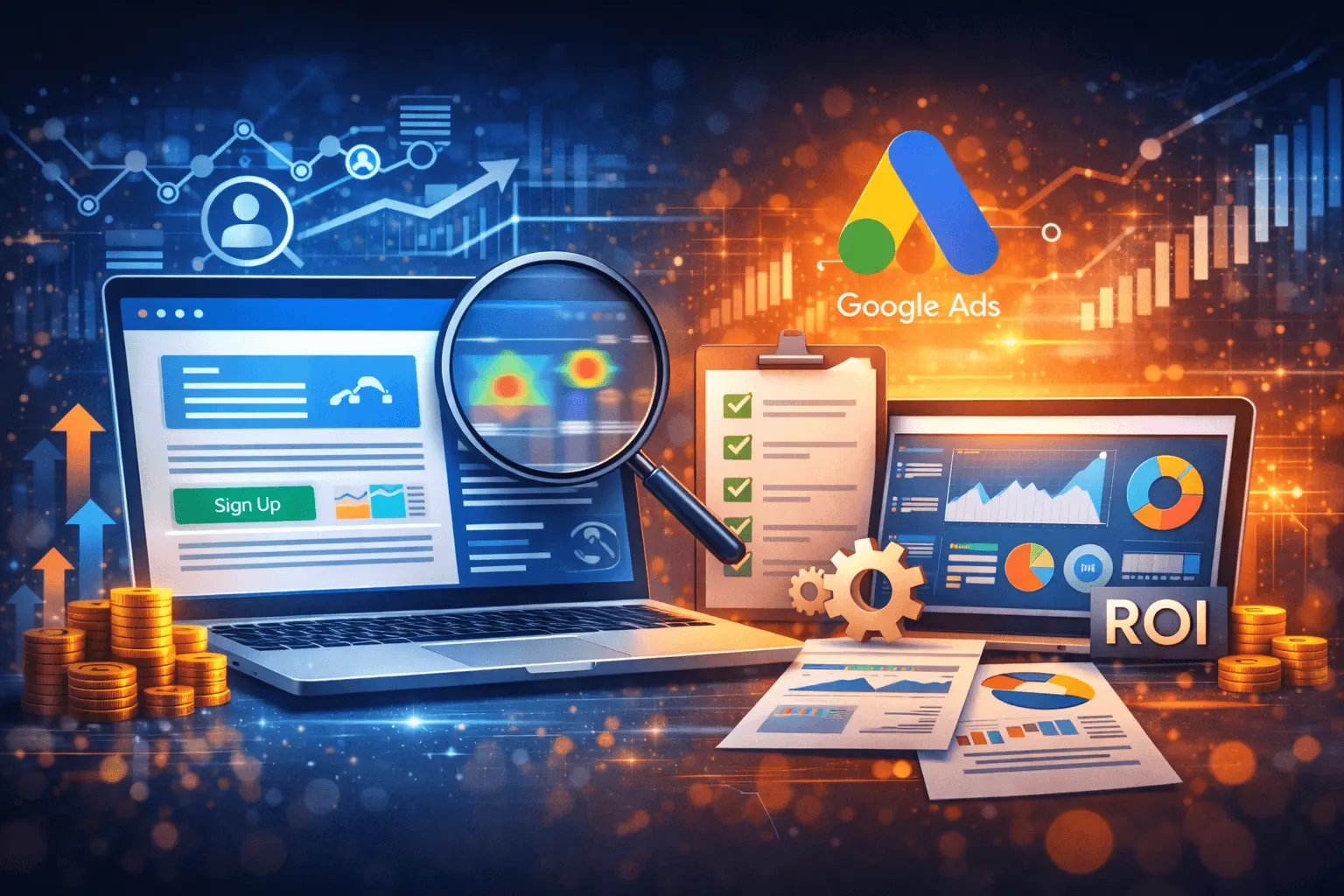
We analyze traffic sources, keyword intent, heatmaps, and conversion data before making changes.
Data drives decisions.
Continuous Optimization and Testing
We never treat Landing Page Optimization as a one-time task.
We test continuously. We refine strategically. We measure consistently.
Combining Paid Search Expertise With Landing Page Strategy
Paid ads and landing pages must work together.
Our team integrates Google Ads strategy with conversion-focused design to maximize ROI.
Learn more about our approach on our internal strategy page:
/paid-search-strategy-guide
For further reading on Google’s landing page experience guidelines, visit:
https://support.google.com/google-ads/answer/2404197
Final Thoughts: Maximizing Paid Search Conversions in 2026
Optimization Is Continuous, Not One-Time
Markets evolve. User behavior shifts. Competitors adapt.
Consistent Landing Page Optimization keeps you competitive.
Integrating Ads, Landing Pages, and Analytics for Success
Success happens when:
Ads attract qualified users
Landing pages deliver relevance
Analytics guide improvement
Alignment produces measurable growth.
Why Expert Guidance Can Make a Measurable Difference
Paid search remains competitive in 2026.
Expert guidance accelerates results. Strategic optimization reduces waste. Data-driven improvements increase profitability.
Landing Page Optimization transforms traffic into revenue. When executed properly, it strengthens trust, boosts ROI, and supports long-term growth.
Frequently Ask Questions
What is Landing Page Optimization?
Landing Page Optimization improves page elements to increase conversions from paid traffic.
Why does Landing Page Optimization matter for Google Ads?
How often should I test my landing pages?
Does page speed affect paid search conversions?
Can personalization increase landing page conversions?