Google Ads Writing Guide for Conversions (2026) | Prodigmar
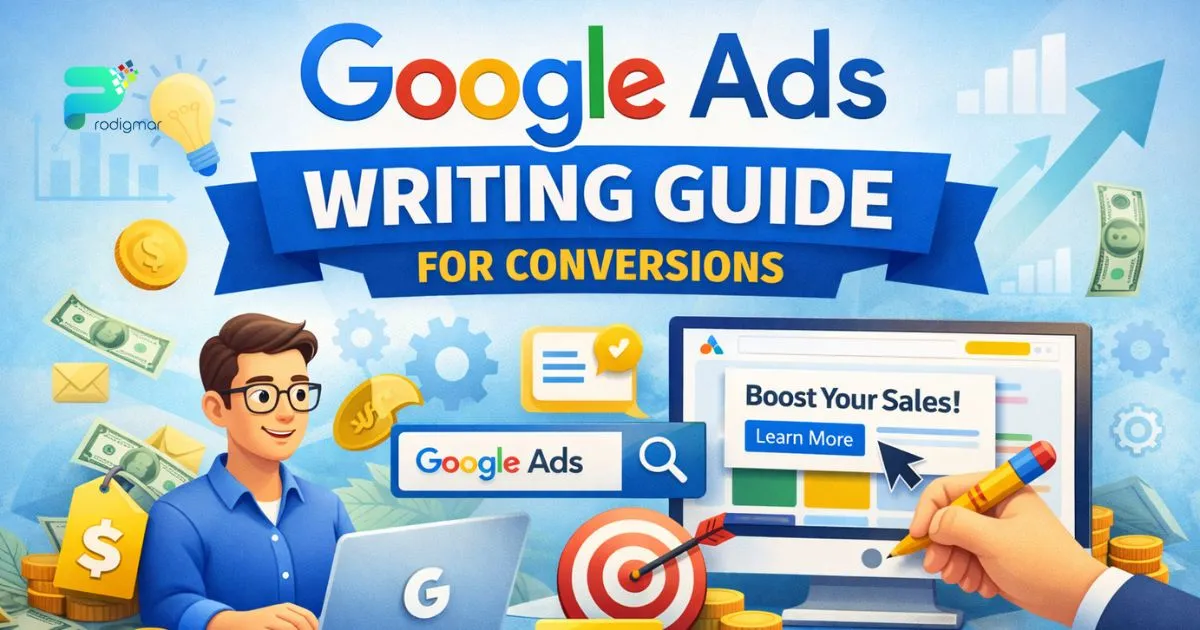
Google Ads is not about clever words. Instead, it is about clear intent, strong relevance, and timing. People search on Google because they want answers, products, or solutions right now. Your ad copy must meet that moment without wasting a single word.
According to Google’s own Ads Help Center, relevance and user experience play a direct role in performance through Quality Score. This means writing better ads does not just improve clicks. It also lowers costs and improves visibility.
In this guide, you will learn how to write Google Ads that convert. Every tip here aligns with Google’s official recommendations and real-world performance data. No filler. No guesswork. Just practical writing strategies that work.
Expert Tip: Boost Your Google Ads Conversions with Prodigmar
- Need actionable tips to boost your Google Ads conversions?
- Follow Prodigmar on Instagram for expert-paid search strategies.
- Comment on our posts to get your FREE Paid Search Optimization Report today! https://www.instagram.com/prodigmaroffical
Understanding User Intent
Why Intent Matters in Google Ads
User intent decides everything in Google Ads. Someone searching “what is Google Ads” wants information. Someone searching “Google Ads agency near me” wants help today.
Google categorizes intent into three main types:
- Informational
- Navigational
- Transactional
High-converting Google Ads focus on transactional and commercial intent. Google confirms this in its Search Quality Evaluator Guidelines, where intent alignment directly affects relevance and satisfaction.
When your ad copy matches intent, users click with confidence. When it does not, they scroll past without mercy.
Identifying High-Intent Keywords
High-intent keywords often include:
- Buy
- Hire
- Pricing
- Services
- Near me
Google Keyword Planner remains the most reliable tool for finding these terms. It shows search volume, competition, and commercial value directly from Google’s data.
At Prodigmar, we prioritize keywords that signal action. Traffic without intent looks good in reports but rarely converts.
Structuring Your Google Ads Campaign for Success
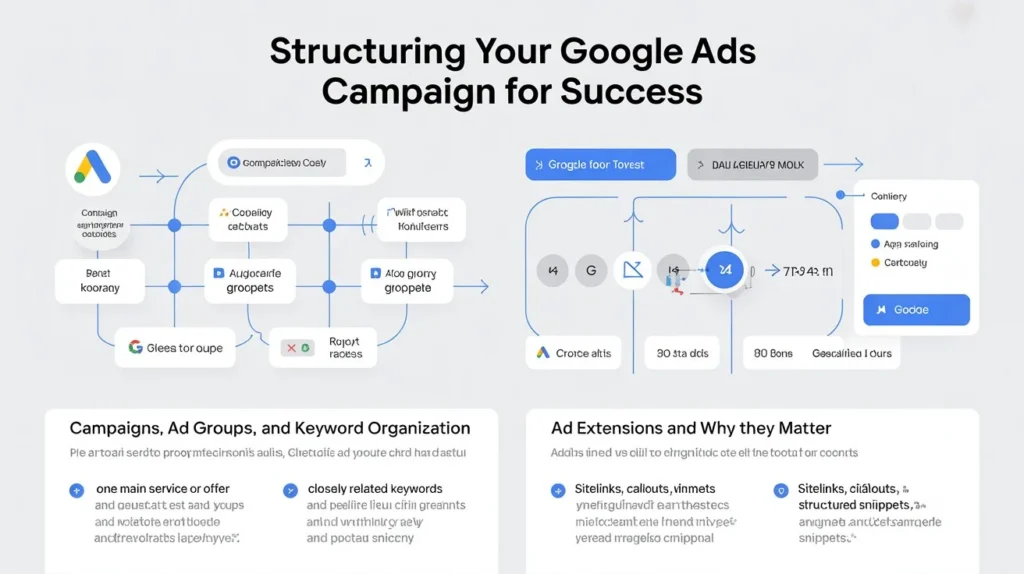
Campaigns, Ad Groups, and Keyword Organization
Strong ad copy fails without structure. Google recommends tightly themed ad groups because they improve relevance and Quality Score.
Each ad group should focus on:
- One main service or offer
- Closely related keywords
- Matching ad copy
For example, do not mix “Google Ads management” with “Facebook Ads services” in one group. Google dislikes confusion almost as much as users do.
Ad Extensions and Why They Matter
Ad extensions increase visibility and credibility. Google states that extensions can improve click-through rates because they provide additional context.
Use extensions like:
- Sitelinks
- Callouts
- Structured snippets
- Call extensions
They do not replace strong copy. However, they support it and often tip the decision in your favor.
Writing Compelling Headlines
Grab Attention Immediately
You get three headlines. Each one matters.
Google’s own best practices suggest placing your most important message in Headline 1. Users scan fast. If you miss that first moment, they move on.
Good headlines are:
- Specific
- Relevant
- Honest
Avoid vague promises like “Best Services Available.” Instead, say what you actually offer.
Include Primary Keywords Naturally
Your focus keyword should appear naturally in at least one headline. This improves relevance and reassures users they found the right result.
For example:
“Google Ads Management That Increases Sales”
This works because it matches intent and avoids keyword stuffing.
Crafting Persuasive Descriptions
Focus on Benefits, Not Just Features
Features explain what you do. Benefits explain why users should care.
Google recommends highlighting value clearly. Users do not buy services. They buy outcomes.
Instead of:
“We manage Google Ads campaigns”
Try:
“Get more qualified leads with expertly managed Google Ads”
Same meaning. Better motivation.
Keep It Clear and Concise
Descriptions allow limited characters. Every word must earn its place.
Use:
- Short sentences
- Clear promises
- Simple language
Avoid jargon unless your audience expects it. Clarity always converts better than cleverness.
Match Ad Copy with Landing Page Messaging
Google strongly emphasizes message match. When ad copy and landing page content align, conversion rates improve and bounce rates drop.
If your ad promises “Google Ads Audit,” the landing page must lead with that offer. Do not make users hunt for it.
Consistency builds trust. Mismatch kills conversions.
Essential Landing Page Elements
High-converting landing pages usually include:
- Clear headline
- Supporting proof
- Simple form or CTA
- Fast loading speed
Google’s Page Experience guidelines confirm that speed and usability affect performance. A slow page wastes even the best ad copy.
Quality Score affects cost and visibility. Google calculates it using:
- Expected click-through rate
- Ad relevance
- Landing page experience
Better writing improves all three.
When ads match keywords and landing pages clearly, Google rewards you with lower costs and higher positions. That is not a trick. It is how the system works.
Many advertisers lose money by repeating the same mistakes.
Avoid:
- Writing generic copy
- Ignoring user intent
- Sending traffic to irrelevant pages
- Skipping extensions
- Never testing variations
Google Ads punishes laziness quickly. However, it rewards clarity and effort just as fast.
Tracking Performance and Measuring Success
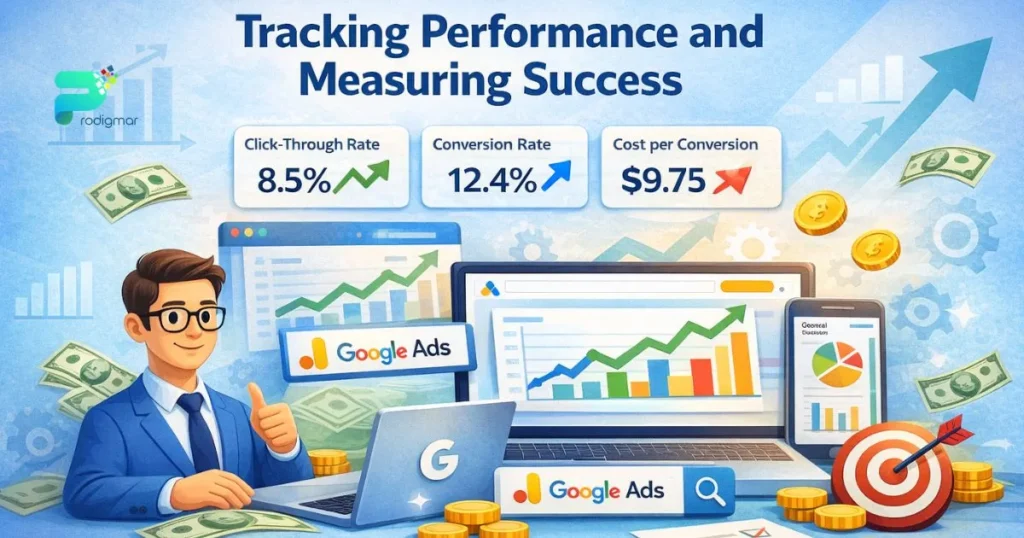
Data keeps you honest. Google Ads provides reliable metrics like:
- Click-through rate
- Conversion rate
- Cost per conversion
Use Google Analytics alongside Google Ads to understand user behavior after the click. Google officially recommends this integration for deeper insights.
At Prodigmar, we measure success by conversions, not impressions. Visibility matters only when it leads somewhere.
Google Ads writing blends psychology, structure, and clarity. Strong copy respects user intent, follows Google’s guidelines, and delivers value without exaggeration.
When you write ads that answer real needs, Google notices. Users notice too.
If you want professional help refining your Google Ads strategy, explore our Google Ads services at Prodigmar. For official guidance, review Google’s Ads best practices from the Google Ads Help Center.
Good ads do not shout. They simply make sense at the right moment.
Frequently Ask Questions
What makes Google Ads copy convert better?
How often should Google Ads copy be updated?
Does keyword placement matter in Google Ads?
Are ad extensions necessary for conversions?
Is landing page quality important for Google Ads?