
Conversion Tracking Guide for 2026 – Powerful Proven Framework by Prodigmar
Digital advertising in 2026 runs on one fuel: accurate data. Without it, even the best campaigns collapse under guesswork. This Conversion Tracking Guide shows you how to measure what truly matters, optimize with confidence, and scale profitably.
At Prodigmar, we don’t chase clicks. We track revenue, leads, customer quality, and long-term growth. This guide explains exactly how we build a reliable tracking framework that aligns with Google’s best practices and trusted industry standards.
Why Conversion Tracking Matters More Than Ever in 2026
The Shift from Click Metrics to Revenue Metrics
Marketers once celebrated impressions and click-through rates. Today, those metrics only tell part of the story. Revenue, profit, and lifetime value define success.
According to Google, advertisers who use data-driven bidding strategies powered by accurate conversion data see stronger performance improvements compared to manual optimization. Smart bidding systems rely on real outcomes, not vanity metrics.
Clicks show interest. Conversions show intent. Revenue shows impact.
Why Inaccurate Data Destroys ROI
Poor tracking misleads decision-making. If your data double-counts leads or misses sales, your budget shifts toward the wrong campaigns.
For example, misconfigured tags often inflate conversion numbers. As a result, algorithms optimize toward false signals. That wastes ad spend and limits growth.
Clean data protects ROI. Dirty data destroys it quietly.
The Real Cost of Poor Tracking Setup
Businesses often ignore tracking setup because it feels technical. However, the cost of ignoring it compounds over time.
- You lose clarity.
- You misallocate budgets.
- Miss scaling opportunities.
The longer inaccurate tracking runs, the harder it becomes to diagnose performance issues.
What Is Conversion Tracking? (Beginner to Advanced Explanation)
How Conversion Tracking Works in Simple Terms
Conversion tracking records user actions after they interact with your ad or website.
For example:
- A form submission
- A product purchase
- A phone call
- A booked appointment
Tracking tools use event tags or pixels to record those actions and send data back to platforms like Google Ads or analytics systems.
Simple idea. Powerful outcome.
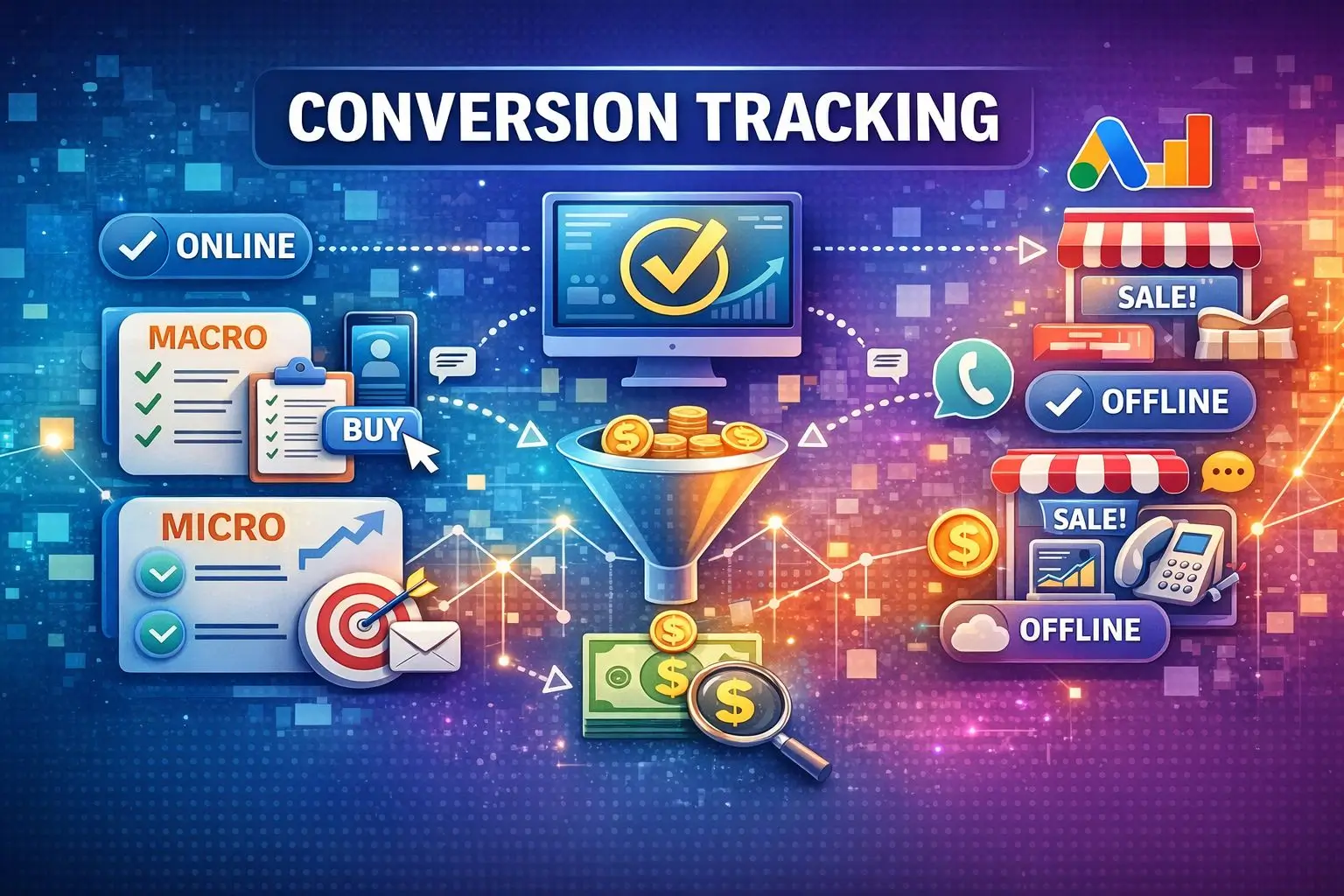
Macro vs. Micro Conversions Explained
Not all conversions hold equal value.
Macro conversions include primary goals such as purchases or qualified leads.
Micro conversions include smaller engagement steps like newsletter signups or product page views.
Both matter. However, macro conversions drive revenue. Micro conversions support the customer journey.
Online vs. Offline Conversion Tracking
Online tracking captures digital actions.
Offline tracking connects real-world outcomes, such as phone sales or in-store purchases, back to digital campaigns.
According to Google Analytics documentation, integrating offline data provides a clearer view of marketing effectiveness across channels.
When you connect both, you see the full funnel.
Essential Conversion Tracking Tools in 2026
Google Ads Conversion Tracking
Google Ads provides built-in conversion tracking. You can measure purchases, leads, calls, and app installs directly within the platform.
This data powers Smart Bidding strategies like Target CPA and Target ROAS.
Without conversion data, Smart Bidding cannot function properly.
GA4 Event Tracking and Goals
Google Analytics 4 (GA4) uses an event-based model. Instead of sessions and goals, GA4 tracks user interactions as events.
You can mark key events as conversions. This flexibility allows advanced tracking customization.
Google’s official documentation confirms that GA4 improves cross-device tracking and privacy controls compared to Universal Analytics.
Google Tag Manager Implementation
Google Tag Manager simplifies deployment.
Instead of editing website code repeatedly, you manage tags from one interface.
That reduces errors and speeds up updates.
CRM and Offline Conversion Integration
When you connect your CRM with ad platforms, you move beyond lead quantity. You measure lead quality.
For example, you can import closed deals back into Google Ads. Then the system optimizes toward revenue, not form fills.
That changes everything.
Step-by-Step Conversion Tracking Setup Framework
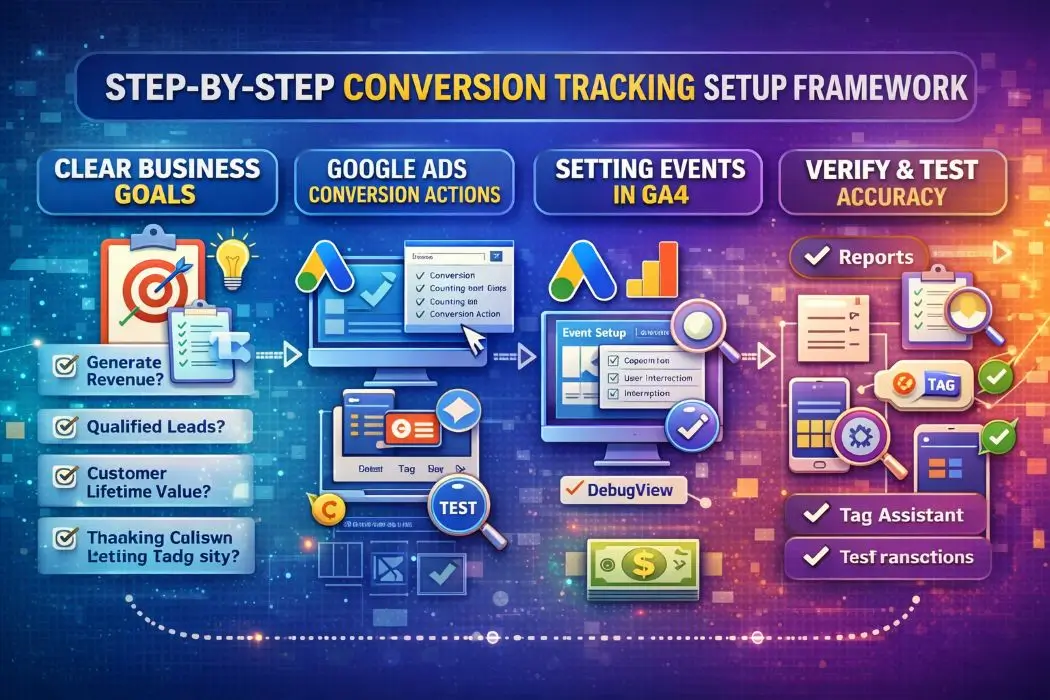
Defining Clear Business Goals First
Start with clarity.
Ask:
- What action generates revenue?
- What defines a qualified lead?
- What customer behavior predicts long-term value?
Tracking follows strategy. Not the other way around.
Setting Up Conversion Actions in Google Ads
Inside Google Ads:
- Create a new conversion action.
- Define value and counting method.
- Install the tracking tag using Tag Manager or global site tag.
- Test before launch.
Accuracy matters at every step.
Configuring Events in GA4
In GA4:
- Identify key user events.
- Create or modify custom events.
- Mark important events as conversions.
- Validate using DebugView.
GA4 offers built-in diagnostic tools that help verify implementation.
Verifying and Testing Tracking Accuracy
Never trust data blindly.
Use:
- Real-time reports
- Tag assistant tools
- Test transactions
Consistent testing prevents silent tracking failures.
Common Conversion Tracking Mistakes That Kill Performance
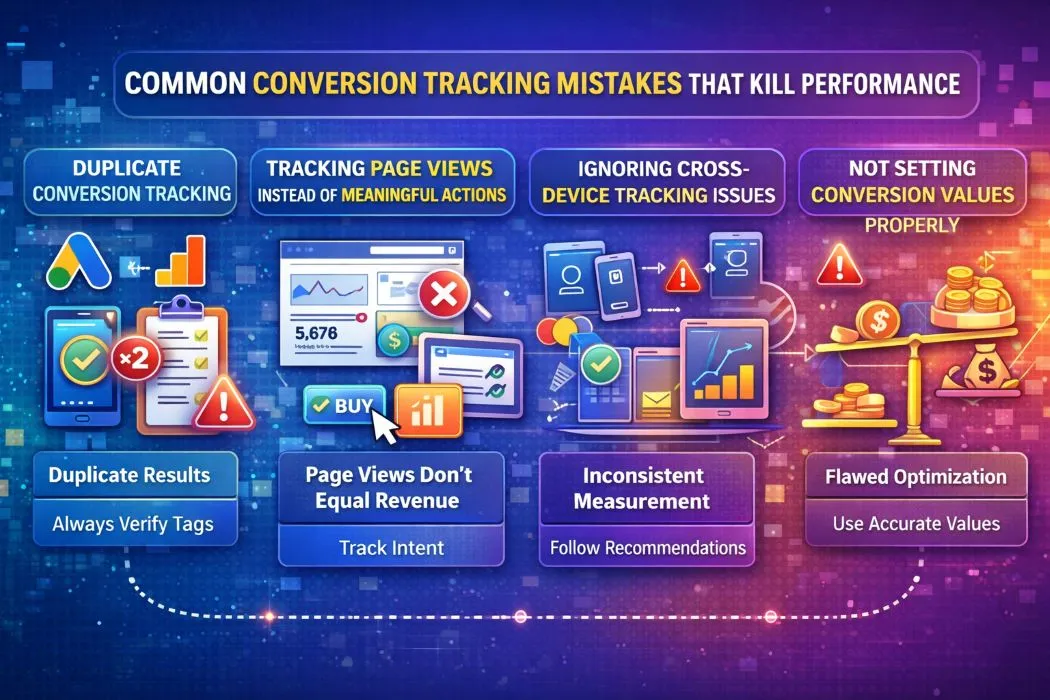
Duplicate Conversion Tracking
If both GA4 and Google Ads fire the same conversion without proper configuration, you double-count results.
Always verify tag firing rules.
Tracking Page Views Instead of Meaningful Actions
Page views don’t equal revenue.
Track actions that demonstrate intent.
Ignoring Cross-Device Tracking Issues
Users switch devices frequently.
Google signals and GA4 user modeling improve cross-device measurement, but implementation must follow recommended settings.
Not Setting Conversion Values Properly
If you assign incorrect values, Smart Bidding optimizes toward flawed priorities.
Revenue-based optimization requires precise value tracking.
Expert Tip: Boost Your Google Ads Conversions with Prodigmar
- Need actionable tips to boost your Google Ads conversions?
- Follow Prodigmar on Instagram for expert paid search strategies.
- Comment on our posts to get your FREE Paid Search Optimization Report today! https://www.instagram.com/prodigmaroffical
Understanding Attribution Models in 2026
Last-Click vs. Data-Driven Attribution
Last-click attribution gives full credit to the final interaction.
Data-driven attribution distributes credit across touchpoints using machine learning.
Google now recommends data-driven attribution for most advertisers due to improved accuracy.
How Attribution Impacts Budget Decisions
If you rely only on last-click, you may undervalue top-of-funnel campaigns.
Better attribution models reveal assist value.
Choosing the Right Model for Your Business
E-commerce brands often benefit from data-driven attribution.
Lead generation campaigns require CRM feedback to measure real revenue impact.
How Conversion Tracking Impacts Smart Bidding and ROI
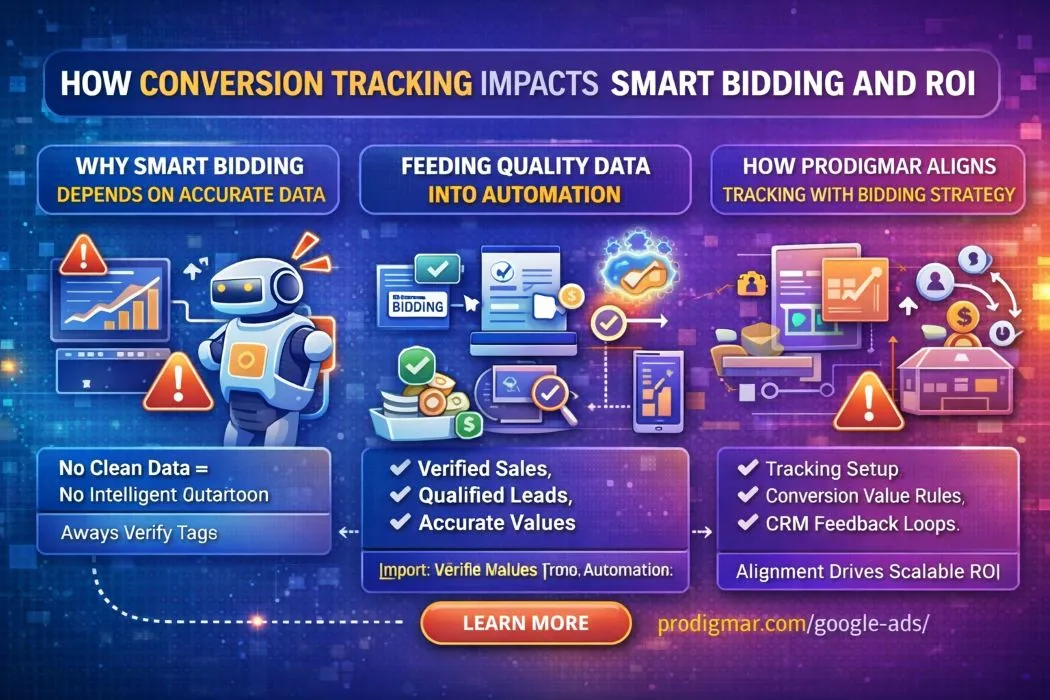
Why Smart Bidding Depends on Accurate Data
Smart Bidding uses machine learning to predict likelihood of conversion.
No clean data means no intelligent automation.
Feeding Quality Data into Automation
Import:
Verified sales
Qualified leads
Accurate values
Automation improves when signals improve.
How Prodigmar Aligns Tracking with Bidding Strategy
At Prodigmar, we align:
Tracking setup
Conversion value rules
CRM feedback loops
That alignment drives scalable ROI.
Learn more about our paid media methodology on our internal guide: https://prodigmar.com/google-ads/
Advanced Conversion Tracking Strategies Used by Prodigmar
Enhanced Conversions for Better Accuracy
Enhanced Conversions use first-party data securely to improve match rates.
Google confirms this method improves conversion measurement in privacy-focused environments.
Server-Side Tracking Setup
Server-side tracking reduces browser dependency.
It improves reliability and protects data accuracy in a cookieless future.
Tracking Lead Quality, Not Just Quantity
A lead form submission does not equal revenue.
We track:
- Sales-qualified leads
- Closed deals
- Revenue per lead source
Quality beats volume.
Connecting Ad Platforms with CRM Systems
CRM integration transforms campaigns from traffic-focused to profit-focused.
When platforms optimize toward closed revenue, scaling becomes predictable.
Measuring True ROI with Accurate Conversion Data
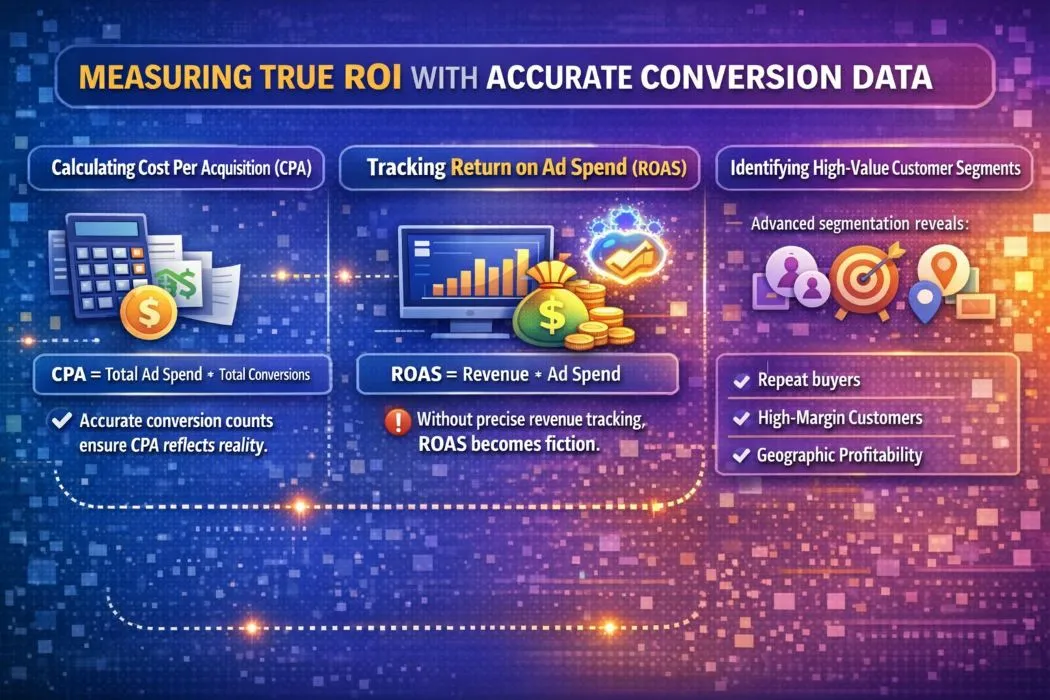
Calculating Cost Per Acquisition (CPA)
CPA = Total Ad Spend ÷ Total Conversions.
Accurate conversion counts ensure CPA reflects reality.
Tracking Return on Ad Spend (ROAS)
ROAS = Revenue ÷ Ad Spend.
Without precise revenue tracking, ROAS becomes fiction.
Identifying High-Value Customer Segments
Advanced segmentation reveals:
Repeat buyers
High-margin customers
Geographic profitability
These insights guide budget allocation.
How Prodigmar Builds a Reliable Conversion Tracking Framework
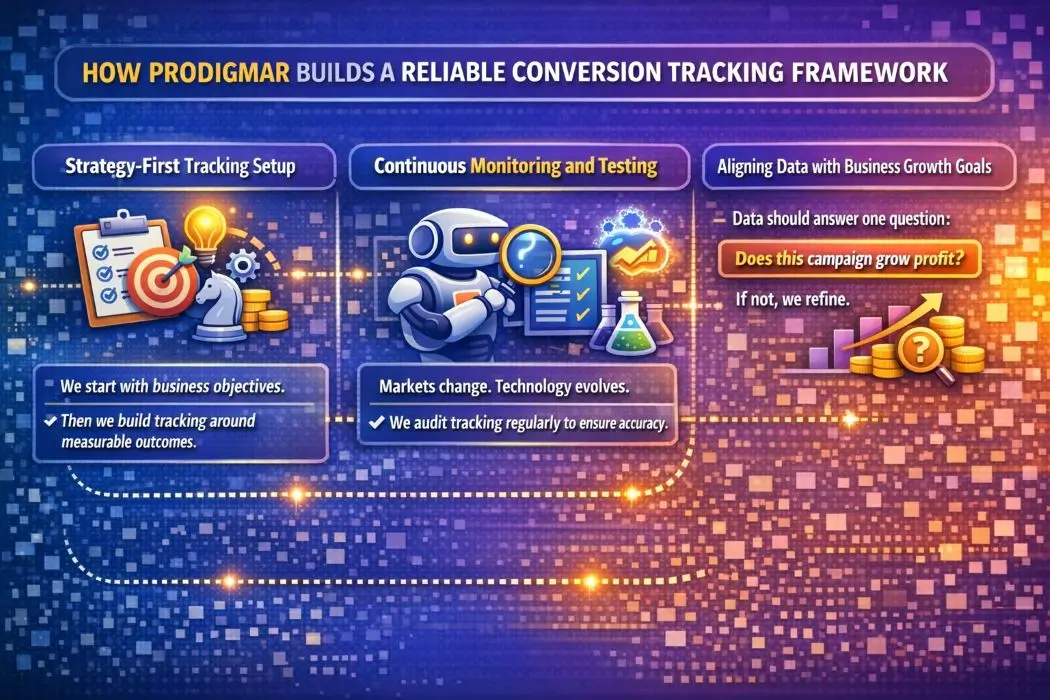
Strategy-First Tracking Setup
We start with business objectives.
Then we build tracking around measurable outcomes.
Continuous Monitoring and Testing
Markets change. Technology evolves.
We audit tracking regularly to ensure accuracy.
Aligning Data with Business Growth Goals
Data should answer one question:
Does this campaign grow profit?
If not, we refine.
Final Thoughts: Mastering Conversion Tracking in 2026
Data Is the Foundation of Profitable Advertising
Without tracking, marketing becomes guesswork.
With tracking, it becomes predictable.
Why Proper Tracking Is a Competitive Advantage
Many businesses still rely on surface metrics.
Companies that measure revenue precisely outperform competitors.
Turning Data into Scalable Growth
Accurate data powers automation.
Automation powers scale.
Scale drives growth.
Master this Conversion Tracking Guide, and you control your advertising future.
Frequently Ask Questions
What is conversion tracking in digital marketing?
Why is accurate conversion tracking important?
What tools are essential for conversion tracking in 2026?
How does attribution impact ROI?
Can offline sales be tracked in Google Ads?