The 7 Non-Negotiable Website Design Trends You Must Master in 2025 for SEO & Conversion
The Digital Imperative: Why 2025 Demands a Design Revolution
The digital landscape is no longer just about looking good; it’s about performing brilliantly. In 2025, your website isn’t a brochure—it’s your most critical business tool. User expectations are higher than ever, and search engine algorithms, like Google’s, are placing unprecedented weight on the actual user experience (UX) delivered by your design.
For businesses aiming to move beyond just 600 impressions to thousands of qualified visitors and high conversions, embracing the future of web design is not optional—it’s a prerequisite for survival. We believe that the convergence of aesthetics, speed, and technology defines success.
Here are the top seven non-negotiable website design trends that every business must understand and implement in 2025 to secure a competitive edge, improve SEO, and maximize conversion rates.

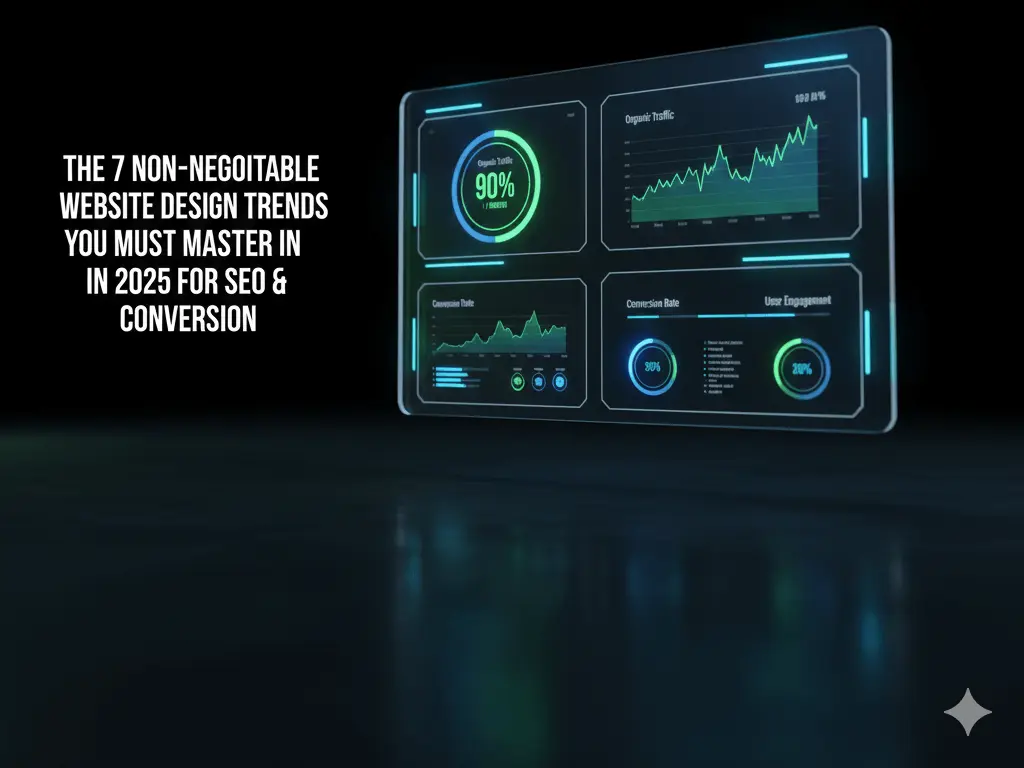
✅ 1. Dark Mode with Adaptive Contrast: Beyond a Visual Preference
Dark mode has matured from a flashy trend to a standard user expectation, driven by reduced eye strain and device battery conservation. However, the 2025 evolution of this trend is Adaptive Contrast.
What It Is:
Adaptive Contrast dark mode intelligently adjusts the color scheme based on ambient light and user settings, ensuring that critical text and interactive elements maintain WCAG (Web Content Accessibility Guidelines) compliance for perfect readability. It’s no longer enough to invert colors; the design must dynamically manage the luminosity ratio between foreground and background.
Why It Boosts SEO & Conversion:
- Accessibility & E-A-T: Google prioritizes accessible websites. Adaptive Contrast ensures your site is usable for all, directly contributing to your domain’s Expertise, Authority, and Trust (E-A-T) score.
- Reduced Eye Strain (Lower Bounce Rate): Extended, comfortable reading keeps users on the page longer. Increased Time-On-Page and lower bounce rates are crucial user signals that Google rewards with higher rankings.
- Modern Branding: It signals a tech-forward, user-centric brand, building instant trust and credibility.
Implementation Focus:
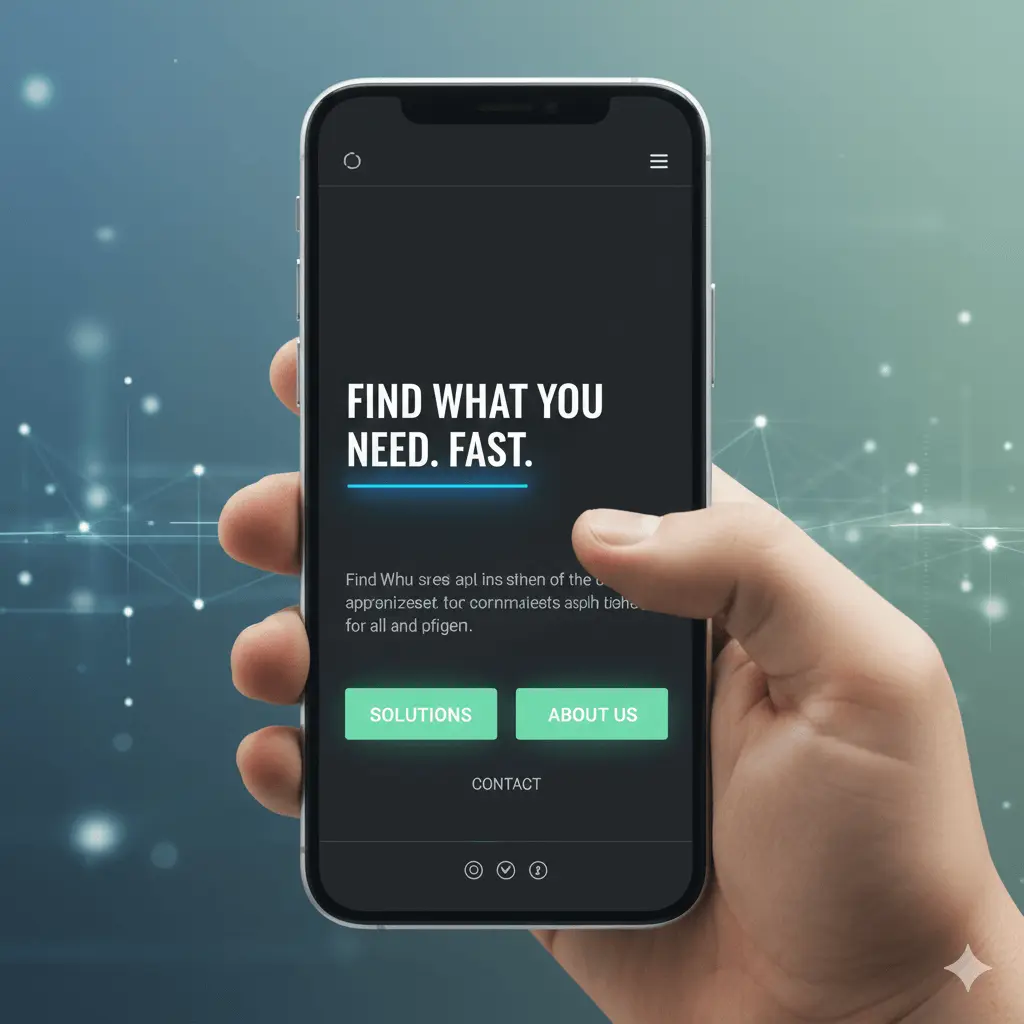
Design a dark mode that utilizes neon or glowing accent colors (like a neon blue or sharp green) only for key interactive elements (CTAs, buttons, form fields) while keeping primary text areas at optimal contrast levels. Ensure the transition is seamless and persistent across sessions.
✅ 2. Minimalist Navigation: Optimizing for the Mobile-First Index
With Google’s continued commitment to mobile-first indexing, complex, bloated navigation is a direct ranking detriment. The design trend for 2025 is a severe reduction in cognitive load through minimalist navigation.
What It Is:
Simplified, purpose-driven navigation that strips away anything non-essential. This means the primary menu (often a sticky header) only contains 3-5 high-priority links, relying heavily on modern conventions like hamburger menus and strategically placed footers for secondary links.
Why It Boosts SEO & Conversion:
- Improved User Flow (UX): When users can find information in fewer clicks, their satisfaction increases. This leads to higher task completion rates (conversions) and better engagement signals.
- Mobile Speed & Readability: Fewer elements in the header mean faster load times on mobile devices, directly impacting your Core Web Vitals score—a confirmed Google ranking factor.
- Link Authority Sculpting: Fewer primary links allow you to concentrate “link juice” (authority) on your most important pillar pages (e.g., Services, Portfolio, Contact), boosting their ability to rank.
Implementation Focus:
Audit your main navigation. Remove redundant links. Use a “Services” or “Solutions” drop-down menu instead of listing every single service line. Ensure all menus are 100% finger-friendly for mobile users.
✅ 3. Purposeful Micro-Animations and Motion Effects
Micro-animations have moved past being ornamental; they are now a functional part of the user interface (UI) that provides feedback and improves guidance.
What It Is:
Small, subtle animations triggered by user interaction (hover effects, button clicks, form submissions) or page transitions (scroll-triggered effects). In 2025, these animations are deeply integrated into the UX to confirm actions, guide the eye, and make the interface feel responsive.
Why It Boosts SEO & Conversion:
- Engagement Signals: Subtle motion holds the user’s attention, making the experience more enjoyable and reducing the chance of premature exit (bounce).
- Clarity in CTAs: A slight, glowing accent or motion effect on a Call-to-Action (CTA) button can significantly increase its visibility and click probability.
- Instant Feedback: Animations that confirm a successful action (e.g., a checkmark after a form submission) build trust and reduce user frustration.
Implementation Focus:
Prioritize performance. Any motion must be lightweight and not contribute to layout shift (CLS)—a major Core Web Vitals issue. Use CSS and WebGL minimally and efficiently. Rule: If an animation doesn’t serve a clear purpose (feedback, guidance, or delight), remove it.
✅ 4. AI-Driven Personalization and Dynamic Content
Artificial Intelligence is transitioning web design from static templates to dynamic, real-time user interfaces. This is the single biggest design trend for conversion optimization in 2025.
What It Is:
Design that adapts its content, images, layout, and CTAs based on the visitor’s history, location, referral source, or demographic data. This includes smart chatbots that offer instant, context-aware support and personalized product/service recommendations.
Why It Boosts SEO & Conversion:
- Hyper-Relevant Content: Delivering content that precisely matches the visitor’s intent (e.g., showing a “B2B Consulting Services” CTA to a LinkedIn referral vs. a “Free Design Audit” to a Google search visitor) drives conversions higher.
- Increased Time-on-Site: When content is instantly personalized and highly relevant, users consume more of it, drastically improving your engagement metrics.
- Future-Proofing: Search engines are moving toward understanding content at a deep, semantic level. Personalized content inherently serves the individual searcher’s needs better than generic content.
Implementation Focus:
Start small by personalizing headlines and primary CTAs for visitors coming from specific campaign pages or referring domains. Integrate a quality, AI-powered chatbot that can triage and guide visitors to the right information 24/7.
✅ 5. Voice-Optimized Interfaces and Semantic HTML
As voice search becomes integrated into everything from smart homes to mobile devices, websites must be structured to communicate effectively with voice assistants.
What It Is:
Designing not just for how a user sees the page, but how a machine reads and interprets the page. This relies on clean, semantic HTML5 structure, proper use of heading tags (H1, H2, H3), and extensive application of Schema Markup (structured data).
Why It Boosts SEO & Conversion:
- Winning Featured Snippets: Voice-optimized content is often structured as clear, concise answers—perfect for Google’s Featured Snippets and “People Also Ask” sections, which is where voice assistants pull their answers.
- Clarity for Bots: Semantic structure helps Google’s crawlers (bots) perfectly understand the hierarchy and core topic of your content, leading to better indexation and ranking.
- Accessibility for Voice Users: By making the interface clear for voice assistants, you simultaneously improve accessibility for screen readers and visually impaired users.
Implementation Focus:
Ensure every page has one clearly defined H1 tag. Use H2 and H3 tags to structure your content like a logical outline. Use JSON-LD Schema Markup (especially for FAQ, How-To, or Services) to explicitly tell search engines what your content is.
✅ 6. Immersive 3D Visuals and Interactive Storytelling
Static images are fading as the primary visual communication tool. In 2025, dynamic, immersive elements will define a premium digital experience.
What It Is:
The use of WebGL, advanced CSS, and lightweight 3D libraries to create interactive product previews, virtual tours, dynamic data visualizations, and full-screen visual storytelling experiences that react to the user’s scroll or mouse movement.
Why It Boosts SEO & Conversion:
- Exceptional User Experience: 3D and interactive elements are inherently novel and engaging. This creates a memorable brand experience that encourages shares and repeat visits.
- Visualization Drives Sales: For product-based businesses, allowing a customer to virtually interact with a 3D model of a product drastically increases purchase confidence and reduces returns.
Increased Time-on-Page: Playing with a 3D element naturally increases the time users spend on the page, sending a strong engagement signal to search engines.
Implementation Focus:
The Performance Warning: While powerful, 3D elements can crush page speed. Use optimized assets, lazy loading, and compress files aggressively. Prioritize performance optimization above all else to ensure the visual delight doesn’t turn into an SEO penalty.
✅ 7. Sustainability-Focused Web Design (Eco-Friendly Development)
This trend is driven by corporate social responsibility, but it has a direct, measurable impact on performance and SEO. An “eco-friendly” website is simply a high-performance website.
What It Is:
Designing and developing websites that consume minimal energy and resources. This means choosing a green web host, using dark colors (which require less energy for display on OLED screens), and most importantly, reducing the weight of the page.
Why It Boosts SEO & Conversion:
- Core Web Vitals Optimization: Lightweight design requires fewer server requests, fewer scripts, and smaller files, leading to lightning-fast load times. This directly translates to perfect Core Web Vitals scores and higher organic rankings.
- Brand Alignment: Today’s consumers and businesses favor partners who demonstrate eco-conscious behavior, building trust and aligning with modern values.
- Universal Speed: A lightweight site loads instantly, regardless of the user’s connection speed or mobile device quality, ensuring a consistently excellent experience for everyone.
Implementation Focus:
Aggressively optimize all images (WebP format is key). Minimize third-party scripts and excessive fonts. Prioritize loading speed as a core design principle, not just a post-launch optimization task.
Final Thoughts & Your Next Step
Ready to future-proof your website?
👉 Download our Free Resource: [The 2025 Website Design & Performance Checklist] to see exactly where your site stands against the competition. 👉 Contact Project Digital Marketing Today: Our experts specialize in design overhauls that prioritize SEO, Conversion, and Speed—ensuring your website dominates the search results and achieves measurable business growth. Don’t just follow the trends—define your market with design built for tomorrow.Frequently Ask Questions
How often should I update my website design to stay competitive?
Will implementing new design trends negatively impact my website's loading speed?
Which of the 7 trends has the biggest impact on conversion rate (sales/leads)?
Is "Dark Mode" just a fad, or does it genuinely affect user experience and SEO?
I have an old website. Should I focus on fixing my technical SEO or redesigning first?