
5 Crucial SEO Trends Shaping the Future of SEO & How Prodigmar Helps You Adapt

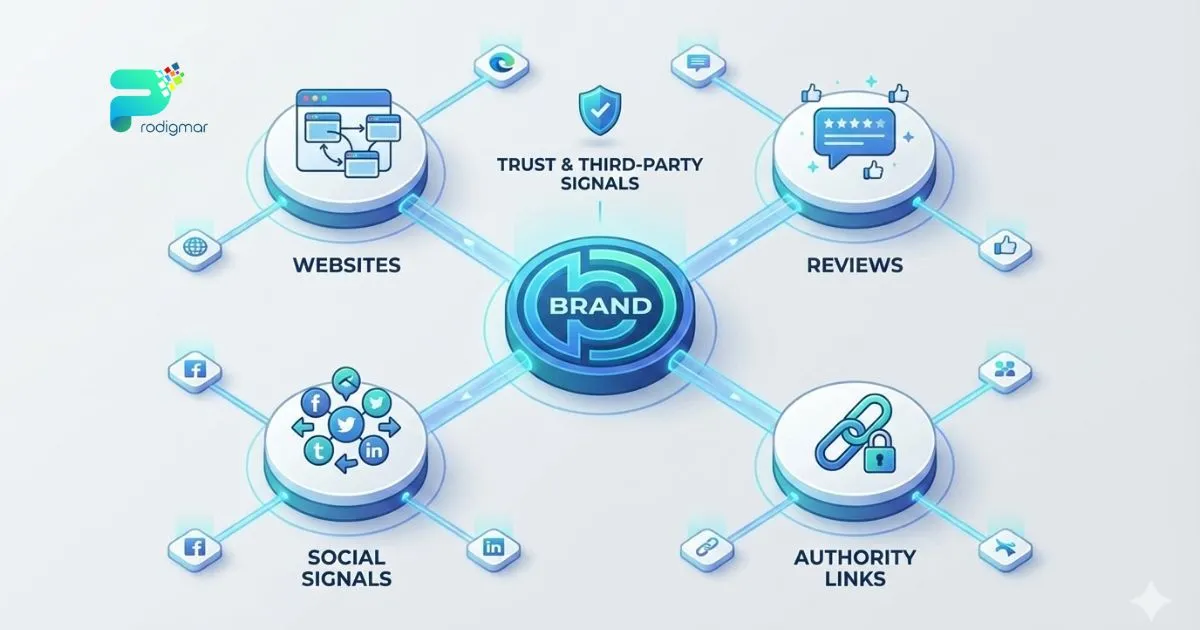
Search optimization no longer lives inside tidy checklists. Algorithms learn. Users multitask. Platforms blur together. What worked last year feels outdated today. These SEO trends redefine how visibility is earned, measured, and sustained. Each shift below explains what’s changing, why it matters, and how smart brands adapt without chasing every shiny tactic.
1. Third-Party Signals Are Becoming a Core SEO Ranking Factor
Search engines increasingly look beyond your website to judge trust. Mentions, reviews, citations, and brand conversations across the web now shape credibility. These off-page signals help algorithms understand whether people recognize your brand or simply stumble upon it accidentally.
Think of it like reputation before introduction. When authoritative sites reference your business naturally, search engines treat those references as confidence votes. Brand authority grows when discussions appear organic, frequent, and relevant across multiple ecosystems, not manufactured through shallow placements.
However, not all mentions carry equal weight. Context matters. A brand citation buried in spam forums adds little value. Meanwhile, thoughtful coverage on respected publications reinforces entity recognition and topical alignment, both essential for long-term rankings.
To stay competitive, brands must earn visibility outside owned assets. Digital PR, community engagement, and strategic partnerships now complement technical SEO. Together, these efforts strengthen search trust signals that algorithms increasingly rely on.
2. Top-of-the-Funnel SEO Is Evolving Beyond Traffic Metrics

At first glance, traffic still looks like success. Yet raw visits rarely tell the full story. Awareness-stage content now serves discovery, familiarity, and recall rather than immediate clicks or conversions. That shift defines modern SEO trends more clearly than ever.
Search behavior shows curiosity before commitment. Users skim guides, compare opinions, and bookmark resources long before buying. Measuring only sessions ignores brand exposure, impression share, and topic ownership that influence future decisions invisibly.
For example, an article ranking consistently for exploratory queries builds memory. Readers may not convert today. However, repeated visibility creates preference tomorrow. That delayed effect makes search visibility metrics more meaningful than bounce rates alone.
Smart measurement focuses on assisted impact. Impressions, branded searches, and returning users paint a richer picture. When SEO supports awareness intelligently, it feeds demand across channels instead of chasing last-click credit.
3. Investing in Niche & Authority Content Drives Long-Term SEO Growth
Broad content attracts broad competition. Niche content, however, builds depth. Search engines reward specificity because it signals expertise. Covering smaller, well-defined topics thoroughly often outperforms generic articles chasing volume.
Authority develops through consistency. When multiple related pages interlink logically, they form topical clusters. This structure helps algorithms understand subject mastery while guiding readers smoothly through deeper learning paths.
For example, a focused guide answering uncommon questions often ranks faster than surface-level blogs. It satisfies intent precisely. Over time, this approach compounds, strengthening content relevance and internal linking signals naturally.
Investing in niche expertise also protects rankings from volatility. While trends fluctuate, authoritative libraries remain resilient. They anchor visibility even as algorithms evolve, making specialization a sustainable growth lever.
4. SEO Strategies Are Shifting from Intent-Based to Persona-Driven

Intent once ruled optimization. Informational, navigational, transactional. Simple labels worked until user behavior became layered. Today, the same query can reflect different motivations depending on who searches and why.
Persona-driven SEO maps content to real people. Pain points, expectations, and context shape how queries unfold. Understanding user psychology helps predict what information feels reassuring, persuasive, or actionable at each stage.
For instance, a startup founder and an enterprise manager may search identical terms. Yet their needs differ drastically. Content tailored to personas delivers clearer value, improving engagement signals organically.
Search engines reward satisfaction. When content resonates emotionally and practically, users linger, explore, and return. That behavioral feedback reinforces rankings quietly but powerfully.
5. Visibility KPIs Are Replacing Traditional Traffic KPIs in SEO
Traffic spikes look impressive. Sustainable visibility performs better. Modern SEO success focuses on how often and where a brand appears rather than how many clicks happen immediately.
Visibility KPIs track keyword footprint, SERP features, and presence across search surfaces. These metrics show whether a brand dominates conversation or merely participates occasionally.
For example, owning featured snippets, People Also Ask boxes, and video results builds authority faster than ranking tenth for high-volume keywords. That breadth strengthens search real estate control.
As algorithms diversify result layouts, visibility across formats matters more. Measuring reach holistically helps brands adapt faster and prioritize opportunities others overlook

SEO success now demands orchestration. Technical health, content depth, brand presence, and behavioral alignment must work together. Treating them separately limits impact and slows momentum.
Adaptation begins with understanding change. The most effective strategies embrace evolving SEO trends without reacting impulsively. They balance experimentation with proven fundamentals, guided by data and intuition equally.
Future-ready SEO values clarity over clutter. When content speaks directly to readers and search engines simultaneously, visibility compounds naturally. That balance separates fleeting wins from durable growth.
Brands that adapt early gain disproportionate advantage. Those who wait often chase competitors instead. The future rewards preparedness, patience, and precision—qualities that define winning search strategies moving forward.
SEO no longer rewards shortcuts or isolated tactics. Sustainable growth comes from understanding how search engines interpret authority, relevance, and real user value together. Brands that adapt to changing behaviors gain consistent visibility instead of temporary spikes.
The SEO trends shaping the future favor clarity over noise and depth over volume. When content aligns with personas, earns trust beyond the website, and measures visibility accurately, rankings follow naturally. The path forward belongs to brands that evolve with purpose rather than react in haste.
Frequently Ask Questions
What are the most important SEO trends right now?
The most impactful SEO trends include stronger third-party signals, niche authority content, persona-driven strategies, and visibility-based KPIs replacing traffic-only metrics.
How does AI search affect SEO strategy?
Why are visibility KPIs more important than traffic?
Does niche content really outperform broad content?
How can businesses adapt to future SEO changes?