Google Ads is not about clever words. Instead, it is about clear intent, strong relevance, and timing. People search on Google because they want answers, products, or solutions right now. Your ad copy must meet that moment without wasting a single word.
According to Google’s own Ads Help Center, relevance and user experience play a direct role in performance through Quality Score. This means writing better ads does not just improve clicks. It also lowers costs and improves visibility.
In this guide, you will learn how to write Google Ads that convert. Every tip here aligns with Google’s official recommendations and real-world performance data. No filler. No guesswork. Just practical writing strategies that work.
Expert Tip: Boost Your Google Ads Conversions with Prodigmar
- Need actionable tips to boost your Google Ads conversions?
- Follow Prodigmar on Instagram for expert-paid search strategies.
- Comment on our posts to get your FREE Paid Search Optimization Report today!
https://www.instagram.com/prodigmaroffical
Ready to Stop Guessing Where Your Budget Should Go?
Every account behaves differently once real audience data and creative testing enter the picture. Prodigmar’s paid social team can audit your current Google ads and show you exactly where your budget performs best, not where a blog post says it should.
Talk to Our Paid Social Team →Understanding User Intent
Why Intent Matters in Google Ads
User intent decides everything in Google Ads. Someone searching “what is Google Ads” wants information. Someone searching “Google Ads agency near me” wants help today.
Google categorizes intent into three main types:
- Informational
- Navigational
- Transactional
High-converting Google Ads focus on transactional and commercial intent. Google confirms this in its Search Quality Evaluator Guidelines, where intent alignment directly affects relevance and satisfaction.
When your ad copy matches intent, users click with confidence. When it does not, they scroll past without mercy.
Identifying High-Intent Keywords
High-intent keywords often include:
- Buy
- Hire
- Pricing
- Services
- Near me
Google Keyword Planner remains the most reliable tool for finding these terms. It shows search volume, competition, and commercial value directly from Google’s data.
At Prodigmar, we prioritize keywords that signal action. Traffic without intent looks good in reports but rarely converts.
Structuring Your Google Ads Campaign for Success
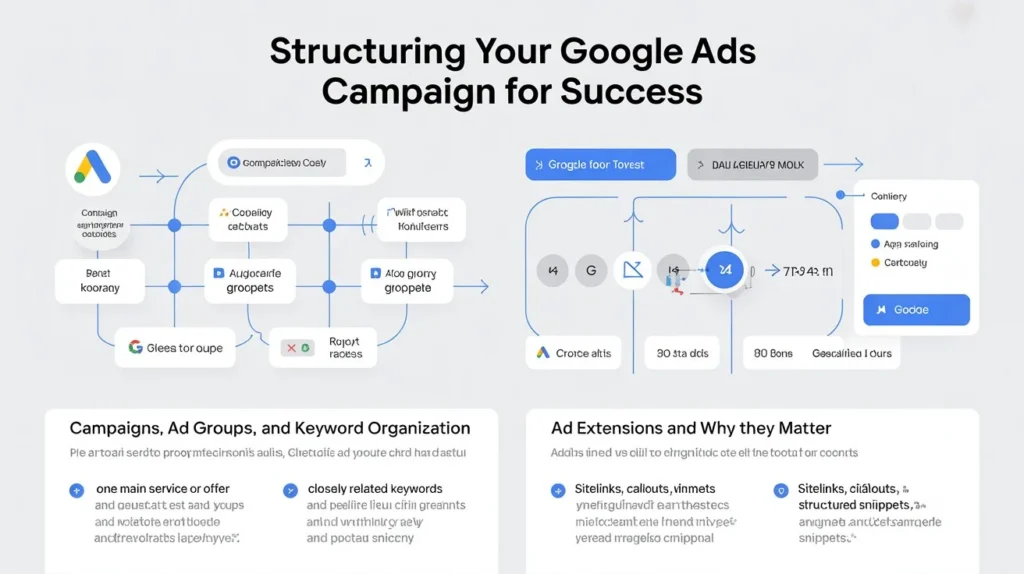
Campaigns, Ad Groups, and Keyword Organization
Strong ad copy fails without structure. Google recommends tightly themed ad groups because they improve relevance and Quality Score.
Each ad group should focus on:
- One main service or offer
- Closely related keywords
- Matching ad copy
For example, do not mix “Google Ads management” with “Facebook Ads services” in one group. Google dislikes confusion almost as much as users do.
Ad Extensions and Why They Matter
Ad extensions increase visibility and credibility. Google states that extensions can improve click-through rates because they provide additional context.
Use extensions like:
- Sitelinks
- Callouts
- Structured snippets
- Call extensions
They do not replace strong copy. However, they support it and often tip the decision in your favor.
Frequently Asked Questions
Google Ads copy converts better when it matches the searcher’s exact intent, leads with a specific benefit instead of a feature, and mirrors the language of the keyword it’s targeting. Ads that state a concrete outcome – a price, a timeframe, or a result – consistently outperform ads that only describe what the product or service is.
Google Ads copy should be reviewed and tested at least every 30 days. Ad performance naturally decays as audiences see the same message repeatedly, a pattern known as ad fatigue, so refreshing headlines and descriptions on a monthly cycle keeps click-through rate and Quality Score from declining.
Yes, keyword placement matters in Google Ads. Including the target keyword naturally in the headline and description improves ad relevance, which is one of the three components Google uses to calculate Quality Score, alongside expected click-through rate and landing page experience.