Google Ads Optimization for Higher ROI in 2026: Powerful, Proven Strategies by Prodigmar
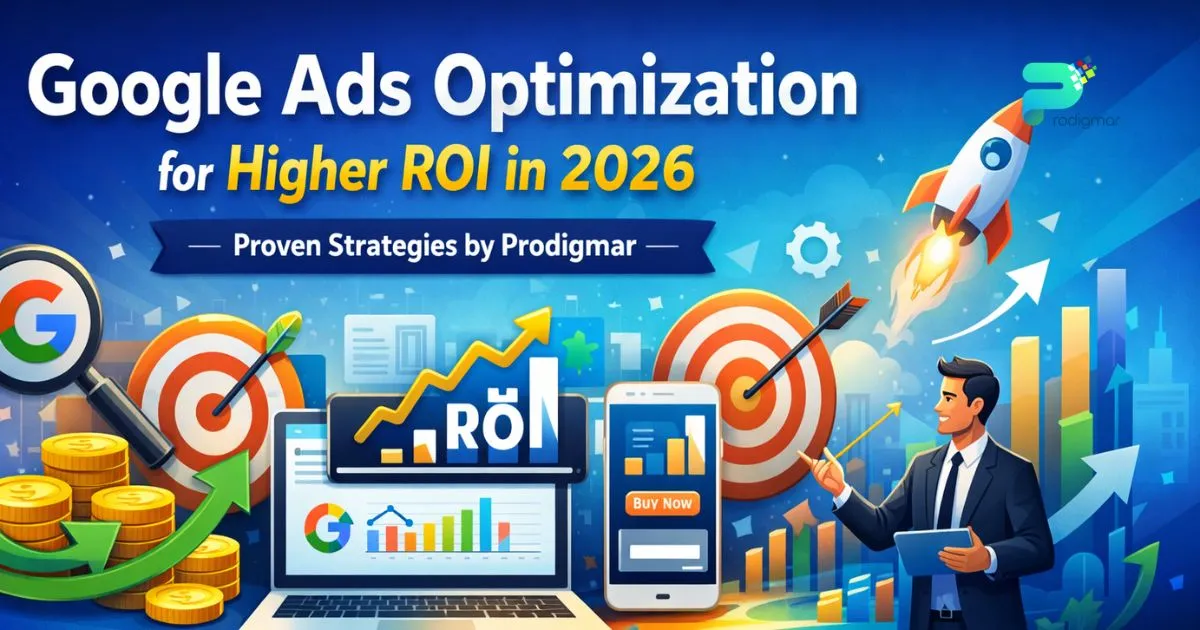
Google Ads Optimization has evolved far beyond simple bid adjustments and routine campaign checks. In 2026, successful advertisers rely on data-driven decisions, precise targeting, and continuous refinement to protect and grow their return on investment. As competition increases and automation becomes smarter, every click must serve a clear business goal. Brands that optimize with an ROI-first mindset achieve predictable growth, while outdated strategies quietly drain budgets. This guide shares Prodigmar’s proven Google Ads Optimization strategies, explaining how to turn paid search into a reliable revenue channel through smarter keywords, better ads, and conversion-focused landing pages.
Why Google Ads Optimization Matters More in 2026
Google Ads no longer rewards guesswork. In 2026, platforms favor advertisers who optimize with intent, data, and discipline. Google Ads Optimization now decides whether campaigns grow—or quietly bleed budget.
Rising CPCs and Smarter Competition
Cost-per-click continues to rise across most industries. Google confirmed that increased competition and automation have reshaped auction dynamics. Advertisers now compete against brands using AI-driven bidding, real-time signals, and first-party data.
Without optimization, budgets disappear fast.
Why “Set and Forget” Campaigns No Longer Work
Google Ads changes daily. Algorithms learn. Search behavior shifts. Competitors react.
Campaigns that stay untouched lose relevance, Quality Score, and conversion efficiency. Optimization keeps your ads aligned with reality, not assumptions.
How ROI Became the Real Performance Metric
Impressions look impressive. Clicks feel encouraging. ROI tells the truth.
Google Ads Optimization in 2026 focuses on profitability, not visibility. Brands that optimize for ROI win long-term growth.
Understanding ROI in Google Ads (Beyond Clicks and Impressions)
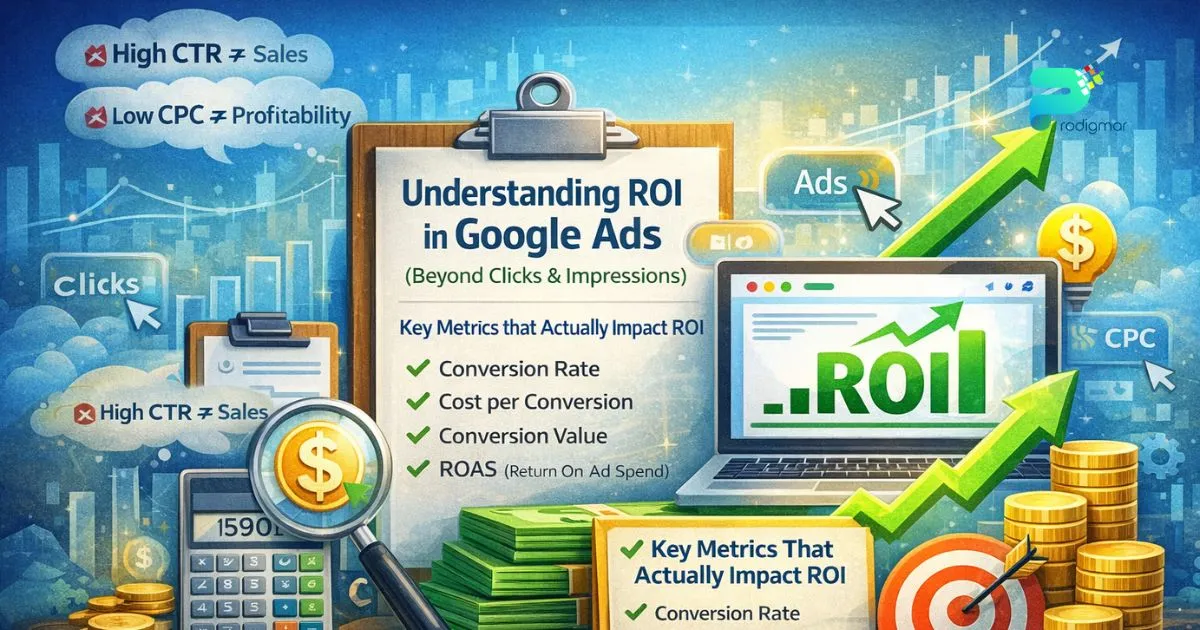
ROI explains whether Google Ads helps your business—or just feeds Google’s revenue.
What ROI Really Means for Paid Search Campaigns
ROI measures how much revenue you earn for every dollar spent on ads. Google defines success through conversions, not traffic volume.
(Source: Google Ads Help Center – )
Key Metrics That Actually Impact ROI
Focus on metrics that influence profit:
- Conversion rate
- Cost per conversion
- Conversion value
- Return on ad spend (ROAS)
Vanity metrics distract. Revenue metrics decide.
Common ROI Misinterpretations to Avoid
High CTR does not guarantee sales. Low CPC does not ensure profitability.
Google Ads Optimization succeeds when conversion value exceeds ad spend, consistently.
Keyword Optimization Strategies That Drive Higher ROI
Keywords form the foundation of Google Ads Optimization.
Prioritizing High-Intent Keywords Over High Volume
High-volume keywords attract browsers. High-intent keywords attract buyers.
Phrases with purchase signals (“buy,” “pricing,” “near me”) convert better and protect ROI.
Smart Use of Match Types in 2026
Exact and phrase match deliver control. Broad match works only with strong conversion data and smart bidding.
Google officially recommends pairing broad match with automated bidding for better signal learning.
(Source: Google Ads Keyword Match Types – )
Using Search Term Reports to Eliminate Wasted Spend
Search term reports reveal what users actually typed.
Removing irrelevant queries through negatives instantly improves ROI.
The Role of Negative Keywords in ROI Protection
Negative keywords stop budget leaks. They prevent ads from showing to users who never plan to convert.
This step alone often delivers immediate performance gains.
Ad Copy Optimization That Improves Click Quality

Clicks mean nothing without intent.
Writing Ads for Conversions, Not Just Clicks
Strong ads speak to problems, outcomes, and trust—not hype.
Clear benefits outperform clever slogans.
Aligning Ad Messaging with User Intent
Search intent shapes copy.
Informational searches need reassurance. Transactional searches need urgency and clarity.
Leveraging Responsive Search Ads the Right Way
Responsive Search Ads work best when headlines remain distinct and focused. Avoid repeating the same idea with different words.
Google confirms that diverse assets improve performance.
(Source: Google Ads RSA Best Practices – )
Continuous Ad Testing Without Hurting Performance
Test one variable at a time. Pause losers early. Scale winners slowly.
Optimization thrives on controlled experimentation.
Landing Page Optimization for Maximum Conversion Value
Ads attract users. Landing pages decide ROI.
Why Landing Pages Decide ROI
A perfect ad still fails if the page confuses users.
Google reports that poor landing experiences reduce Quality Score and increase CPCs.
(Source: Google Quality Score Guidelines – )
Message Match Between Ads and Landing Pages
Consistency builds trust.
Headlines must echo ad promises. Visuals must support intent.
Improving Page Speed and Mobile Experience
Google data shows that slow pages lose conversions fast. Mobile-first optimization remains critical in 2026.
(Source: Google PageSpeed Insights – )
Conversion-Focused CTA Placement
Strong CTAs appear early, remain visible, and feel natural.
Users should never hunt for the next step.
Need actionable tips to boost your Google Ads conversions?
- Follow Prodigmar on Instagram for expert paid search strategies.
- Comment on our posts to get your FREE Paid Search Optimization Report today.
👉 https://www.instagram.com/prodigmaroffical
Automation works best with guidance.
When to Use Smart Bidding (And When Not To)
Smart bidding thrives on data. New campaigns still need manual control.
Optimization means knowing when to step in—and when to step back.
Choosing Between Target CPA, ROAS, and Max Conversions
- Target CPA fits lead generation
- Target ROAS suits eCommerce
- Max Conversions works during learning phases
Correct alignment protects ROI.
Avoiding Common Smart Bidding Mistakes
Never change targets too often. Algorithms need time to learn.
Patience beats panic.
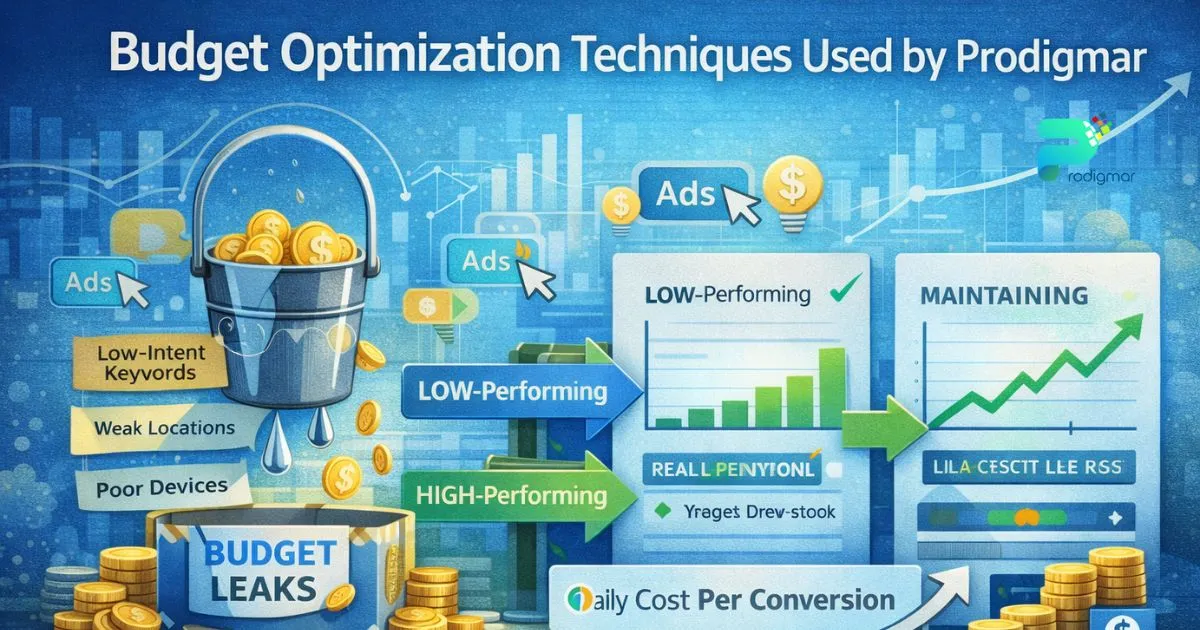
Budget optimization separates growth from guesswork.
Identifying Budget Leaks in Google Ads Campaigns
Low-intent keywords, weak locations, and poor devices drain spend.
Data reveals leaks quickly.
Reallocating Spend to High-Performing Campaigns
Move budget where conversions happen. Pause what underperforms.
Optimization rewards discipline.
Scaling Winning Campaigns Without Killing ROI
Increase budgets gradually. Watch cost per conversion daily.
Aggressive scaling often breaks efficiency.
You cannot optimize what you cannot measure.
Setting Up Reliable Conversion Tracking
Google recommends tracking primary business actions only.
Over-tracking confuses algorithms.
(Source: Google Conversion Tracking Guide – )
Google Ads vs GA4: What to Trust
Use Google Ads for bidding decisions. Use GA4 for user behavior insights.
Together, they tell the full story.
Understanding Attribution Models in Simple Terms
Attribution assigns value across touchpoints.
Data-driven attribution now leads Google’s recommendations.
Google Ads Optimization Mistakes That Reduce ROI
Mistakes cost money.
Over-Automation Without Strategy
Tools amplify strategy. They do not replace it.
Ignoring Data Signals and Performance Trends
Weekly reviews catch problems early. Monthly reviews catch losses late.
Chasing Clicks Instead of Conversions
Traffic without revenue wastes time and trust.
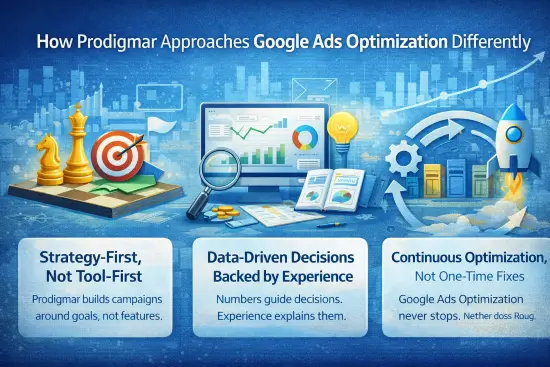
Strategy defines outcomes.
Strategy-First, Not Tool-First
Prodigmar builds campaigns around goals, not features.
Data-Driven Decisions Backed by Experience
Numbers guide decisions. Experience explains them.
Continuous Optimization, Not One-Time Fixes
Google Ads Optimization never stops. Neither does Prodigmar.
Optimization Is a Process, Not a Task
Successful Google Ads Optimization evolves with data, behavior, and competition.
Why Expert Guidance Makes a Measurable Difference
Expert-led optimization saves budget, scales revenue, and builds trust.
In 2026, precision beats presence—every time.
Frequently Ask Questions
What is Google Ads Optimization in simple terms?
How often should Google Ads campaigns be optimized?
Does smart bidding always increase ROI?
Why does landing page speed affect ROI?
Can small businesses compete in Google Ads in 2026?