Google Ads Mistakes That Destroy Your ROI in 2026 — Prodigmar’s Ultimate Fix
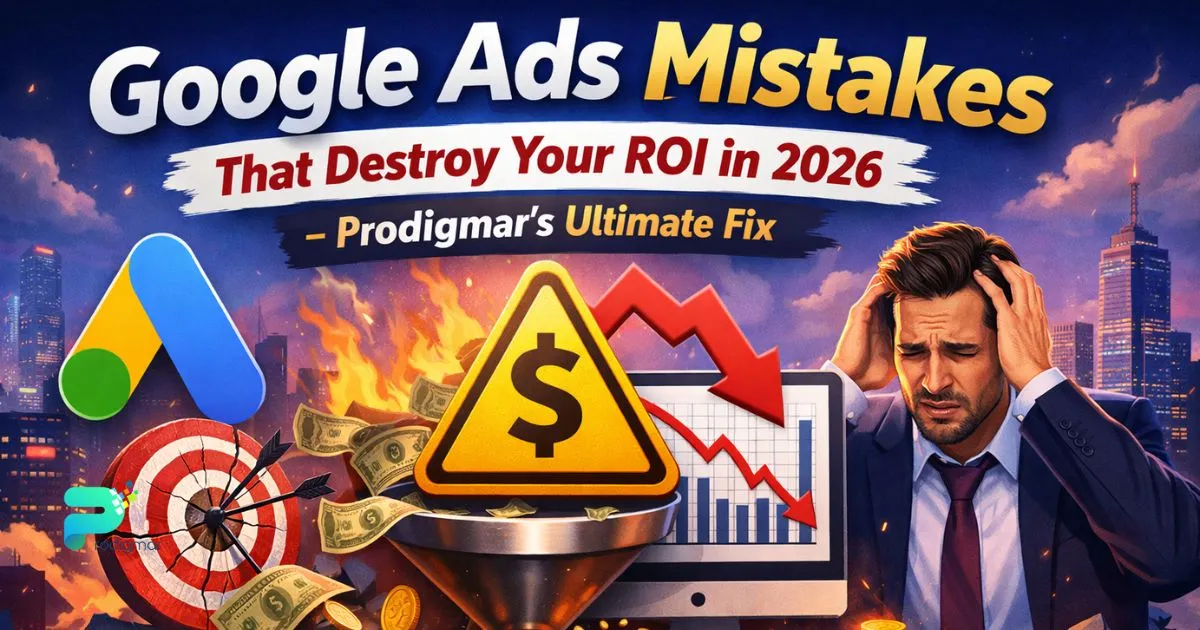
Running Google Ads in 2026 feels very different from five years ago. Competition has intensified. Automation dominates. Costs continue to climb. And yet, many businesses still repeat the same expensive mistakes.
If your Google Ads ROI keeps shrinking, you’re not alone. According to the official Google Ads Help documentation, ad rank, competition, Quality Score, and bidding strategy directly affect cost-per-click (CPC). As more advertisers enter the auction, prices naturally rise.
The good news? You can fix most ROI problems. You just need the right strategy.
In this guide, we break down the most damaging Google Ads mistakes in 2026 — and show how Prodigmar corrects them with a data-first approach.
Why Google Ads ROI Is Harder to Maintain in 2026
Rising Cost-Per-Click and Increased Competition
More businesses rely on paid search than ever before. Google Ads works, so naturally more advertisers join the auction.
According to Google Ads Auction Insights, increased competition drives higher CPCs. When multiple advertisers compete for the same high-intent keywords, costs rise quickly.
This means you cannot afford sloppy targeting anymore.
Automation Without Strategy: A Growing Problem
Google promotes Smart Bidding and automated campaign types. Automation helps — but only when you guide it correctly.
Google itself states that Smart Bidding depends on accurate conversion tracking and quality data (source: Google Ads Smart Bidding Guide).
If you feed bad data into automation, it optimizes for the wrong outcome.
Automation is powerful. Blind automation is expensive.
Why Many Businesses Are Wasting Ad Spend
Most accounts waste budget in three areas:
Poor keyword intent alignment
Weak landing pages
Incorrect conversion tracking
These issues silently destroy ROI. You might see clicks and impressions, but revenue stays flat.
Mistake #1: Targeting the Wrong Keywords
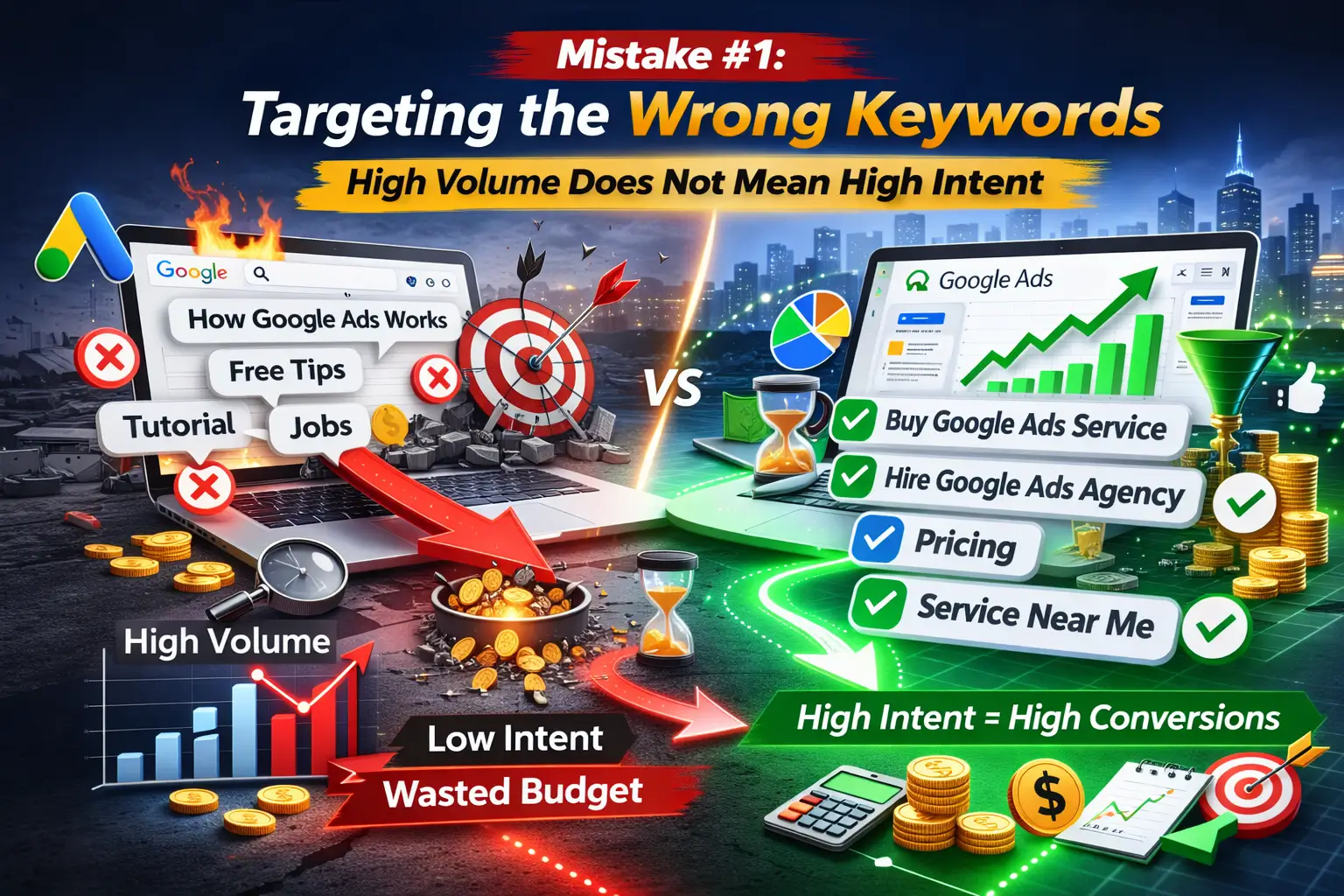
High Volume Does Not Mean High Intent
Many advertisers chase high search volume keywords. It feels logical. More searches should mean more conversions, right?
Not exactly.
Broad keywords often signal informational intent. A user searching “how Google Ads works” rarely wants to hire an agency today.
Google’s Search Quality Evaluator Guidelines emphasize understanding user intent. Intent drives conversions — not volume.
Ignoring Commercial and Transactional Keywords
Transactional keywords include words like:
- Buy
- Hire
- Pricing
- Service
- Near me
These terms show strong buying intent.
If your campaign focuses only on broad informational queries, you burn budget on curious users instead of ready buyers.
How Prodigmar Fixes Keyword Targeting
Prodigmar performs:
- Deep intent mapping
- Competitor keyword gap analysis
- Search term segmentation
- Structured match-type control
We group keywords by funnel stage and assign budgets accordingly. This improves conversion rate and reduces wasted spend.
Mistake #2: Not Using Negative Keywords Properly
How Irrelevant Searches Drain Your Budget
Without negative keywords, Google shows your ads for loosely related searches.
For example, a premium agency may appear for “free Google Ads course.”
That click costs money. It rarely generates revenue.
Using the Search Terms Report Effectively
Google Ads provides a Search Terms Report. It shows the exact queries users typed before clicking your ad.
Yet many advertisers ignore it.
Reviewing search terms weekly helps eliminate irrelevant traffic fast.
Prodigmar’s Negative Keyword Strategy
We implement:
- Shared negative keyword lists
- Competitor filtering
- Informational exclusion
- Location-based exclusions
This ensures that budget flows only toward qualified traffic.
Mistake #3: Weak or Generic Ad Copy
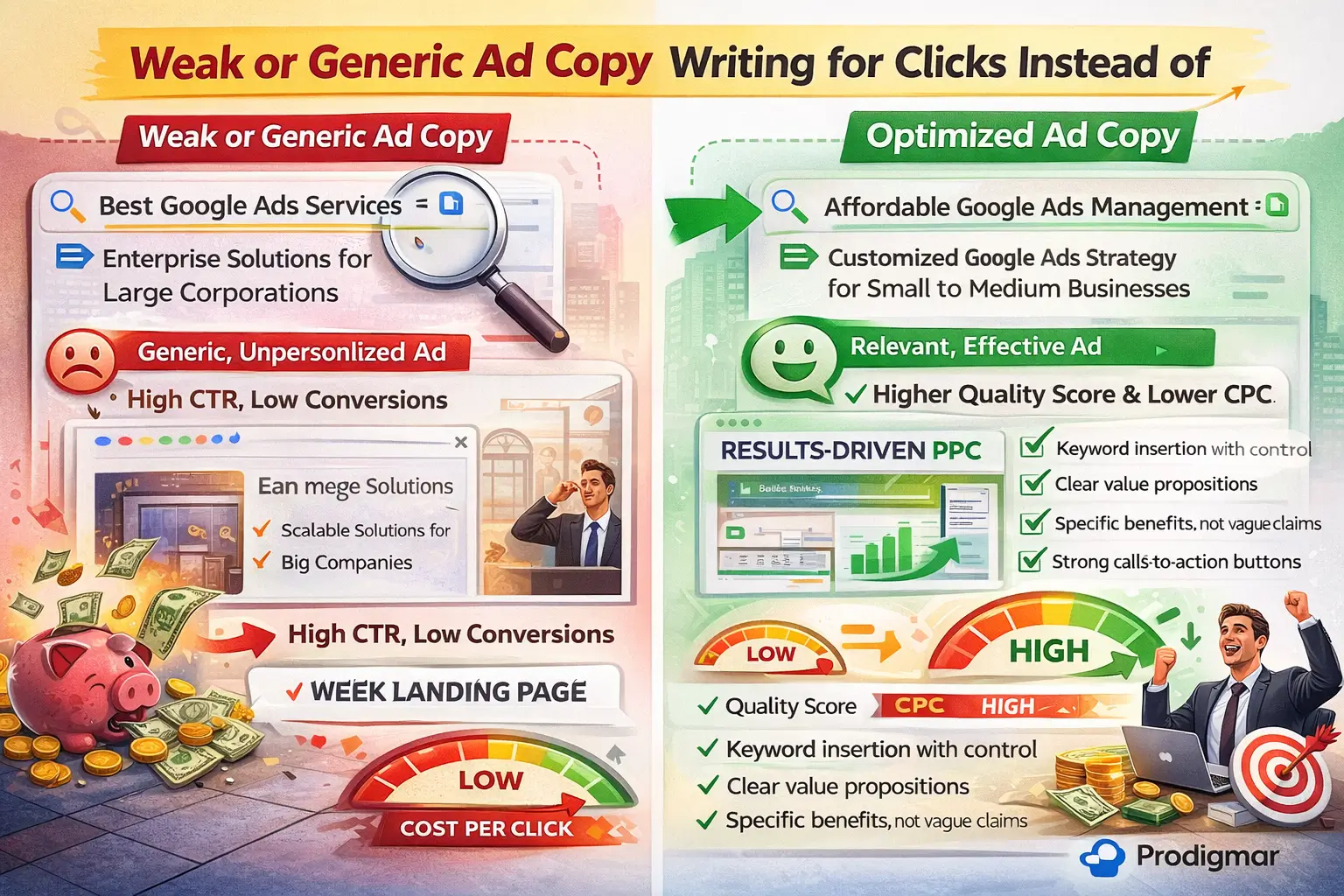
Writing for Clicks Instead of Conversions
Many ads chase high click-through rates (CTR).
But high CTR without conversions means nothing.
According to Google, ad relevance directly influences Quality Score. Higher Quality Score reduces CPC and improves positioning.
Generic headlines like “Best Google Ads Services” fail to stand out.
Poor Message Match Between Ad and Landing Page
If your ad promises “Affordable Google Ads Management,” but your landing page talks about enterprise solutions, users bounce.
Google measures landing page experience as part of Quality Score.
Message mismatch lowers conversion rates and increases costs.
How Prodigmar Improves Ad Relevance and Quality Score
We focus on:
- Keyword insertion with control
- Clear value propositions
- Specific benefits, not vague claims
- Strong calls to action
Every ad aligns tightly with its landing page. This increases Quality Score and lowers cost per acquisition.
Mistake #4: Sending Traffic to Poorly Optimized Landing Pages
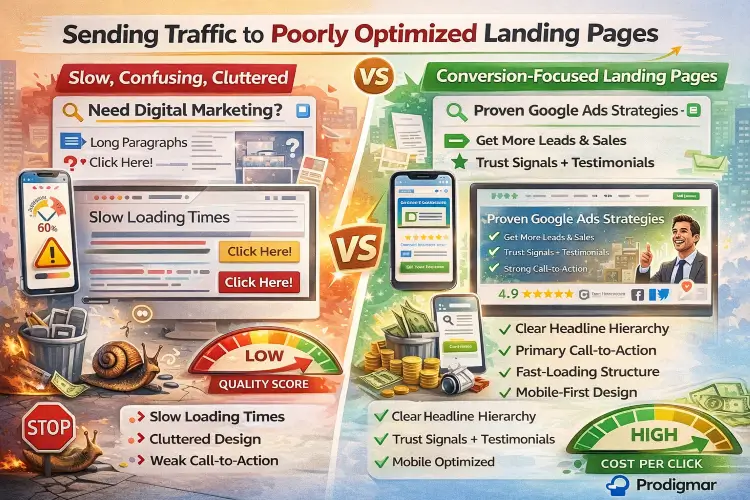
Slow Page Speed and Mobile Issues
Google confirms that page speed impacts user experience and conversion rates (source: Google Page Experience documentation).
In 2026, most traffic comes from mobile devices. If your page loads slowly, users leave instantly.
Confusing Layouts That Reduce Conversions
Long paragraphs. Weak headlines. Too many buttons.
Visitors do not read. They scan.
A cluttered page kills conversions faster than high CPC ever could.
Prodigmar’s Conversion-Focused Landing Page Framework
We build landing pages with:
- Clear headline hierarchy
- One primary call to action
- Fast-loading structure
- Mobile-first design
- Trust signals and testimonials
Conversion rate optimization (CRO) multiplies ROI without increasing ad spend.
Mistake #5: Ignoring Conversion Tracking and Attribution
Running Ads Without Accurate Data
Smart Bidding requires clean conversion tracking.
Google’s documentation clearly states: automated bidding strategies rely on accurate conversion data.
Without it, the algorithm guesses.
Misreading GA4 and Google Ads Metrics
Many businesses misunderstand:
Attribution models
Assisted conversions
Engagement metrics
Google Analytics 4 (GA4) uses event-based tracking. If you misconfigure events, your data becomes unreliable.
How Prodigmar Sets Up Reliable Tracking Systems
We configure:
- Google Tag Manager
- Enhanced conversions
- GA4 event tracking
- Cross-domain tracking
- Proper attribution settings
Accurate data drives intelligent decisions.
Expert Tip: Boost Your Google Ads Conversions with Prodigmar
- Need actionable tips to boost your Google Ads conversions?
- Follow Prodigmar on Instagram for expert paid search strategies.
- Comment on our posts to get your FREE Paid Search Optimization Report today: https://www.instagram.com/prodigmaroffical
Mistake #6: Poor Budget Allocation Across Campaigns
Overspending on Underperforming Campaigns
Many advertisers distribute budget evenly.
However, campaigns do not perform evenly.
If Campaign A generates leads at $20 and Campaign B at $80, equal budgets make no sense.
Not Scaling Winning Campaigns Properly
Scaling requires gradual increases.
Google’s learning phase reacts to sudden budget changes. Large jumps can destabilize performance.
Prodigmar’s Smart Budget Reallocation Strategy
We analyze:
- Cost per acquisition (CPA)
- Return on ad spend (ROAS)
- Impression share
- Conversion rate
Then we shift budget toward top performers systematically.
Mistake #7: Over-Reliance on Smart Bidding Without Oversight

When Automation Hurts ROI
Smart Bidding works well with stable data.
However, if seasonality changes or tracking breaks, automation struggles.
Human oversight remains critical.
Understanding Learning Phase Behavior
When campaigns enter the learning phase, performance fluctuates. Google confirms that significant changes reset learning.
Frequent edits delay optimization.
Prodigmar’s Balanced Manual + Smart Approach
We combine:
- Manual bid adjustments
- Smart bidding strategies
- Real-time performance audits
This balanced approach protects ROI while leveraging automation.
Mistake #8: Focusing on Vanity Metrics Instead of ROI
Why Click-Through Rate Isn’t Everything
High CTR looks impressive in reports.
But revenue matters more.
A 3% CTR with high conversions beats a 10% CTR with zero sales.
Impressions vs Conversions
Impressions measure visibility.
Conversions measure growth.
Smart advertisers focus on business outcomes, not dashboard aesthetics.
How Prodigmar Measures Real Business Growth
We track:
- Revenue growth
- Customer acquisition cost
- Lifetime value
- Lead quality
ROI drives every decision.
How Prodigmar Fixes Google Ads Campaigns Strategically
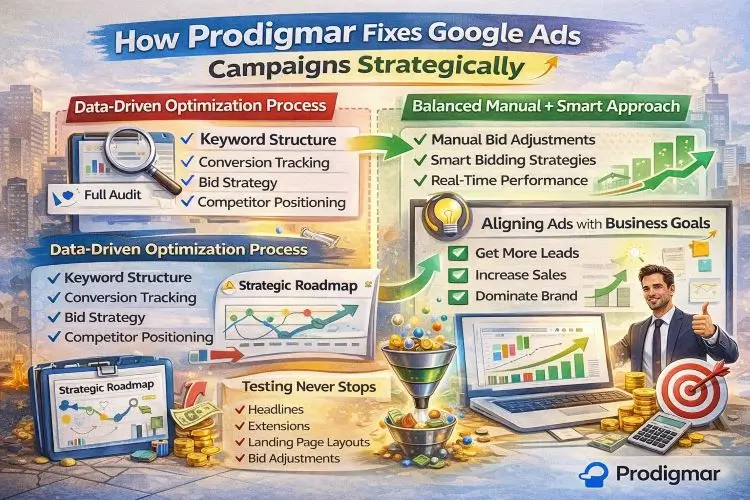
Data-Driven Optimization Process
We start with a full audit:
- Keyword structure
- Conversion tracking
- Bid strategy
- Competitor positioning
Then we create a structured improvement roadmap.
Continuous Testing and Refinement
Testing never stops.
We test:
- Headlines
- Extensions
- Landing page layouts
- Bid adjustments
Optimization remains ongoing.
Aligning Ads with Business Goals
Some businesses want leads. Others want sales. Some want brand dominance.
We align campaigns with clear objectives.
No guessing. No vanity metrics. Just measurable growth.
Final Thoughts: Protecting Your ROI in 2026
Optimization Is Ongoing, Not One-Time
Google Ads changes constantly.
Competition increases. Algorithms evolve. User behavior shifts.
Continuous optimization protects profitability.
Avoiding Costly Mistakes Before They Happen
Most ROI problems come from preventable errors:
- Wrong keywords
- Weak tracking
- Poor landing pages
- Mismanaged budgets
Fix these early.
Why Expert Guidance Makes a Measurable Difference
Google Ads rewards expertise.
Structured strategy, clean data, and disciplined optimization produce consistent returns.
If you want to stop wasting ad spend and start scaling profitably, Prodigmar’s proven framework delivers results backed by platform best practices
Frequently Ask Questions
Why is my Google Ads ROI decreasing in 2026?
How often should I review search terms in Google Ads?
Review search terms weekly to eliminate irrelevant queries and protect your budget.
Does Smart Bidding guarantee better results?
How important are landing pages for Google Ads ROI?
What is the fastest way to improve Google Ads performance?
Fix keyword intent alignment, implement negative keywords, and ensure accurate tracking immediately.