

Google Ads for retail businesses can connect your products with people searching for them. However, a click only starts the journey. Your offer, landing page and follow-up still need to turn interest into a purchase.
For retailers in Pakistan, the practical question is simple: can you attract relevant searches at a cost your business can afford?
This guide explains how to plan retail PPC, choose keywords, budget sensibly and measure outcomes. Because paying for visitors who never buy is a rather expensive way to make your website feel popular.
Key Takeaways
- Match your campaign to purchases, confirmed appointments or qualified showroom enquiries.
- Connect search intent, advertising and landing pages before increasing spend.
- Judge performance using customer outcomes, not clicks alone.
Decide What Your Google Ads Should Achieve
Start with one business outcome. An online clothing shop, salon and furniture showroom need different conversion journeys.
| Business | Useful Outcome | Suitable Destination |
|---|---|---|
| Online retailer | Completed purchases | Relevant product or collection page |
| Salon | Confirmed appointments | Service and booking page |
| Furniture showroom | Qualified enquiries leading to sales | Product details and enquiry page |
Define a qualified enquiry before launch. For example, a furniture prospect might need an available product within your delivery area and provide usable contact details.
Choose campaign goals and bidding around meaningful actions. Avoid treating a page view as equivalent to a purchase simply because both appear in a report.
Check Search Demand and Format Eligibility
Paid search deserves consideration when customers already search for your products or services. Investigate that demand before committing money.
Use Google Keyword Planner to explore relevant terms, estimated searches and advertising costs. Set the geography to your actual market, such as Lahore, rather than relying on worldwide figures.
These estimates guide planning; they do not guarantee clicks or sales.
Can Pakistani Retailers Use Shopping Ads?
As checked on 6 October 2026, Pakistan does not appear in Google’s published Merchant Center supported-country table. Do not build a domestic campaign plan around assumed Shopping ads availability.
Check the target country, product category, account eligibility and current policies before choosing a format. A Pakistan-based exporter targeting another country faces that destination’s requirements.
For this guide, evaluate a focused Search campaign first. Treat Shopping and other formats as separate eligibility decisions.
Research Keywords Around Buying Intent
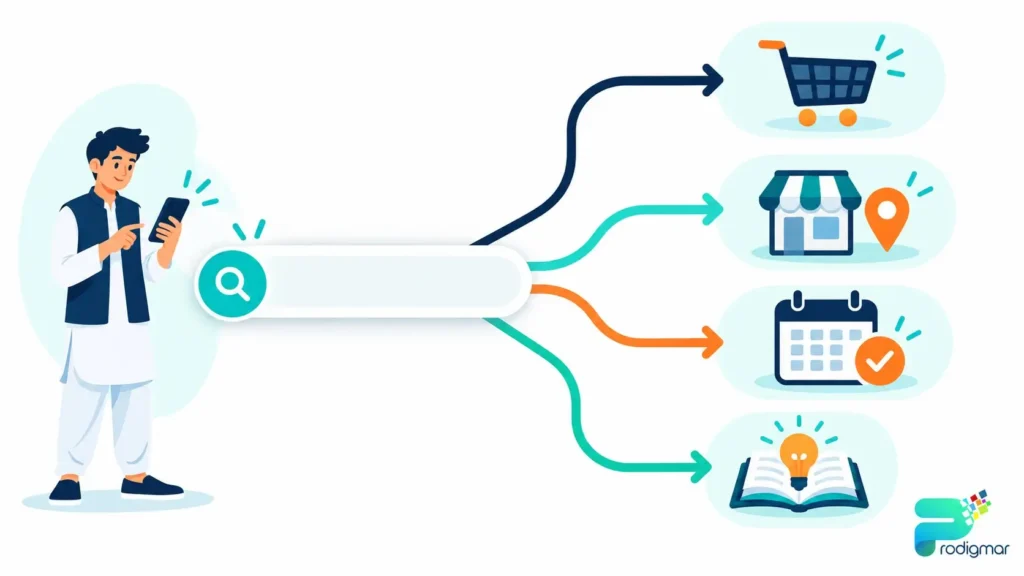
Search intent means what someone wants to accomplish through a search.
Compare these illustrative customer queries. They are planning examples, not verified high-volume keywords.
| Example Query | Likely Intent | Relevant Response |
|---|---|---|
| “buy cotton bedsheets online Pakistan” | Purchase | Available bedsheets with prices and delivery details |
| “sofa showroom Lahore” | Visit or compare | Showroom location, range and opening hours |
| “bridal makeup booking Lahore” | Book a service | Packages, availability and booking process |
| “how to clean a sofa” | Learn | Helpful advice; usually a different priority for a sales campaign |
Build keyword groups around categories you stock, locations you serve and actions customers can complete.
Use customer enquiries to explore English, Urdu and Roman Urdu phrasing. Validate those ideas rather than assuming every language variant has demand.
Keep your own brand searches separate in reporting from generic product searches. They answer different questions about customer discovery.
Control Matching and Review Search Terms
A keyword is a targeting input. A search term is what the customer actually types.
Google’s keyword matching guidance explains that exact match can include searches with the same meaning or intent. It does not mean identical wording only.
Phrase match also considers meaning. Broad match reaches related searches, and Google stresses using Smart Bidding with it.
For an initial focused test, consider phrase and exact match around your strongest categories. This is a planning choice, not a universal rule.
Review the search terms available in your account and investigate irrelevant traffic.
Use Negative Keywords Carefully
Negative keywords exclude unwanted searches. A retailer selling new furniture might exclude relevant combinations involving repair jobs or furniture-making courses.
Check exclusions against your actual offer. Blocking “free” indiscriminately could also exclude shoppers seeking free delivery.
Negative matching differs from positive matching. Review synonyms and singular or plural forms instead of assuming one exclusion covers everything.
Connect Each Advertisement to a Useful Landing Page

Group related products so each advertisement can make a specific, truthful promise.
Mention the product category, a genuine benefit and a clear next step. Avoid unsupported claims such as “Pakistan’s number one” or delivery promises your team cannot fulfil.
Then send visitors to a page that delivers on the message.
A useful retail landing page should show:
- Product details, prices and available options.
- Delivery coverage, charges and realistic timing.
- Return, exchange or booking conditions.
- A clear purchase, booking or enquiry button.
Test the full mobile journey, including forms and checkout. Confirm that your team receives enquiries.
Adapt the details to your category; Prodigmar’s retail industries overview covers different retail sectors.
Get Your Free Retail Growth Audit
Getting clicks without enough customers? Share your website, location and main challenge with Prodigmar. Request a review to help identify priorities across your advertising, landing pages and follow-up.
Request Your Free Retail Growth AuditSet a Budget Your Margins Can Support

There is no universal Google Ads budget for Pakistan. Your product economics, competition, demand and conversion performance shape what makes sense.
Separate advertising spend from agency fees, creative work and website improvements.
Google uses an average daily budget. For most campaigns, the daily spending limit is twice that amount, while the monthly limit is 30.4 times it.
Illustration only: an unchanged PKR 1,000 average daily budget corresponds to a PKR 30,400 monthly advertising limit for most campaigns. This is arithmetic, not a recommended minimum or performance forecast. Budget changes can affect limits.
Next, calculate what an order leaves after product costs and relevant variable expenses. That contribution must cover customer acquisition, overheads and profit.
Set your test budget alongside an affordable acquisition target. Avoid assuming future repeat purchases will rescue an unprofitable first order without evidence.
Track Conversions That Represent Business Value
Conversion tracking should distinguish interest from results.
A WhatsApp click does not prove a conversation happened. A form submission does not prove the person qualifies. An order does not prove payment or delivery.
Google distinguishes primary and secondary conversion actions. Primary actions generally guide bidding when their goal applies; secondary actions usually support observation. Custom goals have exceptions, so review campaign settings.
Keep the reporting stages clear:
| Business | Record Separately |
|---|---|
| E-commerce | Submitted orders, delivered orders, cancellations and refunds |
| Salon | Enquiries, confirmed bookings and attended appointments |
| Showroom | Qualified enquiries, visits and completed sales |
Test tracking before launch. Check values, currency and duplicate events. Where supported, connect later customer outcomes through an appropriate offline conversion setup, with the required permissions.
Improve Campaigns Using Meaningful Measurement
Review spending alongside actual business records.
Track cost per qualified enquiry, cost per acquired customer and attributed revenue. Calculate return on ad spend as attributed revenue divided by advertising spend; remember that ROAS is not profit.
Investigate where the journey breaks. Relevant searches with weak sales may point toward pricing, landing-page clarity or follow-up. Irrelevant searches call for targeting and exclusion changes.
Allow for your buying cycle. A showroom customer may need longer than someone buying an everyday product.
Record changes and expand only when results support the decision.
Build Your Retail Paid Search Plan With Prodigmar
Need clearer priorities before spending more? Prodigmar’s Google Ads services can support campaign planning and management within your retail growth strategy. Bring your website, target locations and biggest sales challenge to a focused conversation.
Request Your Retail Growth Strategy CallFrequently Asked Questions
They can be, when relevant search demand, sufficient margins and a reliable buying journey exist. Start with a focused test rather than assuming every product category will perform equally well.
Use local keyword forecasts, product margins and cash flow to set an affordable test. Include management and website costs separately. No single daily amount guarantees enough customers or a profitable campaign.
Prioritise searches matching available products, buying intent and service locations. Explore product, category and location combinations, then validate demand in Keyword Planner and refine using actual search terms.
Check search relevance, prices, stock, delivery details, mobile usability and tracking. For enquiries, review response quality too. More traffic will not automatically fix a confusing offer or broken checkout.
Pakistan is absent from Google’s published Merchant Center country table checked on 6 October 2026. Verify current eligibility before planning Shopping campaigns. A supported overseas target market requires a separate assessment.