AEO Trends 2026: Prodigmar’s Expert Guide to the Future of Answer Engine Optimization

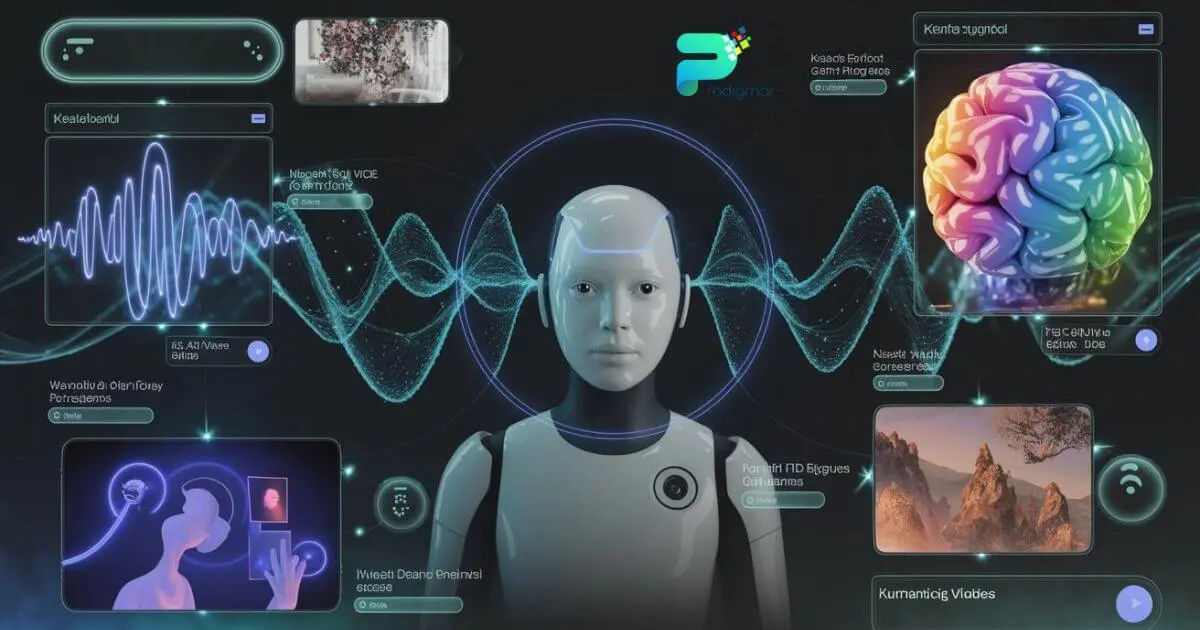
Search no longer behaves like a list of blue links. Instead, it speaks, summarizes, and decides. As AI-driven platforms reshape discovery, visibility depends on clarity, trust, and context. This guide explores AEO Trends 2026, explaining how answer engines choose information and how brands stay relevant.
Understanding Answer Engine Optimization in a Search-First World
Answer Engine Optimization focuses on structuring content so AI systems can extract, trust, and present answers instantly. Rather than chasing rankings alone, it prioritizes relevance, factual depth, and machine readability. This shift marks a fundamental evolution in how digital visibility works.
Put simply, answer engines don’t browse like humans. They parse entities, relationships, and intent. Content succeeds when it mirrors how AI interprets meaning. That’s why Answer Engine Optimization blends semantic SEO, structured data and authoritative signals into one cohesive strategy.
Why AEO Matters More Than Ever in 2026
AI Overviews, voice assistants, and multimodal search now dominate user behavior. People expect instant clarity, not pages of scrolling. As a result, answer engines often resolve queries directly on the results page, reducing traditional clicks while increasing brand exposure.
However, reduced clicks don’t equal reduced value. Visibility inside answers influences trust, recall, and downstream conversions. Studies from Google Search Central (https://developers.google.com/search/docs) highlight how authoritative sources shape AI responses across ecosystems.
Core AEO Trends Defining 2026 Search Behavior

The landscape shaping AEO Trends 2026 centers on understanding how machines reason. Algorithms now reward precision, contextual depth, and entity alignment over volume. Thin content fades quickly, while well-structured knowledge hubs gain prominence.
Additionally, AI systems increasingly cross-reference multiple sources. Consistency across platforms strengthens credibility. When messaging aligns across pages, schemas, and external citations, answer engines treat the brand as a reliable authority rather than a single data point.
Entity-First Content and Knowledge Graph Alignment
Advanced Structured Data Beyond Basic Schema
Structured data now acts like a translator between humans and machines. JSON-LD markup clarifies meaning, relationships, and intent. Beyond FAQs, advanced schemas like Speakable and Author help AI determine who should be quoted and when.
Designing Content for AI Overviews and Answer Boxes

Trust underpins every successful AEO strategy. Without it, even accurate information stays invisible. Answer engines assess credibility through consistency, authorship clarity, and supporting evidence rather than promotional language.
Evidence-based writing wins. Data citations, expert validation, and transparent sourcing elevate authority. According to Schema.org (https://schema.org), structured trust signals significantly improve eligibility for enhanced search features.
First-Party Data and E-E-A-T Evidence Blocks
Experience, Expertise, Authoritativeness, and Trustworthiness guide AI judgment. Content grounded in first-party insights, real examples, and verifiable expertise carries more weight. These signals help AI differentiate genuine authority from surface-level commentary.
Author Identity and Content Provenance
Multimodal Optimization Becomes a Ranking Factor
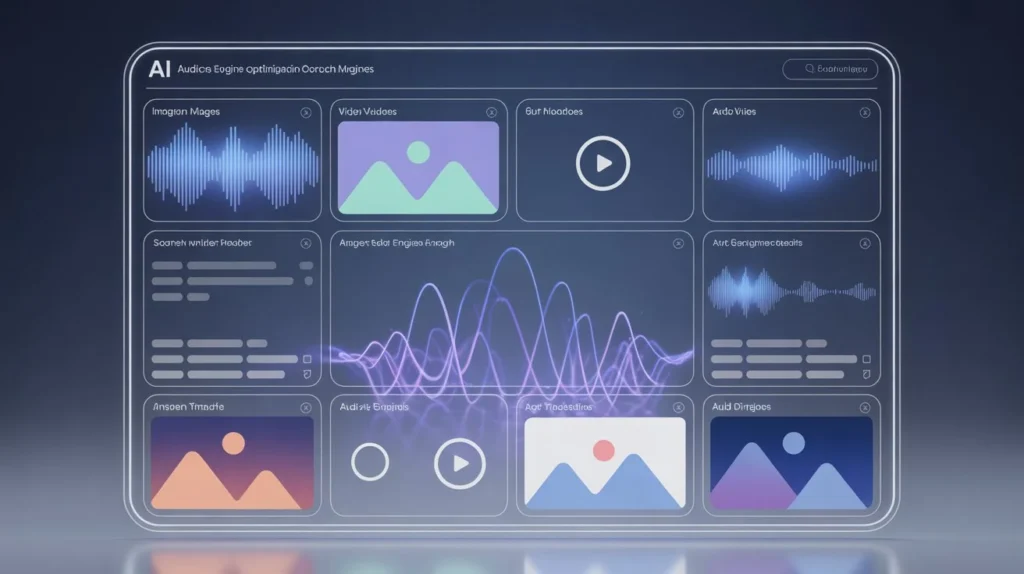
Search results increasingly combine text, visuals, and audio. Optimizing only written content limits reach. Multimodal assets provide richer context, helping AI assemble more complete answers across formats.
Images require descriptive alt text. Videos benefit from transcripts and timestamps. Audio gains visibility through structured metadata. Together, these elements improve discoverability within multimodal answer environments like Google Lens and voice assistants.
Optimizing Images, Video, and Audio for Answers
Conversational Search and Long-Tail Intent Clusters
Users now ask layered questions that mimic conversation. Instead of single queries, they follow curiosity paths. Content optimized for AEO Trends 2026 must anticipate follow-ups and address intent sequences naturally.
Grouping related questions into thematic clusters improves coherence. This structure helps AI engines understand topical depth and deliver sequential answers without switching sources mid-conversation.
Natural Language Patterns and Follow-Up Queries
Writing that mirrors spoken language performs better. Short explanations, clear transitions, and contextual cues help AI maintain conversational flow when responding to complex or multi-part questions.
On-SERP Experience and Technical Performance Signals
Technical health influences answer eligibility. Slow pages, unstable layouts, or confusing navigation weaken trust. Even if users never click, search engines evaluate backend performance before citing content.
Core Web Vitals remain essential. Fast load times and visual stability signal reliability. According to web.dev (https://web.dev/vitals), performance metrics directly affect how content qualifies for enhanced search features.
Page Speed and UX Impact on Answer Selection
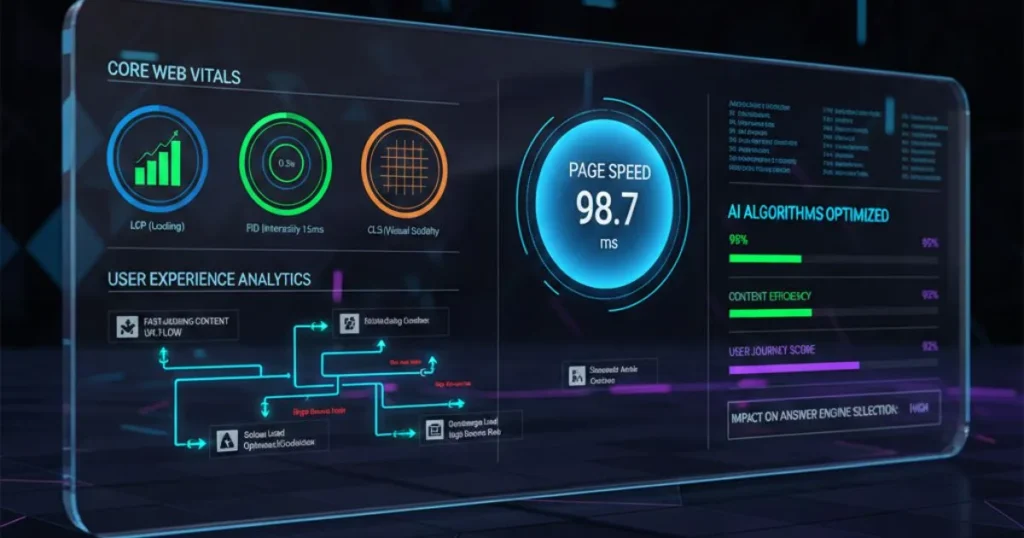
Answer engines prefer content from technically sound pages. Clean architecture, mobile responsiveness, and accessibility features all contribute to higher selection probability.
Measuring AEO Success Without Relying on Clicks
New KPIs for Answer Engine Visibility
Common AEO Mistakes That Limit Visibility
Many brands over-optimize for keywords while ignoring structure. Others publish AI-generated text without human refinement. Both approaches reduce credibility and suppress visibility inside answer engines.
Another frequent mistake involves outdated schema usage. Incomplete or incorrect markup confuses algorithms. Regular audits prevent misinformation from weakening authority.
How to Fix Structural and Trust Gap
How Prodigmar Approaches the AEO Landscape

Prodigmar analyzes search behavior through an answer-first lens. Research-driven frameworks guide content architecture, ensuring alignment with evolving AI systems rather than static ranking models.
By combining semantic SEO, structured data, and performance optimization, Prodigmar helps brands adapt to AEO Trends 2026 without sacrificing user experience or long-term authority.
The Future of Search Is Answer-Driven
Search has become a dialogue. Brands that contribute meaningfully earn trust and visibility. Those that chase shortcuts fade quietly. Understanding AEO Trends 2026 means preparing content to educate, clarify, and assist—before a click ever happens.
The path forward rewards precision, authenticity, and adaptability. When content speaks clearly to both humans and machines, answer engines listen.
Frequently Ask Questions
What are AEO Trends 2026?
How is Answer Engine Optimization different from SEO?
Why is AEO important for businesses in 2026?
How do AI overviews affect search traffic?
How can businesses prepare for AEO Trends 2026?